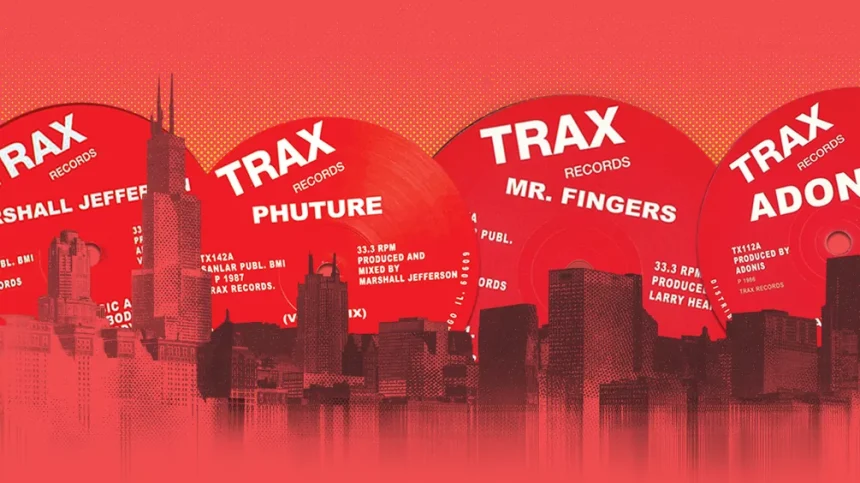
Lawrence and Marshall are both fatalistic about the likelihood of receiving back royalties for their work. “Nobody’s expecting any money because Trax Records doesn’t have any money,” says Jefferson ruefully. The aim at the moment seems to be to mimic the Heard and Owens outcome, where ownership of the song rights revert to the original artists enabling them to claim royalties going forward. According to Rolling Stone magazine, the plaintiffs “allege in court documents and in interviews that Trax didn’t make royalty payments, and in a number of cases released their music without paying them anything at all”, and reported that “The plaintiff’s attorney, Sean Mulroney, refers to the early years of Trax as a “shell game” that included forged signatures, bounced checks, and sketchy (or nonexistent) accounting.”
Again, this is a picture that is echoed by the allegations in Heard and Owens’ successful copyright action, which stated: “…these two artists were not properly compensated for the great value of their musical labors. Instead, the Defendants enriched themselves and brazenly exploited those musical works for their sole benefit, while encouraging, enabling, and aiding and abetting others to do so as well.”
However, Cain claims that the plaintiffs weren’t the only victims in the Trax story. “I’m an artist myself and I also lost all my music,” she said. “I know I never got paid. I can’t say for sure about the other artists.” And in response to the allegations made by Lawrence et al, Trax attorney Baxendale tells DJ Mag that the plaintiffs “have engaged in an egregious pattern of disseminating misleading and slanderous statements both in the media and in court documents”. Clearly, there’s still substantial disagreement between both parties.
With specific regard to royalties, Cain tells DJ Mag: “Since we finally gained control on Jan 1, 2022, the artist’s royalties are being held in an escrow account [a legal holding account] and we have set up royalty accounting systems with Infinite Catalogue. It’s sad that people who I thought were my friends have spewed so much hate towards me. I want the company to pay the classic artists royalties and do the right thing, and now that we can finally do that all I want is a chance.”
Quite how this approach from Trax will play out remains to be seen. For Lawrence and Jefferson, this is now as much about a public show of justice. “I want to know how much money they made,” says Vince Lawrence, “because that’s going to inspire another generation of kids in Chicago.”
Marshall Jefferson takes a similar stance: “Well, I would just like to have my day in court, and see what their case is. You know, it’s been 30-something years — just bring out all these fraudulent contracts with the fake signatures, make them show receipts for money that they paid us for stuff… I would like to see what addresses those songwriting cheques went to.” He doesn’t sound bitter, more resigned to what happened, sometimes laughing at how long it’s gone on, sometimes philosophical about its impact on him: “I’m upset about it, but I don’t dwell on it — you know, I gotta move on.”