
Beginning Day Zero Week With John Summit At Savaya
Before Day Zero Bali 2026 reached its main festival at GWK Cultural Park on April 17, my own experience started two days earlier at Savaya Bali. On April 15, John Summit played at Savaya with Cameron Jack as part of Day Zero Week, bringing one of the week’s biggest club moments to Uluwatu before the main sunset-to-sunrise festival. Savaya gave the night a completely different setting from GWK Cultural Park, with its cliffside location above the Indian Ocean, open-air layout, and sunset-to-night format making it feel like its own destination event within the wider Day Zero Bali 2026 program. Instead of feeling like a separate pre-party, the takeover worked as the first real entry point into the festival week for me.
At Savaya, it already felt like Day Zero had started. The decor was spread across the venue, the branding showed up in different corners, and the whole space felt closer to a mini festival than a regular club night. People were moving through the venue, taking in the view, meeting friends, and slowly gathering closer to the booth as the night went on. I was right at the front for John Summit, which made the set feel much more personal because there was almost no distance between the booth and the crowd. You could see people reacting track by track, the venue shifting as the sky got darker, and the night slowly becoming separate from normal Bali nightlife. With the ocean behind the venue, the lights across the crowd, and Day Zero details everywhere, Savaya felt like its own world for a few hours, and that made the April 15 takeover feel like the real beginning of my Day Zero Bali 2026 experience.
Day Zero Bali At GWK Cultural Park
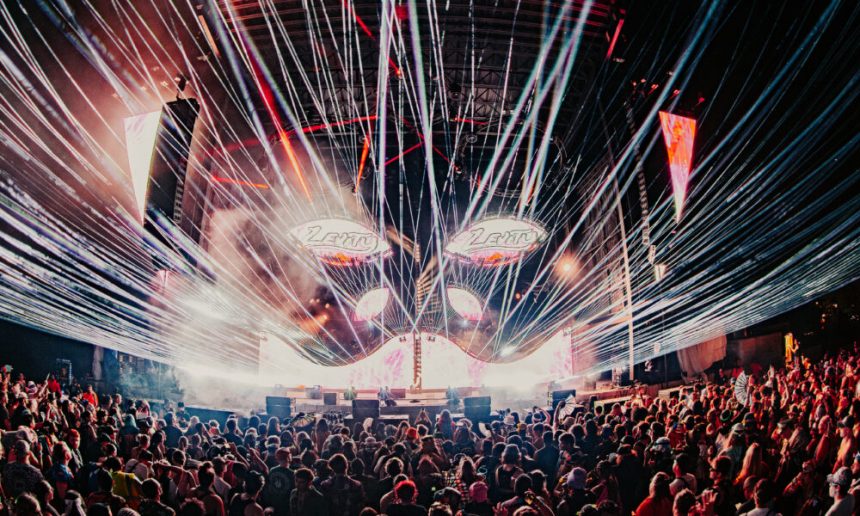
After Savaya, the main Day Zero Bali 2026 experience came together on April 17 at GWK Cultural Park, where the festival held its central sunset-to-sunrise event. This was the core night of the April 14 to 19 Day Zero Week, following the takeover events across The Istana, Desa Kitsuné, Ulu Cliffhouse, and Savaya. What made GWK Cultural Park important was not only its size, but the way it matched the concept of Day Zero. The festival has always carried a strong link to ritual, setting, and long-form electronic music, and the Bali edition brought that into a site known for the Garuda Wisnu Kencana statue and large open-air spaces tied to Balinese cultural identity. The lineup also made that connection clearer, with Gamelan Semara Ratih (Live) appearing on the same program as Damian Lazarus, Bonobo, John Summit, Jamie Jones, Âme DJ, Vintage Culture, Monolink, Jan Blomqvist, and Satori, placing a Balinese musical element directly inside the main festival night.
That was where the festival started to feel different from a normal destination event. GWK Cultural Park already had scale before any stage, lighting, or production came into the picture, so Day Zero Bali did not need to force the cultural side of the experience. The festival details, the visual direction, the Balinese elements, and the setting all felt connected to where we were. After the more intimate feeling of Savaya, walking into GWK felt like entering the larger version of the same world. The space made people look around, slow down for a second, and take in the fact that this was not happening in a random festival field. It was happening under one of Bali’s most recognizable cultural landmarks, with electronic music, local sound, and the Day Zero concept meeting in the same place. For my first Day Zero, that made the main festival feel more meaningful because the Bali debut did not feel copied from another location. It felt like Day Zero had adapted to Bali without losing what made the festival recognizable in the first place.

The Meaning Behind Day Zero Bali
Day Zero began in Tulum in 2012, created by Damian Lazarus around the end of the ancient Mayan calendar and the idea of a new beginning. That origin still matters because Day Zero has never been presented as only a lineup-led festival. Its identity has always been connected to place, ritual, nature, and the responsibility of holding an event in an environment that people are meant to respect. For the Bali debut, that context felt even more important because the main festival took place at GWK Cultural Park, a site closely tied to Balinese cultural identity through the Garuda Wisnu Kencana landmark and its large open-air grounds. The Bali edition also placed sustainability at the center of the event, with Day Zero describing its local approach through Leave No Trace, recyclable materials, organic waste handling, aluminium recycling, plastic reduction, and a zero-landfill goal for the festival.
That message felt much stronger after seeing how GWK Cultural Park looked once the festival had ended. An event running from sunset to sunrise at that scale can easily leave a venue feeling exhausted the next day, especially with thousands of people moving through the grounds, food and drink areas operating all night, decor placed across the space, lighting and production being packed down, and the usual pressure that comes with turning a cultural site into a festival setting. What impressed me was how quickly the space seemed to return to itself. By the next day, GWK Cultural Park was already back to normal, which made the sustainability side of Day Zero Bali 2026 feel visible beyond the words attached to the event. It showed care in a way that people could actually notice after the music stopped, especially because the festival had created such a complete world inside the park the night before. For me, that became one of the clearest reasons Day Zero Bali felt different. It did not only bring the Tulum concept to Bali for one night. It treated the location as something that had to be respected before, during, and after the festival.
Why Day Zero Bali Should Return
By the time Day Zero Bali 2026 ended, it felt like the festival had made a strong case for why Bali should become part of its future. The first edition had the right balance of international pull, local setting, and a week-long structure that gave people more than one way to experience the festival. Savaya gave Day Zero Week its more intimate cliffside moment, while GWK Cultural Park gave the main event the scale and cultural setting needed for a proper Bali debut. That combination made the experience feel considered, not just placed on the island for the sake of adding another destination to the calendar.
For me, the biggest reason Day Zero Bali worked was because it gave the festival space to grow without losing what made it feel personal. There was the excitement of seeing John Summit at Savaya, the scale of walking into GWK Cultural Park, the cultural details throughout the main festival, and the respect shown to the venue once everything was over. Those details made the debut feel like the beginning of something with real potential in Bali. If Day Zero Bali returns, it already has a strong foundation to build from: a concept people understand, venues that match the island’s character, and a format that can turn a festival weekend into a fuller experience across Bali.