
The Dawn of a New Era: “I Feel Love” Takes the Top Spot
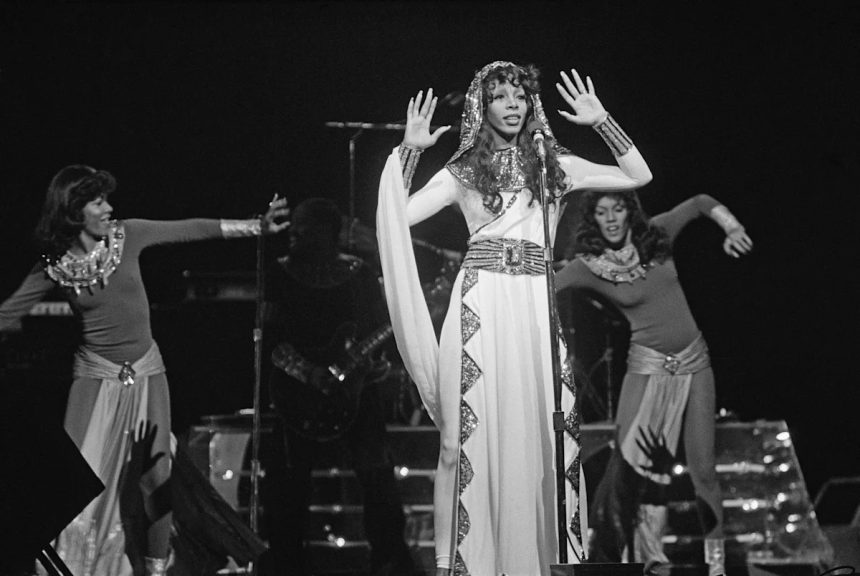
On this day in 1977, music history was made when Donna Summer’s groundbreaking track “I Feel Love” ascended to the No. 1 position on the UK charts. This monumental hit not only marked a significant moment in Summer’s career as the Queen of Disco, but it also signaled a transformative shift in the landscape of pop music. It held the top spot for four weeks, demonstrating a powerful resonance with audiences that would echo through music history.
A Unique Collaboration
“I Feel Love” was the result of a creative partnership between Giorgio Moroder and Pete Bellotte, who co-wrote and produced the track. Their innovative approach was evident in the song’s distinctive sound. Unlike many pop songs of its time, “I Feel Love” was driven by a hypnotic, pulsating beat generated by a Moog synthesizer. This electronic backdrop crafted a sonic experience that was unlike anything else being played on the radio at the time. Notably, the only acoustic element in the track was the kick drum, underlining the revolutionary nature of the production.
The Sound of the Future
The immediate reaction to “I Feel Love” was nothing short of explosive. Brian Eno, a visionary in the music scene at the time and known for his work with David Bowie, famously rushed into the studio to express his awe. He proclaimed that he had “heard the sound of the future,” predicting that this track would redefine club music for decades to come. Eno’s foresight proved prophetic, as the song’s robotic synth pulse laid the foundation for genres such as synth-pop, techno, and electronic dance music (EDM), shaping the soundscape of the late 20th century.
A Lasting Impact
Today, the legacy of “I Feel Love” is unmistakable. Billboard recognized its significance by ranking it as the best dance song of all time, placing it ahead of iconic tracks like Chic’s “Good Times,” Gloria Gaynor’s “I Will Survive,” and Madonna’s “Vogue.” Interestingly, “I Feel Love” initially came out as a B-side and only gained traction after audiences began to fully appreciate its electronic innovation.
Music’s Technological Evolution
The song encapsulates a crucial moment where technological advancement intermingled with musical artistry. Moroder’s pioneering use of machines set a precedent for future musicians, inviting them to experiment with sound in ways that had previously been unimaginable. The integration of synthesized sounds into mainstream music began a gradual transformation, eventually making electronic music a staple on dance floors around the world.
A Timeless Hit
Nearly five decades after its release, “I Feel Love” continues to resonate with listeners and artists alike. Its influence is omnipresent in contemporary music, demonstrating that a song born from the revolutionary use of technology can stand the test of time. Its capacity to evoke emotions while simultaneously encouraging movement keeps it alive in the hearts of both new audiences and seasoned fans.
From the synthetic grooves of the ’70s to today’s electronic-infused hits, “I Feel Love” remains a pivotal touchstone in the story of music. Its unparalleled ability to create an atmosphere of liberation and joy encapsulates the spirit of an era that celebrated innovation and transformation in art.