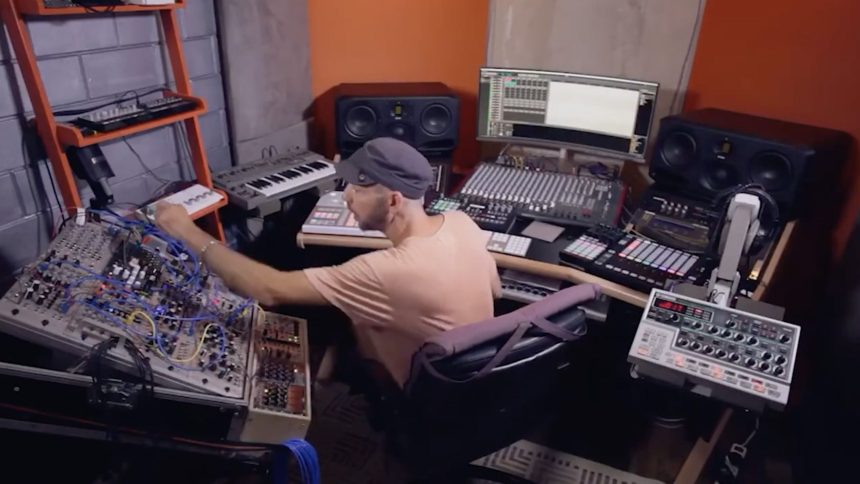
Unraveling the Art of Techno Production: Insights from Master Producers
A good techno track can appear incredibly simple, but the reality is far from straightforward. The genre is steeped in nuance, requiring meticulous attention to detail and skillful production techniques. To help you elevate your techno productions, we’ve gathered insights from some of the genre’s leading lights, each revealing essential tips and tricks that can inspire your next track. Check out the video above, “8 of the Best Techno Production Tutorials,” for a visual guide packed with over 40 minutes of wisdom from the likes of Tom Hades, Matador, and more.
- How Tom Hades Creates Techno Rumble
- Matador’s Drum Layering Techniques
- Secret Cinema’s Use of Randomization
- Paranoid London’s Studio Jam Strategies
- Luke Slater’s Outboard Effect Processes
- Creating Rolling Techno Percussion with Wehbba
- Less-is-More Techno Arrangement with BEC
- Tomy DeClerque’s Mastering Techniques
How Tom Hades Creates Techno Rumble
Belgian techno maestro Tom Hades isn’t just known for his impressive discography but also for his distinct approach to sound production, especially in creating the genre’s signature low-end ‘rumble.’ In a session with Computer Music, he elaborates on his process starting with a solid four-to-the-floor kick. This kick serves a dual purpose as a sub-bass, which is where the magic begins.
Hades processes the kick with heavy saturation and compression, then bounces it to a return track. He layers additional effects, including overdrive and convolution reverb, before applying a final filter to achieve that coveted techno rumble. Using sidechaining, he expertly ducks the sub-bass to make room for the kick. This technique not only adds power but also creates a cohesive sound that underpins the track while remaining subtle enough not to dominate.
Matador’s Drum Layering Techniques
Irish DJ and producer Matador, known for his hardware-driven focus, shares his secrets to creating intricate, layered percussion. Citing his work on “The Enemy” featuring Felix Da Housecat, Matador demonstrates how multiple hits occupying different frequency ranges contribute to a thick-sounding drum section.
By layering a tight 909 kick with claps and percussive elements, he showcases an effective blending technique. For instance, he combines a clap with a tambourine and thickens the hi-hats with shakers. Instead of using extensive EQ on individual tracks, he prefers to create thickness through layering, allowing for a more organic, cohesive sound that advances the groove without relying excessively on plugins.
Secret Cinema’s Use of Randomization
Jeroen Verheij, known as Secret Cinema, is recognized for his innovative approach to track creation. In a glimpse into his studio, he illustrates how randomization tools in Bitwig Studio can infuse spontaneity into melodic ideas and percussion lines.
By sending Control Voltage (CV) signals to a modular synth driven by a random LFO, he creates drum loops that feel humanized and organic. Utilizing techniques in randomization ensures his drum patterns maintain an engaging, unpredictable flow rather than sticking to a rigid metronomic structure. This inventive process allows for creativity to flourish, resulting in tracks that capture the listener’s attention.
Paranoid London’s Studio Jam Strategies
Known for their raw, analogue take on techno, UK duo Paranoid London embraces simplicity in their creative process. During a session with Future Music, Quinn Whalley explains the duo’s philosophy of limiting the gear they use for each track to focus on quality over quantity.
They rely heavily on jamming and recording everything, preserving past ideas to integrate into new projects. This builds a backlog of unique sounds that can bring fresh elements to future tracks, proving that sometimes, less truly is more when it comes to gear.
Luke Slater’s Outboard Effect Processes
British techno legend Luke Slater highlights the importance of outboard effects in his production. During a session recorded for Future Music, he shares insights into how traditional rock equipment, such as Pultec EQs and Overstayer compressors, can yield exceptional results when applied to electronic music.
The unique characteristics of these outboard tools enrich his sounds, providing an extra layer of dynamic quality and authenticity. For example, using a Culture Vulture, he transforms a simple 909 kick into a booming techno bass line, showcasing the potential of combining conventional hardware with electronic sounds.
Creating Rolling Techno Percussion with Wehbba
Brazilian producer Wehbba fine-tunes rolling percussion elements using heavily processed drum machine rimshots. In a studio visit by Future Music, he shares the meticulous process behind his track “Fake.”
By applying saturation and EQ alongside ValhallaDSP’s FreqEcho, Wehbba elevates simple rim shots into complex rhythmic lines that drive the track forward. He emphasizes that even minor tweaks can dramatically alter the sound, making his percussion lines rich and engaging.
Less-is-More Techno Arrangement with BEC
Berlin-based producer BEC, recognized for her hypnotic and groove-focused soundscapes, demonstrates the power of simplicity in her productions. In her studio session, she details the creation of her track “Trusting the Mystery,” which incorporates minimal elements to create tension and depth.
Using just 15 sound elements, she crafts an engaging piece through effective automation and strategic use of space. By balancing a simple two-note melody with looping percussive patterns, BEC illustrates that complexity is not always necessary for a captivating arrangement.
Tomy DeClerque’s Mastering Techniques
Eastern European techno producer Tomy DeClerque shares a refreshing perspective on mastering, emphasizing its early application in the production process. Rather than waiting until the mixing stage is complete, he believes in performing a ‘mastering pass’ early on to identify and address issues promptly.
This proactive approach helps him keep an ear tuned to any frequencies that may need adjustments. By using mastering as a tool to guide the evolution of a track, DeClerque ensures that the final product is polished while still retaining its creative integrity.
Explore More
For more insights and to explore the nuances in techno production, be sure to check out the complete video tutorial series as well as the detailed sessions from each of these talented producers. Their methodologies provide not only inspiration but also practical techniques that can significantly enhance your production game.