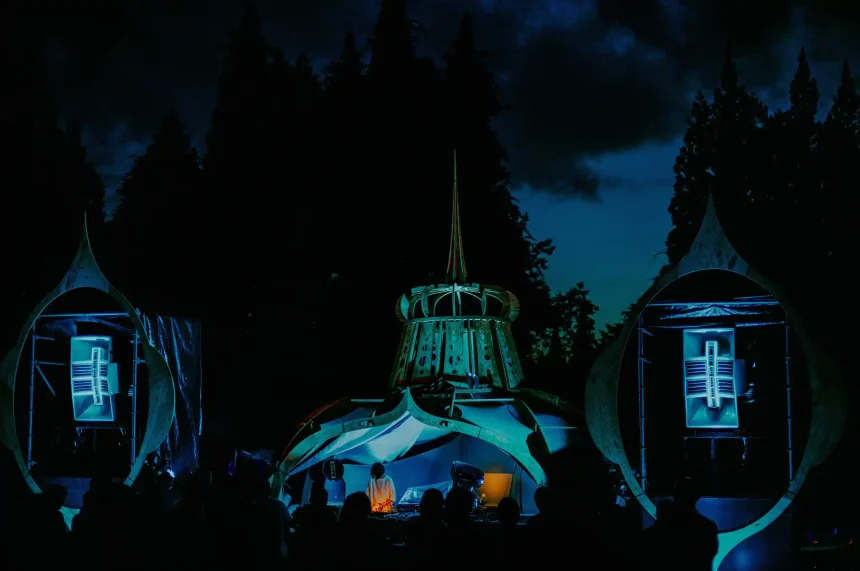
Celebrating 18 Years of Techno Bliss: The Rural Festival
From July 17 to 20, the picturesque surroundings of Bandai-Asahi National Park in Fukushima will host the 18th edition of the Rural Festival. Originating in 2009 as an intimate gathering among friends, this festival has transformed into one of Japan’s premier events for techno, ambient, and experimental music. Over the years, it has garnered respect both locally and internationally, becoming a must-visit for electronic music enthusiasts seeking a connection with nature through sound.
A Journey from Humble Beginnings
Atsushi Maeda, the founder and a resident DJ, reflects on the festival’s modest inception: “We started almost impulsively with friends,” he admits. With limited funds, the early festivals were far from the polished events of today. Promotion relied heavily on word-of-mouth, and resources were kept to a minimum. “We rented a simple tent for rain protection, used minimal lighting brought by friends, and relied on our community,” he recalls. Yet, despite these initial limitations, the core vision of presenting high-quality techno remained unchanged.
Maeda notes that the festival’s growth is attributed to an unwavering idealism. The collaborative spirit among team members and artists has created a vibrant community ethos that has successfully preserved the festival’s intimacy over the years.
Sound Quality: The Heart of Rural Festival
At the core of the Rural Festival experience is an uncompromising dedication to sound quality. Over the last decade, the festival has collaborated with sound engineers to meticulously tune its customized sound systems, enhancing the natural acoustics of its breathtaking mountainous venues. Returning this year, stacks from Void Acoustics and Danley Sound Labs will ensure that attendees can fully immerse themselves in the sonic experience.
Maeda illustrates the importance of sound quality: “From the audience’s perspective, truly great sound is something that is immediately felt; it’s so impactful that it’s difficult to overlook.” This commitment translates into an adaptive sound system, where engineers continuously adjust settings depending on the performer’s style, ensuring a seamless auditory experience.
An Intuitive Connection with Nature
Rural Festival’s unique location in a renowned hot spring region at the base of Mount Adatara adds to its allure. Maeda emphasizes the festival’s emphasis on environmental harmony: “The surrounding area has clean air, high-quality hot springs, and excellent local food.” Some festival staff act as mountain guides, further bridging the connection between visitors and the local environment.
The importance of nature extends beyond the physical landscape; it influences programming and performance styles as well. Artists are encouraged to engage with their surroundings, creating musical dialogues that resonate with the beauty and serenity of the landscape.
Diverse Musical Programming
This year’s festival lineup boasts a rich mix of artists, showcasing both high-profile performers and rising stars. The collaboration of Lena Willikens and Vladimir Ivkovic promises a noteworthy reunion, marking their first performance together in Japan in seven years. Additionally, the London-based DJ Jane Fitz will share the stage with local legend Dr. Nishimura, forming a unique chemistry borne out of a serendipitous encounter at a Rural Festival gathering in Goa.
Expanding its reach, Rural Festival has also hosted pop-up events across Asia, inviting talents like Chhabb from Mumbai and YuY from Taipei, contributing to a diverse lineup that celebrates both regional and international sounds. This push for inclusivity not only enriches the festival experience but also fosters organic connections that have been cultivated over nearly two decades.
Community and Sustainability
Rural Festival’s success is rooted in its community-driven philosophy. Maeda highlights the program’s development through trusted collaborations with local artists and organizers: “As we’ve gained support from these local collaborators, we hope to continue developing the festival sustainably.” This sentiment resonates deeply within the broader Asian music scene, where DIY models are flourishing in response to pandemic challenges.
The festival’s unique charm lies in its balance between intimacy and scale. While larger festivals often prioritize commercial success, Rural Festival remains focused on community, experimentation, and sound, maintaining the heart of what sparked the festival’s inception nearly two decades ago.
The Future of Asian Electronic Music
As the festival industry in Asia booms, with major international franchises establishing footholds in various countries, the challenge remains for organizers to maintain intimacy while expanding their audience. Maeda observes that many festivals in the region are still predominantly club-based, but the rise of grassroots initiatives signals a shift towards innovative programming.
Beyond mere entertainment, Maeda envisions a community that thrives on curiosity and the pursuit of better sound environments, further driving the evolution of the electronic music scene. This transformation and its lasting impacts will continue to shape the future of festivals in Asia.
In celebrating its 18th anniversary, the Rural Festival stands as a testament to the beauty of music uniting people in nature, creating memories that transcend time and place.