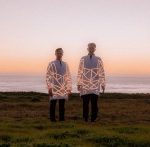
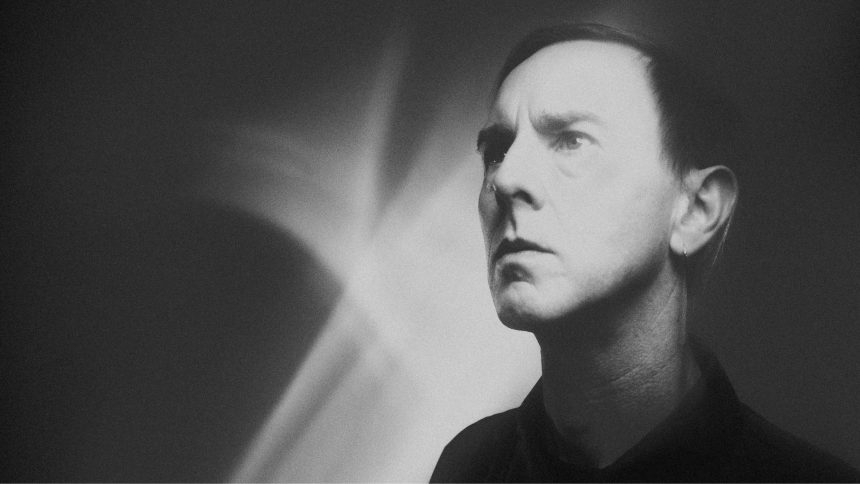
At first listen, Richie Hawtin’s production feels pulled from electronic music’s darkest corners. The frost-bitten minimalism, hypnotic spiraling delays and reverb, and feverish vocals degraded to an indecipherable code paint a vivid picture of his sonic aesthetic.
His music, characterized by sputtering kicks and claps encapsulated by an undulating bass that moves like a whisper through the air, represents a unique style of minimal techno that seems worlds away from commercial clubs and festivals. This minimalistic mastery isn’t just an occasional feat; it’s transformed entire genres and scenes through his various aliases like Plastikman, F.U.S.E., and UP!, making significant contributions to electronic music from the ‘90s to today.
What makes Hawtin’s artistic journey even more fascinating is his ability to remain a foundational figure in both underground gatherings and colossal stages, ranging from Ultra and Coachella to our own local favorites like Club Space and LIV. His upcoming return to Miami for the Time Warp festival on April 25 emphasizes this duality—truly a pioneer ready to usher in a new chapter.
Despite the evolving landscape of electronic music, Hawtin has managed to maintain his authenticity as a DJ while playing in immense venues. His sound never conforms to transient trends or bows to commercial pressures, positioning him as a middle-ground DJ who invites listeners to either delve deeper into his soundscapes or stay at the surface level—frequently leaving them pondering their journey through the music.
“When I look back, there are definitely periods with different sounds, tempos, and vibes,” Hawtin discusses during a conversation with New Times at the Biltmore Hotel. Clad in all black, his outfit starkly contrasts the bright Spanish Revival architecture around him, creating a moment of irony as patrons prepare for their golf games. It’s not long before a young waiter approaches, offering gratitude for Hawtin’s enduring contributions to music—a reminder of the profound impact he has had on the culture.
After this brief encounter, he elaborates: “But I hope there’s consistency. It all goes back to when I started clubbing in the late ’80s and early ’90s. I loved DJs who took me on a trip—who surprised me.” Growing up in Windsor, Ontario—just across the river from Detroit—Hawtin was heavily influenced by the nascent techno scene and artists like Depeche Mode and New Order. It was a perfect storm of inspiration that set him on the path to creating his debut album, Dimension Intrusion, in 1993 under the F.U.S.E. alias, introduced in Miami during the Winter Music Conference.
“Coming up through the Detroit techno school, which was very futuristic and rhythm-based—full of percussion and great bass lines—that’s what I strive to maintain. My sets are a roller coaster; they can be groovy, tough, or even challenging.” The spontaneity and dynamic of performing live is what drives him today. Brow furrowed with focus, he explains, “You get in front of a crowd with a whole bunch of music they don’t know. I try to play the newest music that I have, and you try to take them on a little journey.”
Time Warp Techno Festival Lands in Miami
Time Warp, the Mannheim techno festival founded in 1994, holds a special place for Hawtin, as he was part of the sophomore edition. This year, it will host his Miami edition at Factory Town. Hawtin reflects on the festival’s significance: “It’s a very special event and organization for me because it’s been nearly consistent for thirty years. I prepare extra for events like this; the audience is typically very open-minded and allows me to explore my musical extremes.”
First-time attendees of Hawtin’s set can expect a sonic experience that ebbs, flows, and jolts—moments designed to make dancers pause and reconsider their movements. “In my younger years, I often said, ‘It’s very important to make people stop dancing sometimes.’ It’s not all about keeping them moving; there are ups and downs to consider,” he says. “Time Warp serves as a perfect platform for that.”
Witnessing Hawtin’s live performance is as engaging as the music itself. He rejects CDJs in favor of hardware setups that keep his body in constant motion—his hands and feet working like a conductor of sound, reminiscent of Kamaji from Spirited Away. His unique approach allows for intricate layering of effects and loops, precisely manipulating tracks using a six-channel mixer and cutting-edge controllers, all of which rely on the concept of “stem separation.”
The Detroit Way
Hawtin’s passion for music engineering runs deep. “My dad was an electrical engineer who loved buying HiFi equipment and modifying it; he was a music lover,” he reminisces. This familial background instilled in him a fascination with sound architecture early on, leading him to embrace the ‘Detroit techno’ philosophy: “Fuck those records up. Use EQ, two copies, and two drum machines.” This ethos of pushing the boundaries is something he continuously strives for in his music.
Yet, for Hawtin, it’s not only about the music itself; the thrill of integrating new technology into his performance is equally invigorating. “I honestly can’t say the music is the most important. Sometimes it’s about the music; sometimes it’s the techno—it’s a pendulum swinging for me over thirty years,” he shares.
While electronic music often minimizes the spotlight on those who create it, the industry is rife with contradictions. Can you imagine going to a rock concert where the artists refuse to disclose their setlist? Hawtin has famously challenged this norm, emphasizing transparency as a cornerstone of his practice. At Ultra, he portrayed each track he played in bright red letters against a massive LED backdrop, further underscoring this principle.
“It’s a disservice to the unseen producers who are frequently the real stars in the scene,” he articulates. “They’re treated like low-cost workers farmed out by conglomerates—when in reality they deserve recognition and respect.” Hawtin sees an urgent need for a balanced ecosystem within the music scene, where both artists and producers thrive.
The idea of retiring has never crossed his mind. “I want to open the doors for the next generation,” he expresses passionately, even if that means slowing down due to his young child. “Being part of the first wave of DJs in their 50s and 60s, there’s no playbook for retiring in this field,” he muses.
To Hawtin, DJing is akin to vitality itself: “It’s a feeling of being alive in the moment. I don’t think I will ever want to lose that feeling, and as I get older, I’ll likely crave it even more.”
Time Warp Miami. With Richie Hawtin, Honey Dijon, Marcel Dettmann, Tini, and others. Saturday, April 25, at Factory Town, 4800 NW 37th Ave., Miami; 305-484-6236; factorytown.com. Tickets cost from $75 – $159.99 via dice.fm.