
Insights from IMS Ibiza 2025: The Evolution of the Electronic Music Landscape
The 12th edition of the IMS Ibiza conference commenced on April 22, spotlighting the IMS Business Report, an annual analysis that’s pivotal in understanding emerging trends within the electronic music scene. This year’s report, crafted by MIDiA Research’s Mark Mulligan, promises a detailed overview that not only reflects the current state of the electronic music industry but also anticipates future shifts.
- Insights from IMS Ibiza 2025: The Evolution of the Electronic Music Landscape
- Economic Resilience and Growth in the Music Industry
- The Central Role of Fandom in Electronic Music
- Germany: The Global Leader in Electronic Music
- Ibiza’s Resilient Club Economy
- Dominance of Tech House on Beatport
- The Rise of Harder Electronic Styles
- Streaming Surge in the Global South
- The Rising Value of Electronic Music Catalogs
- Total Value of the Global Electronic Music Industry
Economic Resilience and Growth in the Music Industry
Mulligan highlighted an encouraging trend: the overall growth of the music business in 2025 was more robust than in previous years. Although streaming services experienced a slower pace of growth, that suggests diversification efforts within the industry are benefiting artists and stakeholders alike. Expansion in areas such as merchandise, live performances, and sponsorships—coupled with a resurgence in physical sales—indicates a healthy evolution. The trend away from solely monetizing listenership to embracing broader fandom dynamics hints at a more sustainable future for the music business.
The Central Role of Fandom in Electronic Music
Mulligan pointed out a significant shift in how audiences interact with electronic music. Unlike other genres, electronic music heavily relies on interconnected fan communities and cultural authenticity. Mulligan articulated that this notion of fandom—as a connective force rather than merely a monetization strategy—presents a unique advantage for the electronic music industry. It’s a cue for stakeholders to refocus on nurturing these genuine connections within scenes to invigorate loyalty and creativity.
Germany: The Global Leader in Electronic Music
Germany has reaffirmed its status as the world’s leading market for electronic music, boasting a staggering 604 million monthly listeners on Spotify. Alongside Australia and the Netherlands, Germany showcases a unique demographic advantage: electronic music listeners significantly outnumber the overall population. Meanwhile, emerging markets are also making strides; Indonesia saw a notable 77% increase in electronic music listenership. However, other markets, such as Mexico, witnessed declines, indicating the uneven landscape of growth.
Ibiza’s Resilient Club Economy
Even as the overall number of club events in Ibiza decreased, revenue from club ticketing rose to €160 million in 2025, signaling a shift in consumer spending patterns. Operators are adapting by lowering general admission ticket prices while elevating VIP entry fees, allowing wealthier patrons to subsidize others. This change reflects a broader trend: consumers are increasingly favoring high-quality experiences over frequent outings, impacting the way live events and club culture are monetized.
Dominance of Tech House on Beatport
On Beatport, tech house continues its reign as the most popular genre, marking its fourth consecutive year at the top. Close behind in popularity is house music, with melodic house and techno rising to occupy third place—pushing drum and bass down to fourth. Interestingly, this year’s statistics reveal that 34% of Beatport sales derived from genres outside the top ten, suggesting a flourishing diversity in musical tastes and consumption.
The Rise of Harder Electronic Styles
The IMS report sheds light on the trends emerging from platforms like SoundCloud, where there’s a palpable shift towards harder and faster electronic music. The prevalence of hardstyle, hardcore, and other high-BPM genres has notably increased. Analysts attribute this trend to the current global climate, positing that music often reflects societal challenges. As such, harder subgenres are likely to gain traction in the coming years.
Streaming Surge in the Global South
The report emphasized that the Global South plays a crucial role in driving streaming growth. With a total increase of 10% in digital service provider subscriptions, regions such as India, South Africa, and Indonesia are leading this charge. These markets are expanding at double the rate of their Western counterparts, signaling a significant shift in the global music consumption landscape. Spotify remains at the forefront, capturing a 32% market share, while YouTube Music also notes substantial growth.
The Rising Value of Electronic Music Catalogs
A noteworthy trend in 2025 is the increase in electronic music catalog sales, which accounted for 18% of all publicly announced catalog sales. This trend highlights the investment potential within electronic music due to the relative youth of many electronic catalogs, offering greater opportunities for maximizing streaming revenues.
Total Value of the Global Electronic Music Industry
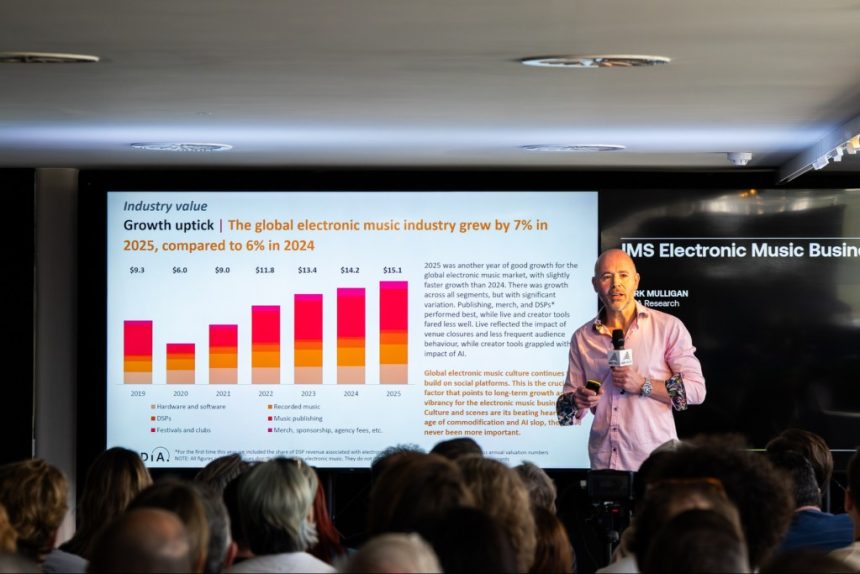
According to the report, the total value of the global electronic music industry reached a staggering $15.1 billion in 2025, up from $14.2 billion in the previous year. Various segments have had varying degrees of success, with publishing, merchandise, and digital service providers performing impressively, while live events faced ongoing challenges. The continuous evolution of social platforms remains a critical factor in fostering global electronic music culture, underpinning the importance of authentic scenes and community engagement.
By delving into these insights from the IMS Business Report, industry professionals can glean a sense of direction and opportunity within the ever-dynamic landscape of electronic music. As trends evolve, understanding these themes will be imperative for those seeking to thrive in this vibrant sector.