
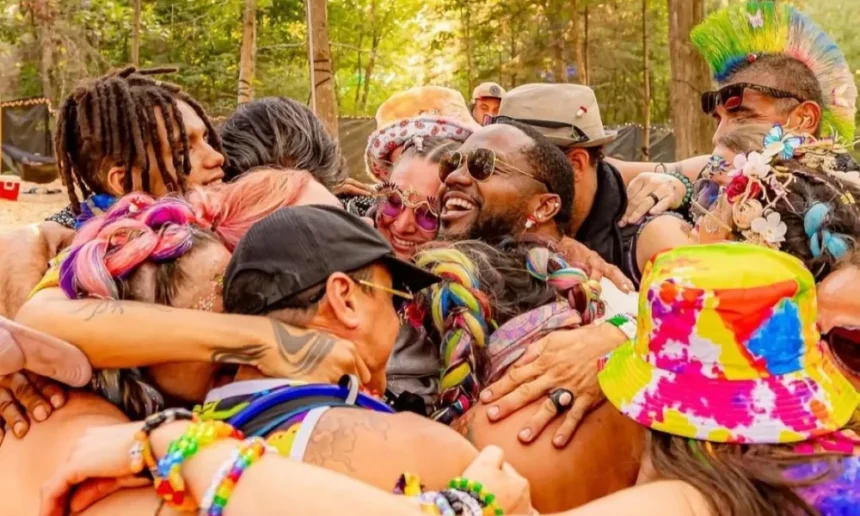
Psychological research suggests that deep emotional connection to music is closely linked to how people process emotion, empathy, and sensory experience.. A widely cited study published in PLOS ONE found that individuals with higher levels of empathy tend to develop stronger emotional connections with music, independent of broader personality traits. The research moves beyond genre and focuses on how listeners engage with sound, mood, and emotional nuance. In music cultures where progression, structure, and immersion play a central role, such as electronic music, this helps explain why some listeners experience music as something deeply felt, not just heard.
How Deep Emotional Connection Plays Out in Electronic Music
Research linking empathy and emotional processing to music engagement helps explain why certain electronic music experiences resonate more strongly with some listeners. In electronic music, emotional connection often forms over extended moments, not through instant hooks. For example, long progressive sets by artists such as Eric Prydz, Matisse & Sadko, or Lane 8 rely on gradual melodic development, repetition with variation, and delayed resolution that unfolds across time. Listeners who connect deeply to these sets often describe being fully absorbed during build phases, subtle chord changes, or slow transitions, instead of reacting only to drops or climactic moments, with the experience building gradually as the set progresses.
This type of connection becomes especially visible at large-scale festivals and extended club environments, with electronic music festivals providing some of the clearest examples. At events like Tomorrowland, Anjunadeep Open Air, or Afterlife, audiences often stay engaged through long sequences of tracks that evolve over time, sometimes without vocals or obvious peaks. Instead of focusing on individual songs, listeners follow how the sound progresses across a full hour or multi-hour set. Research published in PLOS ONE supports this pattern, showing that individuals with higher empathy tend to process music through internal emotional response and sustained engagement. In electronic music settings, this leads to listeners forming strong emotional attachment to long-form sets, closing sequences, and extended transitions, where meaning builds gradually through sound over time.
Why Extended Sets Build Stronger Emotional Connection
Extended DJ sets create space for emotional connection by giving artists time to control pacing, repetition, and progression in ways shorter slots cannot match. DJs known for long-format performances such as Carl Cox at Club Space Miami, Solomun during open-to-close sets, or Sasha and John Digweed in extended club nights often introduce ideas early and carry them across hours, allowing patterns, melodies, and transitions to settle before shifting direction. In extended DJ sets, this progression becomes easier to follow over time, giving listeners a clearer sense of how the set is unfolding. Instead of reacting to isolated drops or individual tracks, listeners follow a continuous flow through sequencing, subtle tempo adjustments, and melodic progression that develops gradually across the set. As the set moves forward, earlier elements begin to reappear in different forms, transitions feel more deliberate, and listeners start to anticipate what comes next, which strengthens engagement and makes each change feel more meaningful in context.
This approach is also central to contemporary festival experiences. Tale Of Us at Afterlife showcases, Black Coffee during extended festival closings, and Eric Prydz in long-form headline slots are known for sets where emotional impact comes from progression and timing, not constant intensity. In these performances, a track played later in the set often carries more emotional weight because of what came before it. For listeners who connect deeply with music, extended sets allow emotional attachment to build through familiarity, anticipation, and resolution across time. The experience feels continuous, with each moment linked to the next, which explains why many EDM fans describe certain nights, sunrise closings, or multi-hour sets as personally meaningful, not just entertaining.
Deep Emotional Connection Across the Electronic Music Scene Today
Deep emotional connection in electronic music often comes down to time, flow, and how sound is experienced across a full set, not in isolated moments. Extended performances allow listeners to settle into patterns, notice subtle shifts, and attach meaning to how a night unfolds from start to finish. This is why many EDM fans remember specific sunrise closings, long club nights, or festival sets as complete experiences, not just collections of tracks. The connection forms through continuity and attention, making electronic music something that lingers well beyond the final record.
As lineups continue to include more extended sets and open-to-close formats, this way of experiencing music is becoming more visible across the scene. Listeners are spending more time following full sets instead of individual tracks, whether at festivals, clubs, or through recorded live sets online. That shift points toward a deeper kind of engagement, where the focus is not only on what is played, but how it unfolds over time. For artists and audiences alike, it leaves more room for connection to build naturally, giving each set a sense of progression that stays with listeners long after it ends.



