Every few years the electronic music ecosystem rearranges itself. Not all at once, and not in the ways the trend forecasters predict — but in hindsight the signal was always there, embedded in sample download data and DJ tracklists and Boiler Room attendance, months before anyone was calling it a movement.
In 2026, the rearrangement is unmistakable. The Splice and MIDiA Research Sounds of 2026 report released in January named Afro house the Sound of the Year on the back of 778% download growth. Speed garage recorded 625% growth in the same cycle. Melodic techno moved from Afterlife stages to the Las Vegas Sphere. Amapiano — already a multi-year phenomenon across Africa — is now showing what Viberate Analytics describes as “structural genre growth,” the kind that doesn’t reverse when a trend cools. And Brazilian funk finally got its own Beatport genre category, a formal institutional acknowledgment that the favela-born sound has arrived on the global electronic music stage.
These are not peripheral developments. They are reshaping festival lineups, redistributing producer energy, and — most importantly — telling us something about what global audiences actually want from dance music in 2026. This is the full story of each subgenre exploding right now, with the data, the artists, the tracks, and the honest assessment of why it’s happening.
Quick Reference: Rising Subgenres Exploding in 2026
| Subgenre | Growth Signal | BPM Range | Origin | Defining Track |
|---|---|---|---|---|
| Speed Garage / UK Garage | 625% Splice growth (2025) | 130–140 | UK (London) | Sammy Virji & Interplanetary Criminal — “Damager” |
| Afro House | 778% Splice growth / Sound of Year | 118–126 | South Africa | Vanco & AYA.SYSTEM — “Ma Tnsani (Yalla Habibi)” |
| Melodic Techno/House | Sphere residency; Coachella 45% electronic | 122–130 | Italy/Global | Anyma — “Abyss” |
| Amapiano | Structural growth across all tiers | 108–116 | South Africa | Kabza De Small & DJ Maphorisa — “Biri Marung |
| Brazilian Funk (Baile Funk) | Standalone Beatport genre (2025) | 130–150 | Brazil | Multiple; DJ Maphorisa x Afro house crossover |
1. UK Garage & Speed Garage — The Sound That Wouldn’t Stay Buried
Growth: 625% on Splice (2025) | BPM: 130–140 | Key Labels: Steel City Dance Discs, Shall Not Fade, ATW Records
The revival metaphor is wrong. UK garage never died — it was dispersed. When the mainstream moved on in the mid-2000s, UKG’s rhythmic DNA dissolved into grime, dubstep, dancehall, and every other British dance music form that followed. The genre didn’t decline; it became the infrastructure for everything around it. What’s happening in 2026 isn’t resurrection. It’s recognition — a generation of listeners tracing the music they love back to its source and discovering that the source is still producing at the highest level.
The data is authoritative: speed garage grew 625% on Splice in 2025, cresting at over 3 million downloads and landing in MIDiA Research’s list of most significant genre surges alongside Afro house and hard techno. On Beatport, UKG and garage-adjacent tracks are flooding the front page. BBC Radio 1 is playing them weekly. Creamfields 2026 added KETTAMA and Sammy Virji to a lineup that also includes Calvin Harris — which tells you everything about how the genre is being positioned relative to the mainstream festival circuit.
What the sound is: Speed garage operates at 130–140 BPM with deep rolling basslines, syncopated percussion, soulful vocal chops, and a groove that pulls from reggae, jungle, and ’90s New York house simultaneously. The 2-step rhythmic pattern — where the bass and kick are offset in a way that makes the music perpetually feel like it’s leaning forward — is the DNA marker that connects the original Sound of the Garage to what KETTAMA, Interplanetary Criminal, and Sammy Virji are making now. It’s unmistakable once you hear it.
The artists driving it: The most important name is KETTAMA — the Galway-born, London-based producer whose debut album Archangel dropped in 2025 to reviews that compared him to the genre’s founding generation while acknowledging he was doing something entirely his own. Fred again.. has called him his favorite current artist. His Brixton headliner sold out. His Steel City Dance Discs releases have become the label’s defining catalog entries. The KETTAMA and Interplanetary Criminal collaboration “Yosemite” on Steel City Dance Discs has been a DJ set weapon across the UK and Ireland club circuit for over a year.
Interplanetary Criminal’s story is one of the most compelling in current dance music. His 2022 summer anthem “B.O.T.A. (Baddest Of Them All)” with Eliza Rose went to #1 in the UK, became a festival summer defining track, then he retreated back underground, co-founded ATW Records with Main Phase, and spent the next two years releasing technically excellent UK garage and speed garage music for the community that matters to him. He played Coachella and Glastonbury. His Mixmag Lab London set in October 2025 is one of the defining UKG documents of the current era.
Sammy Virji brings the biggest-tent sensibility to the scene: his work with Skepta and his live performances for 55,000-person crowds at Milton Keynes have made him the most accessible entry point for UKG audiences who came through other routes. He and Interplanetary Criminal’s November 2024 collaboration “Damager” on Astralwerks — which blends speed garage and donk with chopped vocal samples from a 2000 East Coast rap track by Apathy — encapsulates the genre’s 2025-2026 creative position: reverent enough to know where it came from, experimental enough not to be limited by it. Oppidan, Conducta, Silva Bumpa, and Club Angel round out a generation that ATW Records has been developing as a pipeline for the next wave.
Why it’s happening now: The 20-year cultural cycle is real and well-documented — genres that peaked in the early 2000s are being rediscovered by listeners born in the late 1990s and early 2000s. The deeper reason is that UKG solves a specific problem: it is dance music with authentic Black British cultural DNA that hasn’t been overexposed. TikTok wormholes and YouTube archive dives are delivering listeners to the original source material at exactly the moment that new producers are making the music at a level of quality that justifies the journey.
Track to know: Sammy Virji & Interplanetary Criminal — “Damager” (Astralwerks, November 2024). Released on a major distribution imprint, landed on Spotify’s New Music Friday editorial playlist, and became immediately essential to every serious selector working in the UKG space. Classic speed garage construction applied with 2024 production standards. The defining track of this exact moment in the revival.
2. Afro House — The Biggest Story in Electronic Music
Growth: 778% on Splice (2025); Sound of the Year — MIDiA Research | BPM: 118–126 | Key Labels: Afro Republik, Soulistic, Get Physical, Tomorrowland Music
No genre in the Sounds of 2026 report comes close to Afro house’s numbers. A 778% surge in downloads — from 760,355 in 2024 to 6,674,943 in 2025 — accounts for nearly 70% of all house music growth on Splice and propelled house from the fifth most-downloaded genre to the second, leaping over R&B, pop, and trap in the process. MIDiA Research did not call it a trend to watch. They named it the Sound of the Year, and the data supports that designation.
The growth is global and structurally distributed in ways that indicate permanence rather than viral moment. Istanbul emerged as Splice’s fastest-growing major city for Afro house production. Dubai, Tel Aviv, and cities across the WANA region followed. In North America and Europe, producers who previously made house and techno are incorporating Afro house’s organic percussion and soulful vocal textures into their production palettes. DJ Maphorisa — one of amapiano’s founding architects — announced in early 2026 that he is returning to Afro house after his amapiano run, a signal from someone inside the South African music ecosystem about where the creative energy is moving.
What the sound is: Afro house is rooted in three decades of South African club culture, blending Kwaito’s township rhythms, the deep house imported from Chicago and New York, and the tribal percussion traditions of Sub-Saharan Africa. The result sits at 118–126 BPM with basslines that groove rather than pound, organic instrumentation (live percussion, melodic piano, traditional instruments), and soulful vocals that range from hymnal to hypnotic. The MIDiA report identified its appeal precisely: “organic instrumentation and vocals are providing a welcome break” in an era saturated with processed, algorithmic production. The genre’s warmth is not an accident — it’s a deliberate aesthetic choice that goes back to its roots.
The artists driving it: Black Coffee is the genre’s most internationally recognized ambassador — a Grammy-winning South African producer who has been playing Hi Ibiza and headlining Coachella for years, providing the genre’s most visible proof of concept that Afro house can operate at the highest levels of global club culture. Vanco is the current face of its mainstream moment: his “Ma Tnsani (Yalla Habibi)” with AYA.SYSTEM was the most Shazamed track in Ibiza during the 2025 summer, accumulated 80 million streams, and received a Tiësto remix — making it the track that told everyone paying attention that something significant had happened in this genre.
Caiiro brings the deeper, more tribal end of the spectrum: his fusion of progressive house melodies and South African percussion has been a reference point for producers worldwide who want to incorporate Afro house elements without simply copying its surface aesthetics. His Tomorrowland appearances alongside Da Capo and Enoo Napa at the 2026 Belgium edition’s new dedicated Afro house stage represent the genre’s formal arrival at the world’s largest electronic music platform. Thakzin is the artist most articulating the connection between Afro house, amapiano, and Gqom — his productions draw on all three traditions and he is one of the most promising artists in the global dance music ecosystem right now.
European producers Adam Port, Rampa, and &ME (collectively Keinemusik) have added their minimalist interpretations, bridging the genre to the deeper house traditions of Berlin without stripping its African character. Ape Drums’s “111” on Rampa’s VOD imprint — championed by Black Coffee, Steve Angello, and Rampa himself — is the clearest example of how the genre’s vocabulary is being absorbed into global production without losing what makes it essential.
Why it’s happening now: The MIDiA report’s framing is correct — “deeper connections with organic sounds” are what listeners are seeking as a counterbalance to technology-saturated environments. But the more structural reason is that thirty years of African club culture is reaching a global audience precisely when that audience has the tools and platforms to find it. Afro house was not discovered in 2025. It was always there. What changed is that the algorithmic infrastructure of streaming and the sample download behavior of millions of producers finally created pathways that led to it. The genre’s 2025-2026 moment is the payoff for decades of South African producers building a sound that was excellent before anyone outside the continent noticed.
Track to know: Vanco & AYA.SYSTEM — “Ma Tnsani (Yalla Habibi)” (Afro Republik, 2025). The track that put Afro house’s global moment on a single record: most Shazamed in Ibiza, 80 million streams, Tiësto remix. Blends Johannesburg production with North African melodic language in a way that no one had heard before at this production level. The defining Afro house track of the current cycle.
3. Melodic Techno & House — From Afterlife to the Sphere
Growth: Genre highest-rising on Beatport melodic category 2025; Anyma Sphere residency (100,000 tickets, sold out same day) | BPM: 122–130 | Key Labels: Afterlife, Siona, UPPERGROUND, Anjunadeep
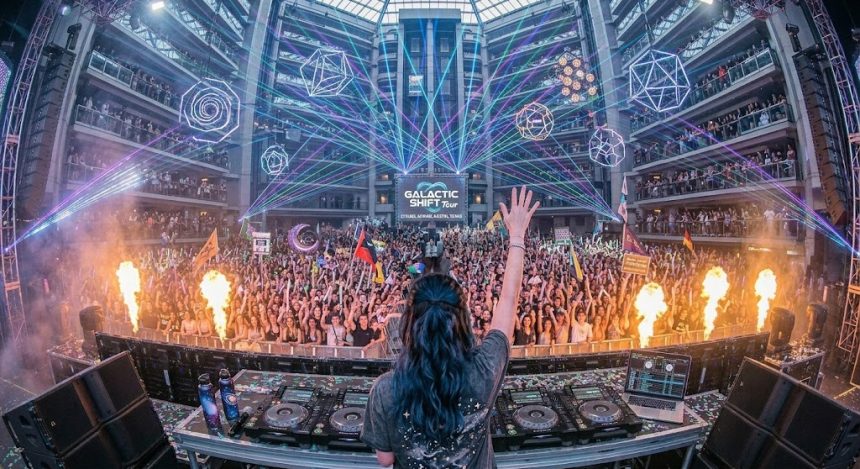
The moment that defined melodic techno’s cultural arrival happened on the floor of the Las Vegas Sphere on December 27, 2024: a robot cellist flanking Anyma (born Matteo Milleri, one half of Tale Of Us), fluorescent crystal visuals wrapping 100,000 square feet of LED display, and a crowd that had sold out every ticket on the same day they went on sale in July — the same Sphere ticket velocity previously achieved only by U2, the Eagles, Phish, and Dead & Company. Anyma had become the first electronic musician to hold a Sphere residency, and the performances critics called a “cybernetic opera” set the standard for what melodic techno’s commercial ceiling looks like in the mid-2020s.
That residency carries into 2026 as the most significant recent demonstration of melodic techno’s mainstream arrival. The Ellie Goulding collaboration “Hypnotized” — previewed virtually during the Sphere shows and nominated for a 2026 EDMA — brought the Afterlife aesthetic to an audience that had never deliberately sought out melodic techno. The Sphere performances gave way to Tomorrowland Mainstage bookings. The Beatport Melodic House & Techno chart, consistently among the platform’s strongest sellers, carried RÜFÜS DU SOL’s “In the Moment (Adriatique Extended Remix)” and Anyma’s catalog releases as chart-holders for months.
What the sound is: Melodic techno sits at the intersection of the rhythmic precision of Detroit and Berlin techno and the harmonic sophistication of progressive house — driving grooves beneath atmospheric pads, intricate arpeggios, and cinematic sound design that creates what producers in the Afterlife orbit describe as “emotional movement.” The genre operates at 122–130 BPM, slower than hard techno, with arrangements built around tension and release cycles that take four minutes to complete rather than ninety seconds. It is music designed for listening as much as dancing — which is partly why it translates to environments as different as Tomorrowland’s mainstage and a Vegas residency, where sitting and watching is as legitimate a response as moving.
The artists driving it: Anyma is the genre’s current mainstream flag-bearer, but the ecosystem around Afterlife Records — the label he runs with Fabio Roscioli as Tale Of Us — is what makes it culturally sustainable. Mind Against, Mathame, Adriatique, Kevin de Vries, Argy, and Massano collectively define what the Afterlife aesthetic sounds like in practice: deep, hypnotic, emotionally expansive, built for immersion rather than impact. ARTBAT bring a harder-edged sensibility from Ukraine — their “Fight Machine” collaboration with R3HAB on UPPERGROUND was the January 2026 melodic techno chart’s most momentum-driven entry. Miss Monique’s “Rollin’” with Glowal on Siona Records has been a sustained chart presence. KASIA, Korolova, and Argy represent a wave of artists working in the Afterlife-adjacent space whose releases regularly anchor Magnetic Magazine’s monthly melodic techno charts.
The Anjunadeep and UPPERGROUND imprints have expanded the genre’s geography: Anjunadeep’s global audience gives melodic techno a pathway into markets where the Afterlife brand hasn’t fully penetrated, while UPPERGROUND’s more aggressive sound design pulls the genre toward harder techno without fully abandoning its emotional range.
Why it’s happening now: Anyma’s Sphere residency is the proximate cause of the genre’s 2026 mainstream profile. The structural cause is a decade of Afterlife building an aesthetic system — not just a label, but a visual language, a live experience design philosophy, and a curatorial standard — that has proven exportable to every venue configuration from Boiler Room warehouse to Las Vegas stadium. The genre’s emotional register fills a gap that neither hard techno (physically demanding, emotionally cold) nor tech house (commercially accessible but often hollow) can fill. Melodic techno offers the full register: the physical experience of techno’s rhythm and bass, the harmonic depth of house, and a cinematic quality that connects to the same emotional appetite that drives film scores and video game soundtracks.
Track to know: Anyma — “Abyss” (from The End of Genesys Deluxe, Afterlife/Interscope). The track that anchored the Sphere residency and defined the January 2026 melodic techno charts. Towering low-end, cinematic restraint, and a structure built for a 100,000-square-foot wraparound screen. The most complete realization of where Anyma’s Afterlife project was pointing.
4. Amapiano — Structural Growth That Doesn’t Reverse
Growth: Top artist less than 6% of growth share — distributed across all tiers; Kabza De Small 200M Spotify streams (South Africa’s most-streamed artist 2025) | BPM: 108–116 | Origin: South Africa | Stages at: Glastonbury, AfroNation, Primavera Sound, Tomorrowland
Viberate Analytics published a cross-genre growth analysis in March 2026 that produced one unambiguous finding: of all the genres examined — Amapiano, Afrobeat, Afropop, K-pop, and Techno — Amapiano showed the most structurally distributed growth. The top artist accounted for less than 6% of observed listener gains. The top ten artists together represented just over one-third. In K-pop, by contrast, the top ten captured more than half. That distribution matters because it means amapiano’s momentum doesn’t depend on a single breakout. Dozens of artists are growing simultaneously. Artists outside the top 200 recorded median percentage growth above 24% in the 30-day window — faster relative growth than the genre’s established stars.
This is what a genre’s infrastructure looks like when it’s functioning at scale. Amapiano in 2026 is not a viral moment waiting to cool down. It is a genre ecosystem — labels, booking agencies, live circuits, production schools, streaming playlists — that operates with its own internal logic and has enough mass to survive any individual artist’s creative pivot.
What the sound is: Amapiano derives from the Zulu word meaning “the pianos” and blends deep house’s harmonic warmth, jazz’s melodic improvisation, and the thunderous log drum bassline that functions as the genre’s most distinctive sonic signature. Tempo sits at 108–116 BPM — slower than most house music, designed for the sustained dance marathon energy of South African township parties rather than peak-time Western club programming. Soulful vocal performances and syncopated percussion sit above the log drum’s rolling, hypnotic pulse. The genre’s evolution into “3-Step” — a three-kick-per-bar pattern developed partly by artists like Dlala Thukzin — signals that even within amapiano’s established vocabulary, the creative engine hasn’t stopped.
The artists driving it: Kabza De Small — the “King of Amapiano” — recorded nearly 200 million Spotify streams in 2025, making him South Africa’s most-streamed artist. His Bab’Motha album spawned multiple club staples, and “Biri Marung” co-produced with DJ Maphorisa, Mr Pilato, and Focalistic reached #1 on South Africa’s official singles chart, peaked at #3 on Shazam global rankings, and broke into Spotify’s Global Viral 50 at #12. These are not genre-specific metrics. These are global pop metrics. DJ Maphorisa, who accumulated 155 million Spotify streams in 2025 and had five entries on the Spotify Global Impact List of South African exports, has now announced his creative pivot back toward Afro house — the genre he came from before amapiano absorbed his career for a decade. That pivot is itself news: a founding architect choosing to move, which tells you something about both where amapiano is in its arc and where Afro house is heading.
Uncle Waffles, Focalistic, Dlala Thukzin, Tyler ICU, and Nkosazana Daughter represent the current generation of amapiano artists whose international bookings continue to expand. Uncle Waffles’ Ibiza sets have become reference points for the genre’s live performance ceiling; Focalistic’s crossover with Davido (“Ke Star”) opened the floodgates for international collaborations; Dlala Thukzin’s 3-Step experiments position him as the artist most likely to define what amapiano sounds like five years from now.
Why it’s happening now: Amapiano has been growing for a decade. What’s different in 2026 is that its structural permanence is now measurable. The Grammy organization has published feature articles on the genre’s history. Amapiano stages are permanent fixtures at Glastonbury, AfroNation, and Primavera Sound. The production community worldwide is actively studying and incorporating log drum patterns and soulful piano runs into music that wouldn’t otherwise be classified as amapiano. The genre has shifted the center of gravity in global dance music southward — African producers are not chasing Western validation; the West is chasing African innovation.
Track to know: Kabza De Small, DJ Maphorisa, Mr Pilato & Focalistic — “Biri Marung” (featuring Dlala Thukzin and others). #1 South Africa, #3 Shazam global, Spotify Global Viral 50. The track that confirmed amapiano’s global arrival with data rather than just cultural narrative.
5. Brazilian Funk (Baile Funk) — The Fifth Wave
Growth: Standalone Beatport genre launched 2025; Beatport Latinx global reach | BPM: 130–150 | Origin: Rio de Janeiro, Brazil
In 2025, Beatport launched Brazilian Funk as its own standalone genre category, pulling it out of the “global” and “world music” buckets it had been relegated to for years. That institutional acknowledgment matters because it reflects reality: Brazilian funk has been influencing global dance music production for longer than most genres that already had their own Beatport category.
The sound — born in the favelas of Rio de Janeiro in the mid-1980s from the collision of Miami Bass, Tamborzão, Latin rhythms, and hip-hop — has spent four decades generating subgenres and international impact from the margins of the music industry’s attention. Its defining rhythmic phrase (“Bum-Cha-Cha, Bum Cha-Cha” or its variants) is addictive in the most literal sense: once you’ve heard it, it becomes difficult to remove from your internal rhythmic library. TikTok and virality culture have carried this pattern to producers in São Paulo, Mexico City, Lagos, and London who are using it as raw material for music that blends it with whatever their local scene produces.
The genre’s expansion has been matched by crossover ambitions from above: DJ Maphorisa’s pivot toward Afro house has explicit references to baile funk’s percussive energy. The Dirtyphonics and More Plastic collaboration “Gumraah” on Monstercat in March 2026 — which appeared in the DnB Beatport top 30 — carries global South influences that connect directly to Brazilian funk’s rhythmic vocabulary. The genre’s formal Beatport category now provides the market infrastructure for a community that was already operating at scale to receive proportional industry attention.
Key artists to watch: Anitta has been the genre’s most visible international ambassador, consistently bringing baile funk rhythms to major label pop contexts. Brazilian house producers like Vintage Culture have been incorporating funk elements into melodic house productions. The genre’s next international crossover moment likely arrives through an unexpected collaboration — the same path amapiano took when Focalistic worked with Davido.
The Five Forces Behind Every Subgenre Explosion
Across these five surges, patterns emerge that explain why this particular moment is producing this particular set of genre expansions simultaneously.
Global South creative authority. Afro house (South Africa), amapiano (South Africa), and baile funk (Brazil) are all receiving institutional recognition — Tomorrowland stages, Beatport categories, Grammy features — that reflects thirty-year bodies of work finally getting their due rather than newcomers arriving at the industry’s invitation. The West isn’t discovering these genres. It’s catching up to them.
The organic vs. processed axis. MIDiA Research identified the pull toward “organic sounds as listeners seek reprieve from technology” as one of the year’s defining creative forces. Afro house’s live percussion and soulful vocals, amapiano’s jazz-influenced piano runs, UKG’s soulful vocal chops — all sit on the organic side of an axis that the harder, more processed sounds of hard techno and neurofunk DnB occupy on the other end. Both ends are growing simultaneously, which suggests the axis itself is the driver rather than any particular aesthetic preference.
The infrastructure lag correcting. Speed garage’s 625% Splice growth means producers are working in the genre faster than its streaming infrastructure has caught up. Beatport’s Brazilian funk category launch means a decade-old production community finally has the market tools it needed. The genre explosions of 2026 are partly explosions that happened five years ago and are only now registering on the instruments the industry uses to measure them.
The 20-year cycle operating on schedule. UKG peaked in the early 2000s; the listeners discovering it now were born around then. Amapiano emerged in the mid-2010s and is now completing its first decade of structural growth. Melodic techno’s roots in the Afterlife aesthetic go back to 2016. None of these are overnight phenomena — they are waves with long histories that 2026 audiences are receiving at a particular point in their arc.
Tomorrowland as the global genre legitimacy machine. The festival’s new Afro house stage at Belgium 2026, the Anyma Mainstage booking, the Tomorrowland Music label releasing tracks by NOVAH and other hard techno artists — what Tomorrowland validates, the global festival circuit tends to adopt. Five of the genre movements in this article have direct 2026 Tomorrowland connections. That’s not coincidence. It’s the world’s most-attended electronic music festival doing what it has always done: reading the global creative conversation and formalizing it in programming.
The subgenres exploding in 2026 are not trends in the disposable sense. They are the sounds of a global dance music ecosystem redistributing creative authority to places and communities that have always deserved it.
- Quick Reference: Rising Subgenres Exploding in 2026
- 1. UK Garage & Speed Garage — The Sound That Wouldn’t Stay Buried
- 2. Afro House — The Biggest Story in Electronic Music
- 3. Melodic Techno & House — From Afterlife to the Sphere
- 4. Amapiano — Structural Growth That Doesn’t Reverse
- 5. Brazilian Funk (Baile Funk) — The Fifth Wave
- The Five Forces Behind Every Subgenre Explosion