
Insights from the 2026 IMS Business Report: The State of the Electronic Music Industry
Introduction: The Pulse of Electronic Music
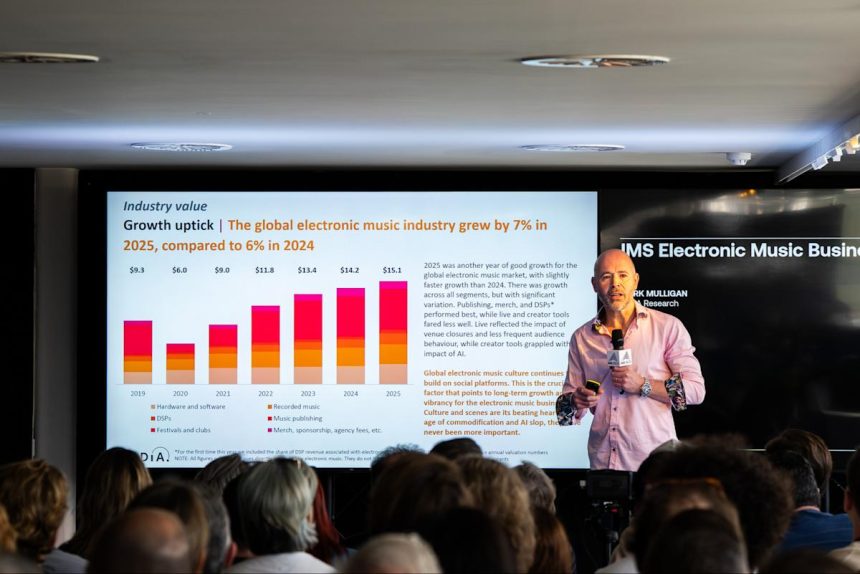
The annual IMS Ibiza conference, known for its critical examination of the electronic music landscape, kicked off this year with the unveiling of the IMS Business Report. This highly anticipated report, encompassing deep insights and statistics around electronic music, was presented by Mark Mulligan of MIDiA Research. Here, we dissect the key findings of the report, offering a lens into the growth, trends, and evolving dynamics of the electronic music industry.
- Introduction: The Pulse of Electronic Music
- Robust Growth of the Music Industry
- Fandom Over Profits: A Unique Electronic Perspective
- Key Markets: Germany Leads the Charge
- Ibiza’s Resilient Nightlife Economy
- Evolution of Genres: Shifting Preferences
- Streaming Services and Emerging Platforms
- Turning Tides in Catalog Sales
- Conclusion: A Thriving Future Ahead
Robust Growth of the Music Industry
A standout revelation from Mulligan’s presentation was the overarching growth of the music business. This year, the industry exhibited growth rates surpassing those of previous years, an encouraging sign. However, what may surprise many is the fact that streaming services experienced a slower growth trajectory compared to the overall industry for the first time.
Mulligan emphasized that this slowdown could translate into opportunities for diversification within the music landscape. The report particularly noted that expanded rights—including merchandise, live performances, and sponsorships—contributed significantly to last year’s growth, marking a resurgence in physical revenue streams.
Fandom Over Profits: A Unique Electronic Perspective
In his analysis, Mulligan highlighted a critical differentiation within the electronic music sector: the concept of fandom. Unlike broader music industry trends that often focus purely on profit maximization, electronic music thrives on genuine community connections and grassroots scenes. This deeper connection to fandom is seen as the industry’s “secret superpower,” allowing it to cultivate authentic cultures that resonate with audiences, especially amidst challenging global conditions.
Key Markets: Germany Leads the Charge
Among the highlights, Germany reaffirmed its status as the top market for electronic music. The report stated that the country boasts an impressive 604 million monthly listeners on Spotify, solidifying its position as a global electronic music powerhouse. Other notable markets, like Australia and the Netherlands, have also shown strong listener engagement, where monthly electronic music listeners exceed five times the respective national populations.
Emerging markets, particularly Indonesia, showcased remarkable growth with a 77% increase in Spotify listeners. In contrast, Mexico faced a downturn, seeing a 34% drop that led to a significant drop in its global ranking for electronic music listeners.
Ibiza’s Resilient Nightlife Economy
Despite a decline in the number of events per venue, Ibiza’s club ticketing revenue soared to €160 million ($187 million) in 2025, eclipsing the previous year’s figures. Mulligan shared how this financial uptick reflects purely on ticket sales, excluding lucrative VIP experiences, suggesting an even greater economic impact on the island.
The report also explored a shift in ticketing strategies; some clubs are lowering general admission prices while increasing prices for VIP access, allowing wealthier patrons to subsidize general ticket holders. This change reflects a pattern where audiences are opting for exclusive experiences rather than routine club nights.
Evolution of Genres: Shifting Preferences
Looking deeper into genre dynamics, house music maintained its dominance, followed by melodic house and techno. Notably, drum and bass witnessed a decline, making room for melodic house and techno to ascend to the forefront. Interestingly, while the top 10 genres displayed specific preferences, it was revealed that 34% of all Beatport sales originated from genres outside the top tier, pointing to a diversifying musical landscape.
Expanding on these genre trends, the report noted that electronic music is witnessing a shift towards harder and faster styles, likely influenced by current global challenges. The resurgence of hard German techno, particularly the subgenre of schranz, along with other rapid tempo genres, signifies how external factors can have a profound impact on music preferences.
Streaming Services and Emerging Platforms
The digital landscape also remains crucial to the industry’s growth. The report highlighted a 10% increase in total digital streaming subscription services (DSPs) over the past year, fueled largely by markets in the Global South, including India and Indonesia. Notably, Spotify continues to dominate, holding a steady 32% market share with 290 million subscribers globally.
While Spotify remained at the forefront, YouTube Music also registered strong growth, showcasing how streaming platforms are diversifying the avenues through which consumers engage with music.
Turning Tides in Catalog Sales
Another significant insight from the report was the noteworthy contribution of electronic music catalogs to overall market activity, amounting to 18% of all publicly announced catalog sales in 2025. This uptick underscores the burgeoning value of electronic catalogs, considered lucrative opportunities for investors seeking to tap into their extensive streaming potentials.
Prominent sales included notable names like Axwell, Laidback Luke, and deadmau5, indicating a healthy interest in electronic music assets, suggesting a maturation of electronic music’s market presence and investment viability.
Conclusion: A Thriving Future Ahead
In essence, the 2026 IMS Business Report paints an optimistic picture for the electronic music industry. It highlights growth fueled by diversity of revenue streams, a rich culture rooted in community, evolving listener behaviors, and a flourishing digital landscape. With its unique intersection of culture and commerce, electronic music is poised for a vibrant future, even in the face of global challenges. The report serves not only as a reflection of current trends but as a roadmap for navigating the dynamic landscape of electronic music in the years to come.