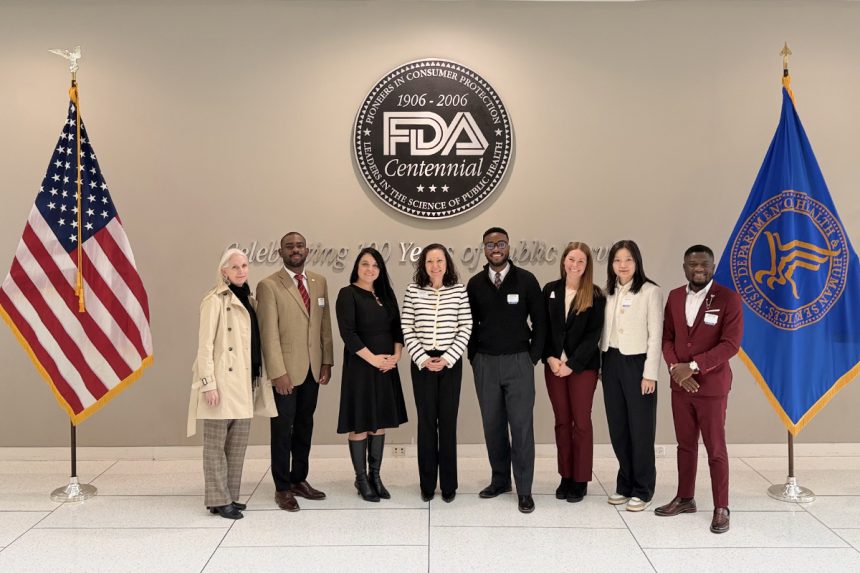
Engaging Insights from Liberty University’s Fellowship Program at the FDA
A group of ambitious students from Liberty University’s School of Health Sciences recently embarked on an enlightening journey to the U.S. Food and Drug Administration (FDA) in Maryland. This visit was not just a field trip; it symbolized the synergy between academic learning and real-world application, showcasing how modern public health regulations are adapting to technological innovations.
A Cutting-Edge Partnership
The Johns Hopkins Fellowship program, a collaborative initiative between Liberty University and the esteemed Johns Hopkins School of Medicine, has garnered attention for its ability to immerse graduate-level public health students in vital research experiences. Now in its third year, this program aims to strengthen essential research skills while promoting interdisciplinary collaboration. By focusing on professional research dissemination, the fellowship prepares students for future roles in public health research and policy.
A Day at the FDA
The group that visited the FDA included both current and former fellows, highlighting the program’s impact over time. Students Bright Agbotui, Grace Sibert, and Raymond Suonyir joined alumni Miebaka Roberts (’25) and Andrea Mackenzie (’23) for a day filled with insights. They were accompanied by faculty and administrators like Dr. Chen Dun, Dr. Heidi DiFrancesca, and Christi Walsh, enhancing the trip’s academic richness and guidance.
Learning from Experts
The visit provided a rare opportunity to hear directly from influential figures at the FDA. Engaging discussions with Commissioner Dr. Marty Makary, Chief AI Officer Jeremy Walsh, and other senior officials showcased how the agency is responding to rapid developments in healthcare technology. According to Dr. DiFrancesca, these experiences equip students with the analytical and leadership competencies necessary for high-level public health operations.
Real-World Impacts of Policies
Suonyir aptly summed up the impact of this experience: “Effective leadership is grounded in the ability to translate rigorous evidence into sound policy.” The visit helped students understand the proactive measures taken by the FDA to protect public health, reinforcing their motivation to influence policy for the betterment of communities.
Innovations in FDA Operations
The fellows gained a deep understanding of various initiatives at the FDA, such as improving public communication and establishing real-time adverse event reporting systems. The insights shared included how artificial intelligence is being integrated into FDA processes to streamline pre-market reviews and enhance post-market surveillance.
The Importance of Transparency
Sibert emphasized the FDA’s commitment to transparency in public health communication. The agency’s efforts to build trust through programs advocating for real-time reporting highlighted the critical intersection of policy and practice in healthcare systems. This emphasis on transparency is increasingly vital as public health challenges grow more complex.
Preparing for Future Challenges
Agbotui remarked on the FDA’s modernization efforts, indicating a fundamental shift towards a data-driven regulatory ecosystem. The students were particularly impressed by how the FDA is refining its oversight through tools designed to enhance public health safety. The keen focus on integrating technology with regulatory processes prepares these future leaders to tackle evolving public health issues.
Fostering Leadership in Public Health
The fellowship experience culminates in a broader objective: to cultivate public health students who are equipped to lead in healthcare policy and regulatory environments. Dr. DiFrancesca noted the critical importance of teaching students to think critically at the intersection of science and technology in relation to regulation, further enhancing their competence in addressing public health challenges.
The Future of Public Health Leadership
By engaging with national leaders at the FDA, Liberty University students are not just learning; they are contributing to the conversation. Through this exposure, the fellowship ensures they are prepared to rise to the occasion, equipped with the skills and ethical grounding needed to influence the future of public health.