
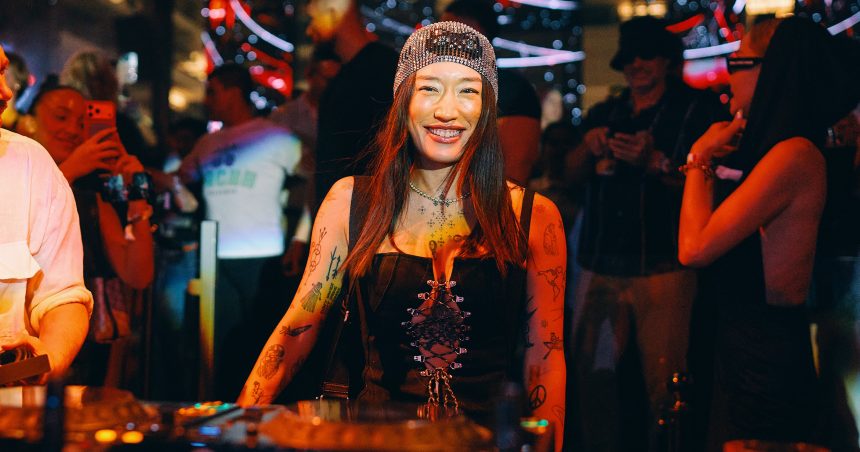
The Paradox of Rising as a Female DJ in Electronic Music
The Overnight Success
When a woman finds herself catapulted to fame in the electronic music scene, it can feel like a fairytale come true. The lights of the festival stage shine brightly, the crowd roars with excitement, and accolades pour in. Many female DJs, like Peggy Gou, experience this fleeting moment of euphoria, marking a significant departure from the underground circuits where they honed their craft. Suddenly, they are not just artists; they become icons, celebrated for their talent and distinctive sound. The allure of success can be intoxicating, filled with the adrenaline rush of recognition and adoration.
The Double-Edged Sword of Fame
However, what comes up must come down—or at least encounter turbulence. The journey toward fame is often interspersed with scrutiny and criticism. By the time the initial excitement fades, many female DJs find themselves facing a new set of challenges. The same public that once revered them can quickly turn critical, nitpicking aspects of their persona and career choices. Whether it’s accusations of commercialism or critiques about background privileges, the landscape of public opinion can feel both intensely personal and harshly impersonal.
For example, consider the scrutiny surrounding Peggy Gou, who, after rising to mainstream prominence, has faced accusations of having “sold out.” Critics argue that her mainstream success has come at the cost of authenticity, questioning if she is still the same underground artist they once cherished. This type of backlash can stifle creativity and lead to an identity crisis for many.
The Weight of Expectations
The spotlight brings with it an avalanche of expectations. Women in electronic music often bear not just their own aspirations but also the collective hopes of a gender that has long been underrepresented in the industry. The pressure to maintain “coolness”—a nebulous yet significant currency in the world of art and music—can be overwhelming. This burden can lead to feelings of impostor syndrome, where the artists doubt their legitimacy and fear being unmasked as “less than” their counterparts.
Charli XCX touched on this phenomenon in her insightful Substack essay, “The Death of Cool.” She articulated a sentiment that resonates with many female artists: the prescriptive notions of what constitutes “cool” often stem from elitist attitudes. Disdain for commercial success is sometimes rooted in a narrow view of artistic integrity, which can alienate both artists and audiences.
Navigating Commercial Success
Critics often fail to recognize the nuance involved in navigating commercial success. For many artists, expanding their reach and capitalizing on popularity doesn’t equate to a loss of artistic value. Instead, it could be a viable path to sustainability in a notoriously fickle industry. The irony is that commercial success often affords artists the freedom to explore creative avenues they may not have been able to pursue previously. Duality defines this experience: mainstream popularity can enhance an artist’s platform while simultaneously subjecting them to judgment.
Moreover, the financial backing gained through commercial success can provide artists the resources to invest in productions that align more closely with their original vision. As Charli XCX pointed out, just because a piece of art becomes commercially viable doesn’t mean it loses its intrinsic merit.
Community and Support in the Industry
Within this challenging landscape, community becomes essential. Female DJs often lean on one another for support, sharing experiences that illustrate the inherent complexities of their roles. Festivals are increasingly promoting female talent, contributing to a sisterhood that fosters collaboration rather than competition. This communal spirit can serve as a buffer against the harsh critiques that can surface in the public eye.
Events focused on female empowerment in the music industry have gained momentum in recent years. Initiatives aimed at providing networking, mentorship, and resources create spaces where women can thrive without the pressure to conform to outdated notions of what it means to be a successful artist. Such environments allow female DJs to express themselves authentically, cultivating not just individual success but also collective growth.
The Evolution of the Artist
As female DJs navigate their careers, an evolving understanding of identity and artistry emerges. The initial phase of success might confine them to rigid expectations, but as they grow and mature, they often embrace a more eclectic and wide-ranging approach to their music and image. This evolution is crucial in shaping their legacy and reshaping what it means to be “cool” in the music industry.
Artists like Peggy Gou remind us that evolution is part of the artist’s journey. The winding road may bring challenges, such as misinterpretations or scandals, but these experiences also contribute to a nuanced narrative that celebrates resilience, creativity, and authenticity. By redefining what success looks like for themselves, female artists have the opportunity to challenge cultural narratives and inspire future generations.
In the ever-changing landscape of electronic music, female DJs must learn to balance the joys and pitfalls of fame, evolving not just as artists but as multifaceted individuals who refuse to be confined to the expectations surrounding their identities. They remind us that while the path may be riddled with contradictions, it ultimately leads to a richer and more diverse musical tapestry.