Harnessing the Earth’s Heat: The Geothermal Revolution in New Haven
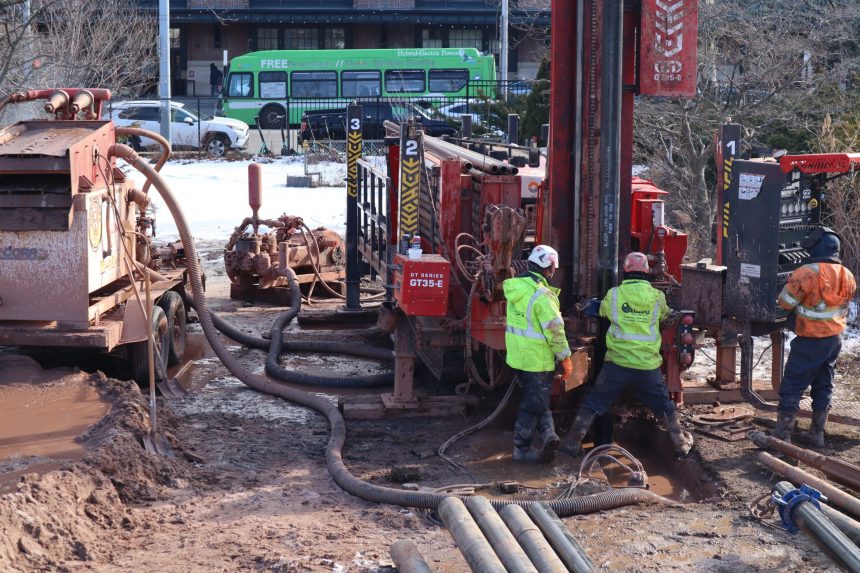
On a uniquely muddy January day, when the weather offered a brief reprieve from the relentless polar vortexes and snowstorms, a small crew set to work hoisting 20-foot steel pipes into a borehole being drilled hundreds of feet deep across from Union Station in New Haven. This scene, albeit an unusual one in the heart of winter, marks a significant step in a groundbreaking energy project that harnesses geothermal technology.
Introduction to Geothermal Technology
Geothermal energy taps into the natural heat accumulated beneath the Earth’s surface — a resource that has been utilized for centuries yet continues to evolve with modern innovations. This sustainable energy source provides heating, cooling, hot water, and electricity, making it a versatile option for many sectors. Though the Trump administration has shown varying levels of support for geothermal technology, the ongoing projects reflect a broader commitment to reducing reliance on fossil fuels.
The Mechanics of Geothermal Energy
As Chris Treiling, a geotechnical engineer with CDM Smith, explains, the current phase involves installing steel casings in the borehole after drilling through layers of soil and bedrock. This casing stabilizes the surroundings and sets the stage for deeper drilling to establish a comprehensive geothermal system. The unsolicited beauty of this technology lies in its capacity to not just provide energy but to gather crucial information about the underground geology, which can further refine and enhance system design.
“The first borehole has revealed higher thermal conductivity, and these insights will guide us in our geothermal project,” Treiling shares, emphasizing the evolving nature of geothermal technology.
Not the Geysers You Imagined
Contrary to popular imagery associated with geothermal energy, such as erupting geysers and steaming hot springs, this project involves drilling deep into the ground rather than capturing spectacular geothermal vents. Julie Fosdick, a geoscientist at the University of Connecticut, further clarifies this common misconception, noting that geothermal heat lies beneath the Earth’s crust everywhere; it just requires the right conditions to be harvested.
The Geology Factor
Geothermal resources vary dramatically across regions, depending on geological formations. Fosdick explains that younger, volcanically active areas, like certain parts of the western United States, have easier access to hotter geothermal resources. In contrast, New England’s more ancient geological landscape lacks the same volcanic activity, meaning that while geothermal potential exists, it is less potent and more challenging to tap into.
In Connecticut, diverse rock types, from granite to gneiss, create a complex interplay for geothermal systems. Fosdick notes, “The properties of those rocks matter significantly in determining what types of geothermal systems are feasible.”
Varieties of Geothermal Systems
In terms of technology, several geothermal systems exist, tailored to meet the needs of different regions. Enhanced Geothermal Systems (EGS) have shown promise, especially for electricity generation, but they are yet to be widely applicable in eastern states. For now, Ground Source Heat Pumps dominate the scene in the eastern U.S., proving effective for heating, cooling, and hot water—alleviating pressure on the electric grid during peak demand.
“Ground source heat pumps are quite effective, especially in this context,” asserts Roland Horne, an earth sciences professor at Stanford University. He underscores the critical distinction between using geothermal heat and simply borrowing it through closed-loop systems.
Navigating Challenges
While geothermal systems emit zero emissions, challenges remain. Installation costs can be high, especially in densely populated urban settings. Moreover, drilling activities, even in areas with existing geothermal activity, can lead to minor seismic events. Fosdick notes, “It’s crucial to avoid drilling near ancient faults to mitigate these risks.”
Connecticut does experience small seismic activities in places like Moodus. The region’s wet ground may actually aid geothermal effectiveness due to its thermal conductivity.
The New Haven Geothermal Project
The New Haven initiative seeks to implement what’s often termed “networked geothermal.” This involves a closed-loop system that accesses heat from underground layers. As Steve Winter, executive director of climate and sustainability for New Haven, points out, such a system can be structured to serve various entities through a centralized pump mechanism.
Two test boreholes in New Haven are providing critical performance data to determine the final design of the geothermal system. The interplay between individual building loads—such as Union Station and the surrounding residential units—has beneficial implications for efficiency and infrastructure costs.
Funding the Vision
The ambitious geothermal project comes with a price tag of around $16.5 million, with significant funding having been secured through federal channels. Negotiations for covering the city’s cost share are underway, aiming to gain momentum as the project leverages federal tax incentives.
Despite past uncertainty over federal geothermal support under the Trump administration, recent agreements signify a cautious optimism for the project’s future.
Existing Geothermal Systems and the Future
New Haven is not entering uncharted waters; numerous network geothermal systems have taken root across the United States, especially on university campuses. Institutions like Yale and UConn have explored geothermal energy’s potential, paving the way for innovative adaptations in other regions.
In particular, projects like the one in Framingham, Massachusetts, highlight the growing trend of integrated systems. These past experiences inform future endeavors, emphasizing the importance of effective communication between technological capabilities and the regulatory landscape.
In an overview by Kat Burnham, a senior principal with Advanced Energy United, she captures the broader sentiment perfectly: “Geothermal systems not only provide local energy sources, but they represent a sustainable solution to energy affordability crises.”
Connected directly to the Earth’s latent thermal energy, these systems promise stability and sustainability, long after the groundbreaking ceases at Union Station.