
The Evolution of House Music: A Journey from the South to the Global Stage
Introduction to Personal Soundscapes
Jacksonville, Fla.—As a true Southerner, my early musical influences were deeply rooted in R&B, funk, soul, gospel, and pop. I grew up surrounded by the smooth vocals of Luther Vandross and the soulful sounds of Jill Scott and Rick James. The airwaves were filled with soothing tunes from The Quiet Storm and the Sweat Hotel, leaving little room for the pulsing beats of house music.
The Musical Awakening
In my teenage years, as I embraced a broader musical spectrum, I encountered house music, although I couldn’t pinpoint exactly where or when it first resonated with me. The late 2000s and early 2010s saw a surge of Electronic Dance Music (EDM)—a genre that undeniably influenced mainstream music. Among the artists who captured my attention was Skrillex, a pioneer of the dubstep scene known for his cutting-edge sound. Though dubstep was a gateway into the wider world of EDM, it was house music that ultimately transformed my musical identity.
The Rise of EDM Heroes
The EDM boom introduced me to titans like Calvin Harris, David Guetta, Nicky Romero, Avicii, and Tiësto. My dreams of experiencing the pulsating atmosphere of Ultra Miami were thrilling, yet by 2015, I found myself distanced from the EDM scene. At the time, I assumed it was due to evolving musical tastes, but my eventual realization was stark: the absence of representation left an undeniable void. The leading faces in the industry didn’t reflect my identity or culture, leading me to unceremoniously turn my back on house music.
The Intersection of Identity and Heritage
As a Black individual in America, the search for authentic spaces and communities has always been paramount. EDM, while inherently personal, lacked the inclusivity and visibility I craved. I naively perceived a disconnect between Black culture and house music—an assumption that has been profoundly corrected over time. House music, in fact, has a rich legacy intertwined with Black artistry, featuring icons like Green Velvet and Carl Cox who bear testament to this critical relationship.
House Music’s Cultural Foundations
To understand house music, we must grasp its origins rooted in Black history. Emerging as a spiritual successor to disco in the late 1970s, house music arose amidst the cultural upheaval surrounding Disco Demolition Night in Chicago—a pivotal moment marking the genre’s fall from mainstream favor. While disco records were annihilated, house took shape in underground clubs, transforming the musical landscape.
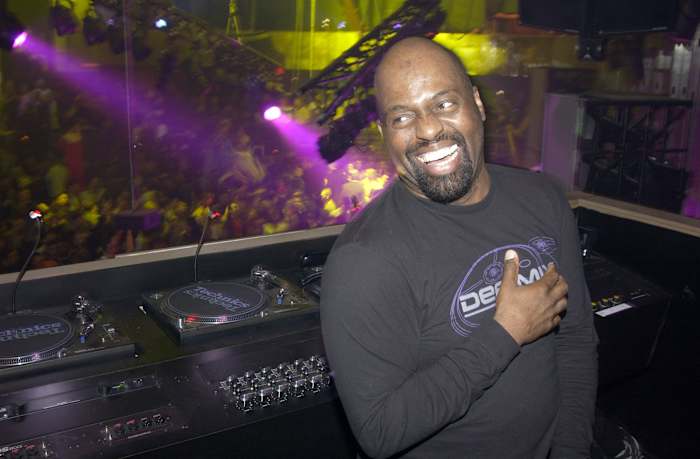
This era gave birth to pioneering figures like Frankie Knuckles, hailed as the “Godfather of House.” Starting his career in NYC, Knuckles found his voice in Chicago’s Warehouse club, where he, alongside contemporaries such as Ron Hardy and Marshall Jefferson, solidified house music’s sound and ethos.
Jacksonville’s Musical Landscape
Although Jacksonville isn’t traditionally known as a hub for house music, its vibrant cultural tapestry is steeped in various genres—jazz, rock, hip-hop, and R&B. At one point, LaVilla was celebrated as the “Harlem of the South,” and the city boasts a rich musical heritage, famously serving as the birthplace of the Black National Anthem.
Despite a sparse history concerning house music, Jacksonville birthed an electronic soundscape, nurtured by talents like 95 South, Quad City DJs, and 69 Boyz. This Miami Bass sound uniquely blends hip-hop and electro, defining a distinctly Southern musical experience.
The Pursuit of Representation
Jacksonville’s electronic music scene is evolving but remains predominantly white, contrasting with a city where nearly 30% of the population identifies as Black. In conversations with local DJs, with eager initiatives such as Duval Folx aimed at creating platforms for Black and queer artists, a desire for inclusive spaces is palpable. These movements are significant as they proactively celebrate diversity within the local house music scene.
The Future of House Music
While the global house and electronic music stages predominantly feature white artists, a resurgence of Black, brown, and queer DJs is paving the way for reclamation of this rich cultural genre. From Jacksonville to Johannesburg, the fusion of house music with Black culture is reemerging, and the anticipation of future developments in the scene—reflecting radical acceptance and inclusivity—grows stronger each day.
In an evolving landscape that remembers its roots, the hope remains that house music will continue to resonate with, represent, and empower the communities that birthed it. The beats and rhythms evolve, yet the essence—its soul—remains intertwined with the diverse fabric of the cultures from which it sprang, underscoring the transformative power of music that knows no boundaries.