
Advancing Nuclear Waste Management: The Role of Particle Accelerators
Particle accelerator technologies are at the forefront of modern nuclear science, propelling us toward potentially revolutionary advancements in nuclear waste management. The Thomas Jefferson National Accelerator Facility, a key player in this field, is currently engaged in pioneering research aimed at enhancing nuclear waste recycling processes through innovative accelerator technology.
Harnessing Government Support
Recent initiatives have been bolstered by substantial funding from the Department of Energy’s Advanced Research Projects Agency–Energy (ARPA-E). The facility has secured two grants, amounting to a total of $8.17 million, under the Nuclear Energy Waste Transmutation Optimized Now (NEWTON) program. This program is designed to foster the development and implementation of novel technologies that improve particle generation systems, ultimately focusing on the reduction of nuclear waste’s half-life.
The Challenge of Nuclear Waste
Spent nuclear fuel poses a significant environmental challenge, primarily due to its highly radioactive isotopes, which can have half-lives extending into tens of thousands of years. Traditional storage methods are lengthy and costly, calling into question the long-term safety and sustainability of current practices. Researchers are now exploring methods to shorten these timelines drastically through the transmutation of nuclear fuels.
Innovations in Accelerator-Driven Systems
The current projects funded by ARPA-E are specifically tailored to enhance various components of an accelerator-driven system that employs neutron spallation. This advanced technique involves bombarding nuclear waste with neutrons to transform long-lived radioactive isotopes into more stable forms with significantly reduced half-lives. As Rongli Geng, the principal investigator on both grants, explains, “These neutrons will interact with these unwanted isotopes and convert them into more manageable isotopes that you can either try out for some beneficial use or bury underground.”
Efficient and Reliable Cavities
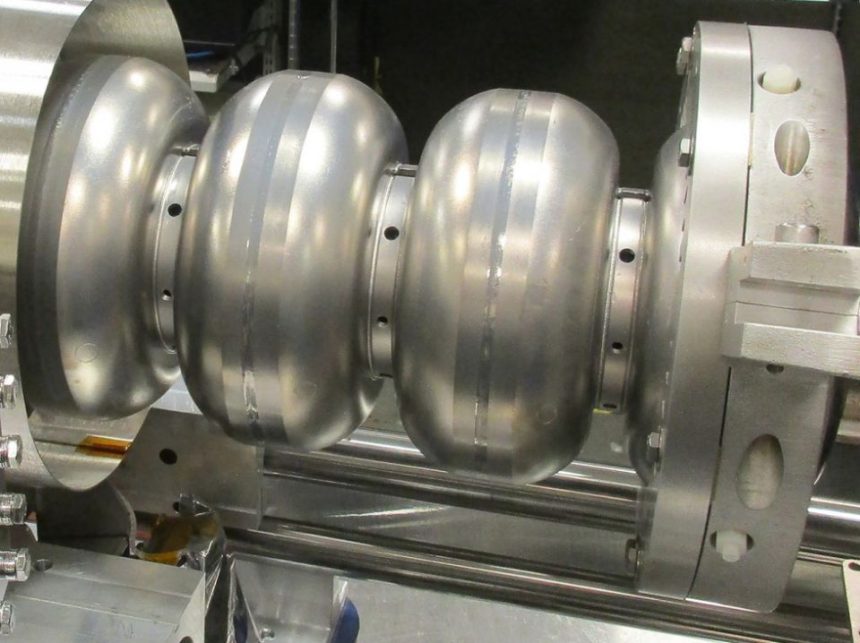
One of the pivotal projects, titled “Superconducting Nb₃Sn Cavities for Efficient and Reliable 10 MW Proton LINACs,” focuses on redesigning the superconducting radio frequency (SRF) cavities integral to the accelerator system. The innovative approach involves coating these cavities with tin, allowing them to operate effectively at higher temperatures. This development potentially eliminates the need for expensive cryogenic refrigeration systems, paving the way for more cost-effective and efficient operations.
The collaboration with RadiaBeam Technology and Oak Ridge National Laboratory further augments this research, aiming to apply these findings specifically to neutron spallation processes. Moreover, researchers are also delving into a novel class of cavities known as spoke cavities, which may provide enhanced performance and adaptability for various applications in nuclear waste transmutation.
Ensuring Steady Power Supply
While re-engineering the cavities is critical, having a robust power source is equally essential for the successful operation of these particle accelerators. The second ARPA-E funded project, “High-Efficiency Continuous-Wave RF Sources for High-Power Particle Accelerators,” addresses this need by examining the radio frequency power sources utilized in these SRF cavities.
This project aims to develop advanced magnetrons, devices that are common in applications ranging from microwave ovens to radar systems. However, they have seen limited use in accelerator technologies due to challenges such as inconsistent start-up conditions and operational stability issues. Collaborating with Stellant Systems, General Atomics Energy Group, and ORNL, the team is focusing on creating a high-powered magnetron designed to mitigate these common problems.
Conclusion: A Pathway to Sustainable Waste Management
Through the integration of advanced accelerator technologies and meticulous research, the work being conducted at the Thomas Jefferson National Accelerator Facility represents a transformative approach toward nuclear waste management. By developing systems that can effectively transmute highly radioactive materials into manageable isotopes, the potential to significantly decrease storage timelines is within reach—offering an innovative pathway toward more sustainable and safe nuclear energy practices.