Daft Punk: Pioneers of Electronic Music
Origins and Formation
Daft Punk, the influential French musical duo comprised of Thomas Bangalter and Guy-Manuel de Homem-Christo, emerged from the vibrant music scene of Paris during the 1990s. Their journey began in secondary school, where a shared passion for music led to the formation of their first band, Darlin’. However, a critical review describing their sound as “daft punky thrash” sparked a metamorphosis—thus, Daft Punk was born.
Inspired by electronic dance music genres such as house and techno, Bangalter and Homem-Christo transitioned from rock to electronic music. This shift came after immersing themselves in the nightlife of Parisian clubs and underground raves, allowing them to develop a unique sonic identity that would soon captivate the world.
Breakthrough with “Da Funk”
In 1995, Daft Punk released “Da Funk,” a groove-driven instrumental track that marked their first global success. The song cleverly blended elements of funk with an acid house aesthetic, introducing their fresh sound to a broader audience. It was a pivotal moment that laid the groundwork for their debut album, Homework, which followed in 1997. The album earned critical acclaim within the dance music scene, with tracks like “Around the World” helping to further solidify Daft Punk as innovative pioneers in electronic music.
Evolution of Sound: Discovery
Daft Punk’s next major evolution came with the 2001 album Discovery. This work showcased a departure from the purely electronic sound of their previous album, embracing a broader palette that drew on disco, rhythm and blues, and glam rock influences from the 70s and 80s. Tracks like “Digital Love” and the euphoric anthem “One More Time” became staples, showcasing a sophisticated, song-oriented approach.
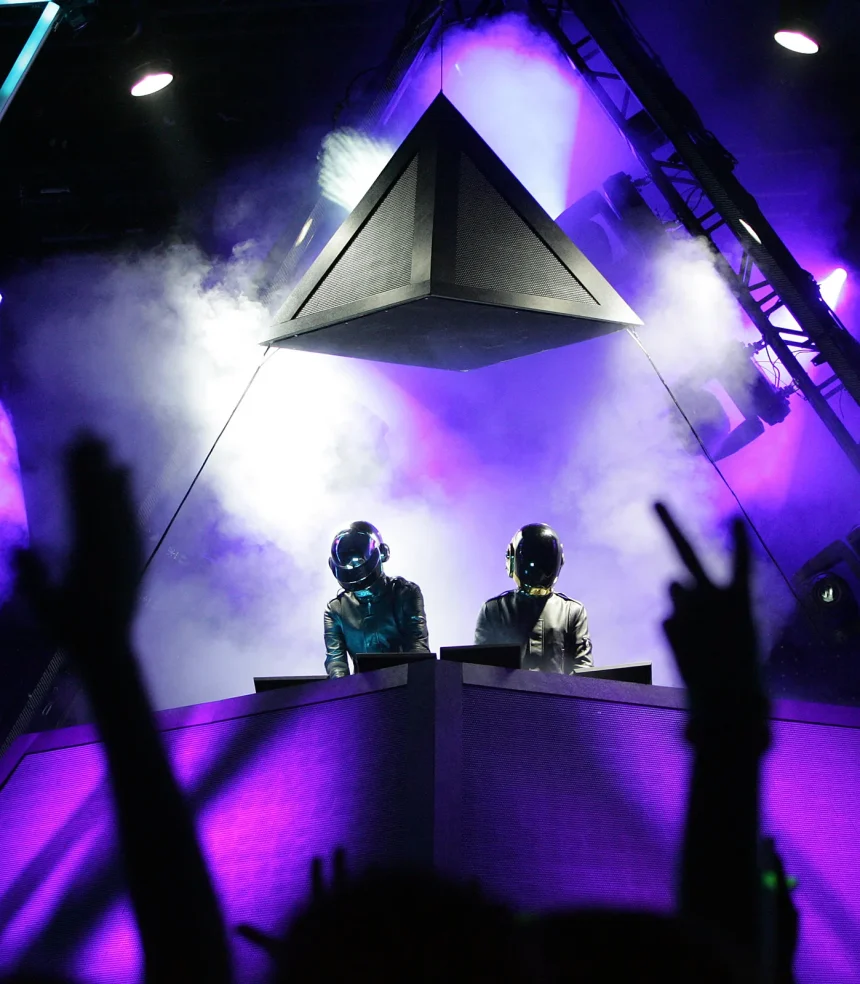
Simultaneously, the duo began to cultivate their iconic robotic personas, wearing sleek costumes and metallic helmets that obscured their identities. This theatrical presentation not only became central to their brand but also elevated their performances into a visual spectacle, merging music with a distinctly modern aesthetic.
The Human After All Era
In 2005, Daft Punk released Human After All, which presented a more minimalistic sound, receiving a lukewarm reception compared to its predecessors. However, their 2006 tour marked a spectacular return to the stage after nearly a decade. Featuring an extraordinary light show with a giant illuminated pyramid as the centerpiece, the tour captivated audiences worldwide. This period saw a resurrection of their popularity, particularly with the success of Kanye West’s “Stronger,” which sampled their track “Harder, Better, Faster, Stronger.”
Grammy Recognition and Random Access Memories
After an interlude that included composing the score for the science-fiction film TRON: Legacy in 2010, Daft Punk returned with Random Access Memories in 2013. This album was a significant departure from their earlier sound, emphasizing live instrumentation and collaboration with a diverse array of musicians. The result was a rich, textured sound reminiscent of classic records like Fleetwood Mac’s Rumours and Michael Jackson’s Thriller.
“Get Lucky,” featuring Pharrell Williams and Nile Rodgers, became a sensation, driving the album’s commercial success. In the United States, where Daft Punk had previously struggled to achieve mainstream traction, Random Access Memories was hailed as a breakthrough. The duo’s Grammy wins in 2014, including Album of the Year, cemented their status as icons in the industry.
Cultural Impact and Legacy
Throughout their career, Daft Punk has consistently influenced and inspired a new generation of electronic musicians. Their collaborations with artists such as Pharrell Williams and Jay-Z showcased their versatility and ability to transcend genres. The duo’s distinctive sound and aesthetic have become foundational elements of modern electronic music.
On February 22, 2021, Daft Punk announced their split, leaving a lasting legacy. Their documentary, Daft Punk Unchained, released in 2015, provides fans with a deeper understanding of their artistic journey and the impact they’ve made on the world of music.
Daft Punk’s unique fusion of innovative electronic sounds and captivating visuals turned them into more than just a musical duo—they became cultural icons whose influence is still felt across the music industry today.