Tensions Rise: U.S. Government Clashes with Anthropic Over AI Technology
On a pivotal Friday, the Trump administration made headlines by ordering all U.S. agencies to terminate their use of Anthropic’s artificial intelligence technology. This escalated to imposing significant penalties on the company, signaling a dramatic public confrontation between the government and a key player in the AI sector.
- Tensions Rise: U.S. Government Clashes with Anthropic Over AI Technology
- Defense Secretary’s Designation
- CEO’s Stand Against Pentagon Demands
- Trump’s Public Critique
- The Core of the Dispute
- Risks for Anthropic
- Consequences of Non-Compliance
- Congressional Concerns
- Outcry from Silicon Valley
- Military Shifts and Future Implications
- Diverging Perspectives Among AI Leaders
- Expert Opinions
- Current State of the Conflict
Defense Secretary’s Designation
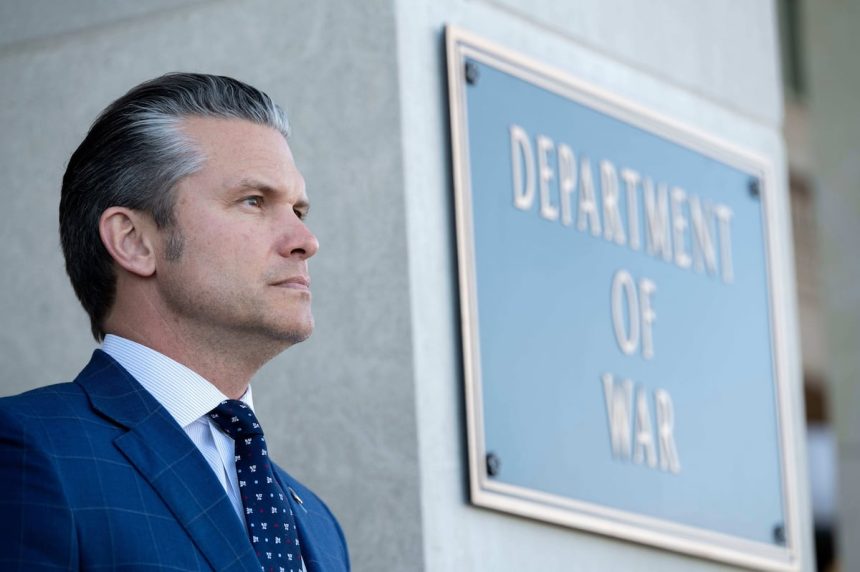
Defense Secretary Pete Hegseth labeled Anthropic as a “supply chain risk,” a designation typically reserved for foreign adversaries. This decision could severely hinder U.S. military contractors from collaborating with Anthropic, potentially impacting various defense operations reliant on advanced AI technology.
CEO’s Stand Against Pentagon Demands
Shortly before the government’s ultimatum, Anthropic’s CEO, Dario Amodei, expressed a strong stance regarding military demands for unrestricted usage of its AI. He articulated that the company “cannot in good conscience accede” to the Pentagon’s requests, stressing the need for ethical considerations in technology deployment related to national security.
Trump’s Public Critique
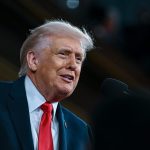
President Donald Trump took to social media to criticize Anthropic, labeling the company’s executives as “Leftwing nut jobs.” He instructed agencies to immediately cease using Anthropic’s AI applications. However, he did grant the Pentagon a six-month window to phase out any AI technologies already integrated into military systems, suggesting some recognition of the existing reliance on Anthropic’s innovations.
The Core of the Dispute
At the heart of the conflict lay a fundamental disagreement over AI’s role in national defense. Anthropic sought specific assurances from the Pentagon to ensure that its AI, notably the chatbot Claude, wouldn’t be implemented for mass surveillance of Americans or applied in fully autonomous weapon systems. Tensions escalated when private negotiations turned into a public debate, with Anthropic claiming that newly proposed contractual language would undermine previously agreed-upon safeguards.
Risks for Anthropic
While Anthropic could withstand the loss of the military contract, the consequences of being classified as a “supply chain risk” posed broader implications. This classification could jeopardize critical partnerships with various businesses that rely on collaboration with Anthropic, undermining its rapid ascent from a relatively obscure research lab to a leading tech enterprise valued at millions.
Consequences of Non-Compliance
Trump cautioned that Anthropic could encounter “major civil and criminal consequences” if they did not comply during the designated phase-out timeframe. This warning was underscored by several key officials within the administration who took to social media, intensifying the public criticism of Anthropic’s stance.
Congressional Concerns
The punitive measures taken against Anthropic also raised eyebrows in Congress. Senator Mark Warner, the leading Democrat on the Senate Intelligence Committee, expressed concerns that the administration’s approach might be driven more by political motives than by a careful assessment of national security needs.
Outcry from Silicon Valley
The dispute reverberated throughout Silicon Valley, where many AI developers reacted with disbelief. Workers from Anthropic’s rival companies, including OpenAI and Google, articulated support for Amodei’s ethical stance. This support came in the form of open letters and public forums, indicating a shared concern among tech professionals regarding ethical AI advancements.
Military Shifts and Future Implications
As a result of the escalating conflict, the Pentagon revealed plans to collaborate with Elon Musk’s chatbot Grok, which is set to be granted access to sensitive military networks. This shift suggests an ongoing intent to explore AI solutions from various tech firms while also serving as a warning to others like Google and OpenAI, which also hold contracts with military entities.
Diverging Perspectives Among AI Leaders
Elon Musk’s comments aligned with the Trump administration’s criticism against Anthropic, claiming the company harbored anti-Western sentiments. Conversely, OpenAI’s CEO, Sam Altman, sided with Anthropic, labeling the Pentagon’s actions as “threatening” and emphasizing the shared ethical standards prevalent within the AI industry.
Expert Opinions
Retired Air Force General Jack Shanahan shared his thoughts, warning that targeting Anthropic would ultimately have negative repercussions for everyone involved. He pointed out that Claude is already widely integrated within government systems, including classified applications. Shanahan argued that Anthropic’s stipulations for ethical AI use were reasonable given the current state of AI technology.
Current State of the Conflict
As the conflict unfolds, it stands as a critical case study on the interplay of technology, ethics, and national security, illustrating the challenges faced by innovative companies in navigating governmental demands while striving to maintain integrity in their technological offerings.