Doc Martin: A House Music Legend—Innovating After Four Decades
California’s Doc Martin stands as a testament to the enduring passion and evolution of house music. With nearly 40 years of dedication both in the studio and behind the decks, he has carved out an indelible mark on the music landscape. Running his own label, Sublevel, for 25 years, Doc Martin continues to release original tracks, remixes, and collaborations with renowned artists like Harry Romero and D’Julz—further enriching his storied career.
- The Global Influence on Creativity
- Lessons from the Past for New Producers
- The Art of Remixing: Keeping Integrity Intact
- An Inside Look at His Studio
- The Importance of Vintage Gear
- Navigating Modern Technology: The DJM V10 Mixer
- Investment and Gear Karma
- A Streamlined Future
- The Authenticity of Music Creation
- Advice for Aspiring Producers
- Debunking Myths in Music Production
- Influences and Masterclass Moments
The Global Influence on Creativity
One of the striking facets of Doc Martin’s artistry is how his global experiences have shaped his creative process. When asked about the impact of playing alongside musical icons like Larry Heard, Frankie Knuckles, and even Daft Punk, he reflects on the importance of stylistic independence.
“I try not to get caught up in what’s hot at the moment. I’m pretty genre illiterate,” he admits. Instead, he draws inspiration from various musical styles, integrating elements that excite him into his own work. The buzz of different cities—be it the distinct sounds of Chicago or the vibrant energy of Tokyo—serve as a rich wellspring for his creativity.
Lessons from the Past for New Producers
Doc Martin also emphasizes the lessons that newer producers can learn from the earlier eras of electronic music. He acknowledges the wave of fresh ideas sweeping through the current generation but underscores the importance of authenticity. “The most important thing is to have your music be a reflection of you,” he advises. He cautions against relying solely on AI or trendy sounds, encouraging artists to experiment and find their unique signature.
The Art of Remixing: Keeping Integrity Intact
Doc Martin’s approach to remixing is just as thoughtful. With his latest remix of Jeremiah’s Move, he sought to honor the original while infusing it with a unique West Coast vibe. “I wanted to keep the integrity of the original while adding my signature flair,” he explains. His techniques include layering congas, enhancing the bass, and incorporating dub-style keyboard elements, showcasing his mastery of both respect and innovation.
An Inside Look at His Studio
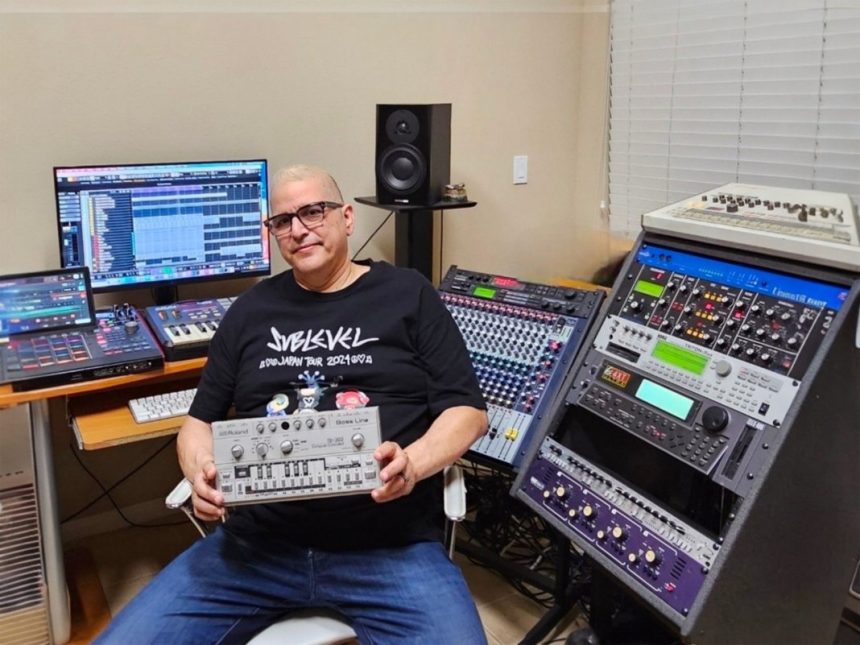
Nestled in a storefront by the beach in Oceanside, California, Doc Martin’s studio is an eclectic mix of analog and digital gear. It began as a space for pre-production but has grown into a sanctuary for sound experimentation. Doc notes that this setting allows for the exploration of effects and sounds that contribute to his ongoing growth as a producer.
“It’s a mixture of analog and digital equipment, and after all this time, I’m still learning how to get different things out of my gear,” he reflects, embodying the perpetual learner ethos.
The Importance of Vintage Gear
Doc Martin’s studio is not just a workspace but a museum of vintage gear. He frequently reaches for iconic Roland drum machines, which he asserts possess distinct personalities that enrich his music. “Whereas modern gear often all sounds the same, my vintage machines all have their own character,” he remarks. His admiration for the warmth of these machines is palpable, reinforcing the ongoing relevance of analog technology in a digital age.
Navigating Modern Technology: The DJM V10 Mixer
Transitioning to more modern aspects of his setup, Doc Martin praises the DJM V10 mixer, which he helped product test. This mixer’s compressive capabilities allow for smoother blending of tracks, particularly useful when combining new releases with older classics. He fondly recalls how initially intimidating the mixer seemed, with its numerous knobs and features, but it has since become a standard in the industry.
Investment and Gear Karma
Over the years, Doc Martin has experienced good “gear karma,” having acquired equipment through fortunate finds, including a vintage TR-909 for a mere $300. Among his more recent investments is the Akai MPC X, which he finds both exciting and still in need of exploration. The duality of his gear reflects his journey, mixing nostalgia with contemporary advancements.
A Streamlined Future
Looking forward, Doc Martin envisions a streamlined approach to his sound and studio. He acknowledges that he possesses a wealth of analog equipment that could be passed on to aspiring artists. His ongoing quest for knowledge remains, as he aspires to continue collaborating with those deeply entrenched in their craft.
The Authenticity of Music Creation
In a world dominated by streaming platforms, Doc Martin expresses little concern about conforming his sound to fleeting trends. “I look for stuff that I can pull out five years from now and will still sound good,” he states, emphasizing the importance of building a lasting relationship with music rather than focusing merely on volume or turnover in releases.
Advice for Aspiring Producers
With decades of experience, Doc Martin offers invaluable advice to emerging producers eager to navigate the complexities of the music industry. He underscores the significance of self-releasing music to gain insights into the industry’s framework. “Don’t get discouraged if you send stuff out and don’t hear back from the labels,” he encourages, fostering resilience and persistence.
Debunking Myths in Music Production
Turning to common misconceptions, Doc Martin challenges the notion that possessing an extensive array of gear is the key to success. He recalls moments from his early career, highlighting instances where limited equipment yielded impressive results. “I’ve been to studios where there are tons of keyboards just sitting there collecting dust. There’s no right or wrong; it’s just what works for you.”
Influences and Masterclass Moments
Reflecting on his formative years, Doc Martin credits figures like Blakkat for imparting knowledge on techniques and live mixing. He also acknowledges contemporary influences that have shaped his sound, including industry peers Joeski, Harry Romero, and Homero Espinosa. Each collaboration enhances his understanding of the craft, further enriching his musical journey.
In the world of house music, few artists can boast such an extensive and vibrant history as Doc Martin. His unwavering passion, commitment to integrity, and dedication to innovation continue to inspire both listeners and fellow producers alike in the ever-evolving electronic music landscape.