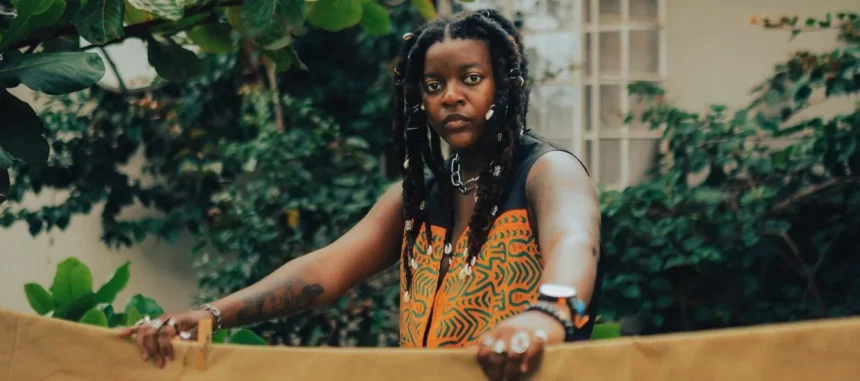
Chmba: How The Pan-African Electronic Music Innovator Is Shaping the Global Underground
Malawian DJ and producer Chmba is reshaping the landscape of Pan-African electronic music, taking her highly textured, cross-continental sound from the heart of her homeland to global stages like the Avicii Arena, the World Economic Forum, and Amsterdam Dance Event. Operating seamlessly between the grit of the underground club circuit and the formal structures of international institutions, she carries a specific sonic identity rooted in organic percussion, robust digital frameworks, and community action.
Her technical approach to music began early. At just seven years old, she was already dismantling family cassettes, an exercise that laid the groundwork for a production style built on fluidity rather than rigid rules. This formative experience inspired Chmba’s unique way of engaging with sound.
“I don’t think I ever learned to treat sound as fixed,” she explains. “Even as a child, pulling apart cassettes and rebuilding them, I was already questioning the idea of a ‘final’ version of anything. I see sound as something that carries memory but is always open to reinterpretation. My production lives in that space.”
This instinct to reshape existing textures has driven a discography marked by distinct emotional shifts. Her EP Mtima Rising was conceived during lockdown in her mother’s home amidst heavy grief, resulting in a project defined by isolation and minimal equipment. Chmba’s ability to channel personal experiences into her art showcases her diverse emotional range.
In contrast, the follow-up EP, Okongola Caucus, marked a physical and sonic opening, leaning into layers, communal energy, and desire. The evolution from introspection to collective celebration speaks to her versatility and growth as an artist.
When engineering these tracks, her workflow remains deeply connected to physicality. Fusing traditional pan-African drum rhythms with modern house architecture requires careful manipulation of frequencies to ensure organic elements are not overpowered.
“I get up and sometimes ask, how would I move to this? I see sound as movement,” she says. “I spend time in the early stages selecting percussion that already has character and movement, often rooted in live or traditional textures. From there, it’s about carving space through EQ, making sure each element has its own frequency pocket. The goal is for the percussion to feel alive and breathing, while the bass anchors everything without overpowering it.”
Her dual identity as an artist and the founder of the Tiwale community centre, an NGO in Malawi supporting women and gender minorities, heavily dictates her schedule. Despite the contrasting demands of international touring and operational leadership, she views the two roles as symbiotic.
“It’s a constant dance, to be honest. The music informs the work, and the work informs the music. They contribute to each other,” she notes. “Working with young women and gender minorities who are just starting out, there’s a kind of fearlessness and curiosity that feeds their process, something incredibly rich in returning to raw production. I try to bring that back into my own practice.”
With a 2026 calendar packed with new music exploring the intersection of Afro-percussion, electronic frameworks, and future rock elements, Chmba is operating entirely on her own terms. Through constant geographical transition and structural experimentation, she remains anchored by the fundamental rhythm of her roots.
To further dive into her creative process and community work, consider the following aspects:
How Early Audio Manipulation Shaped Chmba’s Production Style
Chmba’s early experiences dismantling family cassettes taught her to treat sound as a flexible medium rather than something fixed. This instinct drives her current focus on sampling, remixing, and reshaping existing textures to continue a story that already exists.
The Technical Setup for the Project Mtima Rising
Recorded during a period of lockdown and grief, the production setup was highly minimal. Chmba utilised everyday items like egg boxes and closets to manage sound quality and protect the intimacy of the recordings, reflecting her adaptability and creativity.
Balancing NGO Work with International Touring
She manages the dual roles by building strong systems and trusting the Tiwale community. Her time is structured in blocks: intentional check-ins and decision-making windows while on tour, and hands-on engagement when at home in Malawi. This strategic approach allows her to nurture both her musical and humanitarian aspirations.
The Technical Workflow for Blending Percussion and Bass
Chmba selects percussion with inherent character and uses EQ to carve out frequency pockets for every element. She employs sidechaining and subtle saturation on digital basslines to ensure the transient relationship with the kick feels natural. This technical mastery reflects her deep understanding of music as a living entity, always evolving and adapting.
Read more about artists like Chmba and their impacts on the electronic music scene in our interviews here.