
Retracing Belgian New Beat’s Accidental Explosion
“DJs purposely started to play these records at the wrong speed. And even producers started to record this way, because it was such an interesting sound,” muses producer CJ Bolland in a notable scene from Jozef Devillé’s 2012 film The Sound of Belgium. The sound he refers to is new beat, a vibrant blend of hypnotic, slowed-down dance music that took Belgium by storm in the mid-to-late 1980s.
A Unique Musical Journey
The Sound of Belgium traces over fifty years of musical and technological evolution, delineating two significant eras: the popcorn scene of the ’70s and the sultry, electronic grooves of the mid- to late ’80s. In the earlier era, DJs would spin classic soul, ska, and R&B records at 33 RPM, significantly altering their appeal. By the mid-1980s, however, the sound morphed into what became known as new beat, characterized by its slower tempos and wickedly catchy beats.
The hard-hitting electronic music of the early ’90s epitomized by Bolland and Belgium’s then-emerging artists like Outlander and Frank De Wulf marked a peak, but the roots of Belgian electronic dance music stretch much deeper.
Dark Tones Amidst Economic Struggles
Entering the ’80s, Belgium faced bleak economic recessions and escalating Cold War anxieties, which influenced local electronic musicians to cultivate darker sounds. At the forefront were innovators like Front 242 and Neon Judgment, echoing the sounds of post-punk groups like DAF and Nitzer Ebb across Europe.
Simultaneously, Belgium became a bastion for cold wave and synth-pop genres, with countless bands experimenting with accessible electronic equipment, often self-releasing music on limited-edition 7-inches and cassette tapes. Prominent labels such as Sandwich and offshoots like Crammed Discs played significant roles in this burgeoning scene, eventually leading to the establishment of Antler Records.
The Birth of New Beat
Antler Records emerged from the remnants of a short-lived new wave label called Kleo, founded in 1982 by notable pioneers like Roland Beelen (a.k.a. Bellucci) and Maurice Engelen (a.k.a. Praga Khan). This new venture was initially a hub for cold wave bands like Siglo XX and EBM acts such as The Klinik.
As dance clubs like The Happy House, the Atelier, and On The Beach proliferated, new beat began to flourish. Richard Noise, a DJ from The Grid, noted how this music scene resonated in the larger urban centers like Antwerp, particularly at the newly opened venue, Ancienne Belgique.
Legends of New Beat
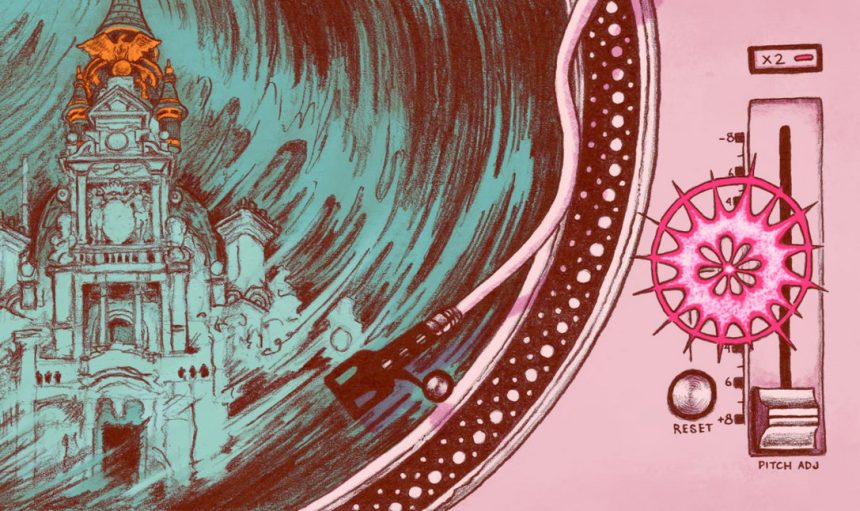
It was in this very venue that the seminal new beat sound supposedly took shape. Dikke Ronny, a local DJ known for his eclectic sets, recounted the tale of how a simple error—switching the pitch control to +8—created a transcendent musical moment. “It was an accident, but immediately it filled the floor, and it sounded fantastic, beautiful,” Ronny remarked in a 2021 interview for Attack magazine.
While many attribute the inception of new beat to this fateful performance, alternative accounts hint at other DJs who played key roles in this sound evolution, such as Marc Grouls from Ancienne Belgique and Jean-Claude Maury, an Ibiza pioneer. The ability to transform tracks like “Flesh” by A Split Second into dance floor megahits became a catalyst of experimentation, further propelling the genre’s rise.
A Multi-Faceted Soundscape
With this new wave of creativity came a flurry of compelling releases. One of the first records born from this experimentation was “Not Afraid to Dance” by Fruit of Life, marking the beginning of over 100 new beat recordings under various labels and aliases like Erotic Dissidents and Taste Of Sugar.
Other prolific contributors included the collaboration of Gery Francois, Tony Baron, and Lee Kane, who released tracks under creative names like Acid Aliens and Ugly Mood, culminating in the landmark 1989 album King Of The Beat, which became essential listening for enthusiasts of the genre.
Boccaccio: The Heart of New Beat
The legendary nightclub Boccaccio, a pilgrimage site for new beat aficionados, provided a fertile ground for this musical movement. Nestled in the small town of Destelbergen, Boccaccio became iconic, featuring a unique atmosphere characterized by atmospheric lighting and a relentlessly immersive sound.
DJs like Olivier Pieters and the late Eric “Powa B” Beysens pushed the limits with their atmospheric, darkly nuanced sets, captivating the crowd until the early hours. Dancers, decked out in fashion from The Antwerp Six or new designs promoted by Engelen, fell into a trance, enthralled by the hypnotic beats that defined the new beat era.
The Mainstream Breakthrough
Despite minimal mainstream support, new beat eventually broke into the popular music scene with the commercial hit “Sound of C” by Confetti’s. This single sold over 50,000 copies and exemplified the genre’s transition from underground to mainstream, even as it risked dilution into the more formulaic “nougat beat.”
As the original pioneers shifted towards faster beats and hardcore techno, the influence of new beat rippled across the UK acid house scene, while contemporary DJs like Josh Cheon of Dark Entries continued to unearth its pearls for new generations of music lovers.
Essential Listening
Exploring new beat requires delving into specific albums and tracks that capture its essence. Here are a few essential releases to get started:
Various Artists: Belgian New Beat – The Compilation
A 55-track collection featuring new beat classics alongside rare gems, showcasing the breadth of the genre from tracks like Snowy Red’s “Euroshima (Wardance)” to A Split Second’s “Flesh.”
Various Artists: Belgian New Beat – Volume 2
This follow-up compilation continues the journey with highlights such as Secrets of China’s “Chinese Ways,” revealing its influence across genres like techno and beyond.
Lords of Acid: Lust
A quintessential album that epitomizes the sex appeal of new beat, featuring tracks that capture both the essence of the genre’s hedonistic undercurrents.
Jade 4U: “Rainbows (Midnight Mix)”
This track stands as a poignant representation of new beat’s melodic side, demonstrating the genre’s range from gritty to ethereal.
A Split-Second: …From The Inside
Ground zero for new beat, A Split-Second’s work showcases the genre’s roots and its evolution throughout the decade.
The landscape of Belgian new beat resonates through the decades, continuing to inspire contemporary artists and DJs alike. Through its evolution and diverse influences, it showcases a vibrant chapter in electronic music history.



