
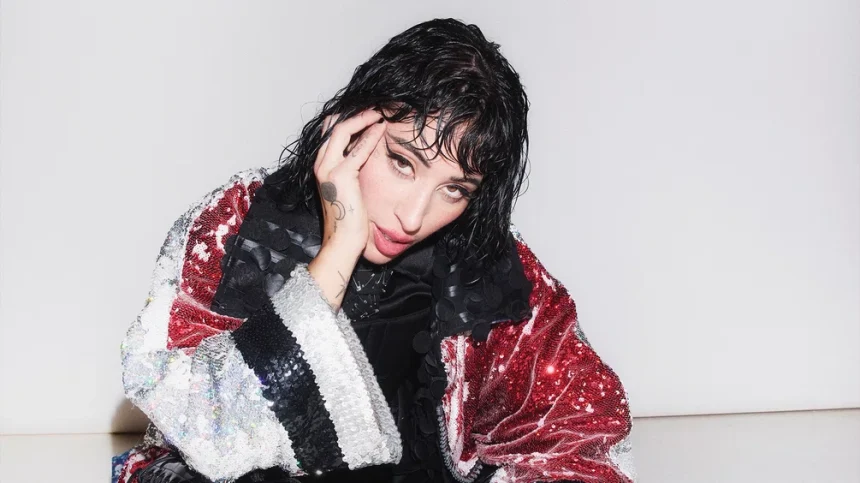
While Indira has cultivated her own sense of harmony, constantly merging obscure elements of psytrance and techno in a cohesive fashion, she has also faced demons of her own — mainly those who didn’t believe in her artistry. But by following her crystal-clear vision, she is now at the top of her game, professionally and personally. Her Instagram documents it all: heaving crowds in spaces across Europe, the Americas, and Asia, selfies with said crowds, a brand ambassador deal with Land Rover Defender, skateboarding down the sunny streets of Gran Canaria and surfing the island’s azure-blue waves. But Indira’s rapidly ascending profile hasn’t dented her down-to-earth attitude and seemingly endless passion for the craft. It’s why she loves playing more intimate events between the stadium-sized festivals and superclubs. “I always think, even if you are a big artist, you can’t forget where you come from; the underground,” she says. “It’s the small clubs, the small promoters, this is the magic of what we are making.”
While it’s “always amazing” to play in front of 40,000 people at a festival, which seems to be quite frequent for Indira these days, she feels more nervous playing in modest spaces, keenly aware that punters have paid to see her alone, not hundreds of other DJs sprawled across festival terrain. But it also gives her a chance to construct a story in her sets, as there’s a lot more to Indira’s selections than 150bpm psy-techno.
“Last year, I played a three-hour set in Space Miami,” she says. “I started at 126bpm, playing minimal, house, and dub techno from 2010 and 2008, the kind of tracks that nowadays, even on a big stage, you don’t hear because it seems like there is a rule where every set needs to have a general speed, and sometimes, you need to follow that wave of speed and energy. But I think we are losing a little bit of the soul in the music, because music is not only for Instagram and TikTok videos, where everyone is holding up their hands or closing their eyes and dancing, although that’s magic too,” she continues. “I think we need to fight, in a way, as big artists to still play in small clubs, because this is the real moment, it’s with the community. Eye to eye with all your warriors.”



