From Kraftwerk to Daft Punk to Deadmau5, it’s been a wild ride on the dance floor
Superstars like Skrillex and Deadmau5 have helped make electronic dance music bigger than ever this year – but party people around the world have been getting down to programmed beats for decades before those guys showed up. At its broadest definition, EDM can cover everything from Chicago house to Dutch gabber to drum ‘n’ bass to dubstep, from the visionary bleeps of Kraftwerk to the ambient blues of Moby‘s Play to the synthed-up indie-rock of LCD Soundsystem. With this list of the 30 Greatest EDM Albums of All Time, we’ve tried to hit all the high points in that ludicrously varied, constantly evolving mix.
-
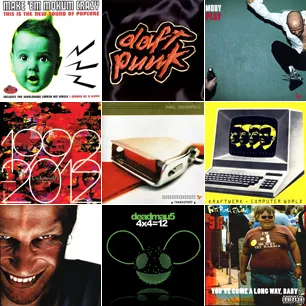
Various Artists, ‘Make ‘Em Mokum Crazy’ (Mokum, 1996)

Image Credit: Mokum
-
Deadmau5, ‘4×4=12’ (Ultra Math, 2011)

Image Credit: Ultra Math He may suck at math, but Canadian EDM superstar Joel Zimmerman is definitely more than just a happy dude bouncing around in an LED mouse hat. His fifth and best album shows off his ability to stretch his signature good-mood progressive house in a number of directions – from the speedy groove and OCD car-alarm melody of “Bad Selection” to the thick Daft Punk-like vocoder-funk of “Animal Rights.” “Raise Your Weapon” is a quintessential Deadmau5 anthem: slowly lapping synth waves, a gently triumphal beat and singer Greta Svabo Bech’s invitation to “watch it burn,” followed by a harsh blast of dervish bass that’s hard but not too hard. If Skrillex is Metallica, this guy is Bon Jovi.
Related
• Video: Inside Deadmau5’s RS Cover Shoot
• Deadmau5 Clarifies ‘Press Play’ Comments About Fellow DJs -
The Orb, ‘The BBC Sessions 1991-2001’ (Island, 2008)
Image Credit: Island
-
Orbital, ’20’ (Rhino, 2009)
Image Credit: Rhino Paul and Phil Hartnoll named their group after the U.K.’s orbital motorways, the system of roads that provided a network of party spots for the early British rave scene. It’s ironic, then, that Orbital were one of the first acts to push the beyond the confines of that scene, prizing composition and subtlety while striving to make great albums and put on stadium-ready live shows (their 1994 Glastonbury performance is one of the festival’s most storied moments). This well ordered two-CD overview showcases the brothers’ knack for gracefully curvy hooks: the feather-in-the-air figure at the heart of “Lush,” the neon-videogame programming of “Omen,” and “Chime,” whose keyboard riff is boogie-woogie headed to Mars. And with tracks like “Belfast,” “Impact – the Earth Is Burning” and the serenely contemplative “Are We Here (Who Are They?)” they confounded the notion that techno couldn’t have content by pondering politics, the environment and humanity’s role in society.
Related
• Video: Inside Deadmau5’s RS Cover Shoot
• Nineties Electronica Survivors Rave On
• Photos: Behind the Scenes of Kaskade’s Tour
• Skrillex: Eight Wild Nights and Busy Days with the Superstar
• Villas, Private Jets and Paris Hilton: Rolling in Ibiza with David Guetta -
4 Hero & DJ Marky, ‘Kings of Drum + Bass’ (BBE, 2010)
Image Credit: BBE Dubstep was hardly the first London-rooted EDM style to rely upon heavy sub-bass and twitchy beats. Drum & bass, initially called jungle when it bubbled up in the early Nineties, split its instrumentation between fast (chopped-up breakbeats) and slow (dubby B-lines), a unique dynamic that was often jittery and calming both at once. Drum & bass produced a number of fine albums – Roni Size & Reprazent’s double-disc New Forms, Spring Heel Jack’s 68 Million Shades – but it was really a singles medium. This double DJ set – the first half mixed by Nineties stars 4 Hero, the second by Brazilian DJ Marky, who emerged in the ’00s – offers a good overview of its rough, febrile early years (on tracks by Nasty Habits, Nookie, and Terminator II, a.k.a. Goldie) and the jazzier, curvier directions it’s taken since.
Related
• Video: Inside Deadmau5’s RS Cover Shoot
• Nineties Electronica Survivors Rave On
• Photos: Behind the Scenes of Kaskade’s Tour
• Skrillex: Eight Wild Nights and Busy Days with the Superstar
• Villas, Private Jets and Paris Hilton: Rolling in Ibiza with David Guetta -
Sasha & John Digweed, ‘Northern Exposure’ (Ultra, 1997)
Image Credit: Ultra
-
Justice, ‘†’ (Ed Banger, 2007)
Image Credit: Ed Banger French EDM duo Justice rocked the 2000s by channeling the simplest disco and cheesiest Euro-trash into piledriver tracks that made Daft Punk look like folkie wallflowers. “Stress” set swarming Psycho strings over lunging Jaws bass; “D.A.N.C.E.” deployed a kiddie choir and a Chic bassline; “Waters of Nazareth” had some of the dirtiest synth squawks ever recorded, a church organ and a beat scientifically proven to lower your IQ five-to-ten points if you made it through the whole song. The Catholic imagery of their cross logo and song titles like “Genesis” only added to the mystique: these dudes were the high priests of Big Dumb Fun.
Related
• Justice on Headlining Both Coachella and Lollapalooza
• Video: Inside Deadmau5’s RS Cover Shoot
• Photos: Behind the Scenes of Kaskade’s Tour -
Paul Oakenfold, ‘Tranceport’ (Kinetic, 1998)
Image Credit: Kinetic Founding father of British rave Paul Oakenfold was as mega as DJs got in the Nineties, opening for U2, remixing Smashing Pumpkins and selling 100,000 copies of this definitive collection – a startling sales figure for a DJ mix. If Sasha and Digweed put trance’s limpid power-drive over to the dance audience, Tranceport cemented it as a new kind of pop, peaking with the sugar-rush synth peals and from-behind snare rolls of Binary Finary’s “1998” and Energy 52’s “Café Del Mar (Three N One Remix).” Sometimes syrup tastes really good.
Related
• Paul Oakenfold’s View from the Top
• Nineties Electronica Survivors Rave On -
LCD Soundsystem, ‘Sound of Silver’ (Capitol/EMI, 2007)
Image Credit: Capitol/EMI LCD Soundsystem‘s James Murphy fused Eighties synth-pop, dance-punk and Detroit techno into a staggering work of heartbreaking genius. Earlier in the decade, his DFA label had helped get indie-rock kids on the dancefloor with songs like the Rapture’s “House of Jealous Lovers.” Here he had those same kids shuffling their Converse to the electro of “Get Innocuous,” laughing their asses off to the Euro-baiting boogie of “North American Scum,” and crying in their craft brews to “All My Friends” and “Someone Great,” reflections on aging and regret set to gorgeously throbbing synth grooves. Sound of Silver recalled albums like the Pet Shop Boys’ Introspective, which used dance grooves to explore complex feelings of desire and obligation.
Related
• 500 Greatest Albums of All Time: LCD Soundsystem, ‘Sound of Silver’
• 100 Best Albums of the 2000s: LCD Soundsystem, ‘Sound of Silver’ -
Madonna, ‘Ray of Light’ (Maverick, 1998)
Image Credit: Maverick
-
The Avalanches, ‘Since I Left You’ (Modular, 2001)
Image Credit: Modular “Welcome to Paradise,” a voice invites us at the opening of the Avalanches’ debut. Yep, pretty much. The Aussie trio tapped into the Beach Boys/De La Soul tradition of all-smiles cuteness for what might be the blissiest album in dance music history. Using an estimated 3500 samples – from classics like Madonna‘s “Holiday” and Kid Creole and the Coconuts’ “Stool Pigeon,” as well as hard-to-recognize hip-hop, funk, easy-listening and cheese-jazz records – they created a concept album about getting over a breakup by embarking on an island cruise. (Call it EDM’s Forgetting Sarah Marshall.) On “Flight Tonight” and “Stay Another Season” the sense of escape into something exotic, but also kind of scary, gives all the bright, swirling music a needed emotional tension, while tracks like the butterfly-light lounge pop of “Two Hearts In 3/4 Time” are perfect serotonin surges.
Related
• Video: Inside Deadmau5’s RS Cover Shoot
• Nineties Electronica Survivors Rave On
• Photos: Behind the Scenes of Kaskade’s Tour
• Skrillex: Eight Wild Nights and Busy Days with the Superstar
• Villas, Private Jets and Paris Hilton: Rolling in Ibiza with David Guetta -
Underworld, ‘Anthology, 1992-2002’ (JBO/V2, 2003)
Image Credit: Cooking Vinyl It’s no surprise that Underworld would get tapped to do music for the opening ceremony at the 2012 London Olympics. When it comes to being awesomely grandiose, few can beat them. Karl Hyde and Rick Smith were London house music DJs who impacted their tracks with an arena-rock grandeur. Yet even when they used rock instrumentation (as on the harmonica driven “BigMouth,” which opens this greatest-hits set), they never tried to push their sound beyond EDM’s essential building blocks: the God-touched keyboard stabs, a stomping four-on-the-floor groove and Hyde’s bullhorn chant-sing vocals. It all came together best on the totally over-the-top “Born Slippy,” a drunk’s inner dialogue over a Balearic-Brontosaurus beat that got used brilliantly by Danny Boyle in the final scene in Trainspotting.
Related
•Underworld Named Music Directors of 2012 Olympics
•Nineties Electronica Survivors Rave On: Underworld -
Michael Mayer, ‘Immer’ (Kompakt, 2002)
Image Credit: Kompakt
-
Aphex Twin, ‘The Richard D. James Album’ (Warp, 1996)
Image Credit: Warp Warning: dancing to this album can cause headaches, temporary loss of appetite, blurred vision or swollen bladder; if symptoms persist, please put on a Jewel CD. Cornwall, England native Richard James is electronic music’s great restless innovator, a prolific mad scientist blurring the lines between dance music, ambient and avant-garde composition, influencing a generation of “intelligent” dance music artists, as well as everything Radiohead did after OK Computer. His self-titled 1996 album might be the height of undanceable dance music, setting lush Victorian string arrangements and pastoral keyboard textures over brutally hard, quadruple-time breakbeats and toxic electro squelches. There’s loopy novelty (the slide-whistle driven “Logi/Rock Witch”), sonic terrorism (“Inkeys”) and abstract whimsy (“Finger Rib”). The album’s centerpiece, “Boy/Girl Song,” combines all those things to sound like the world’s meanest jungle DJ playing a tea party at Downton Abbey.
Related
• Video: Inside Deadmau5’s RS Cover Shoot
• Nineties Electronica Survivors Rave On
• Photos: Behind the Scenes of Kaskade’s Tour
• Skrillex: Eight Wild Nights and Busy Days with the Superstar
• Villas, Private Jets and Paris Hilton: Rolling in Ibiza with David Guetta -
Various Artists, ‘Journey Into Paradise: The Larry Levan Story’ (2006)
Image Credit: Rhino
-
Fatboy Slim, ‘You’ve Come A Long Way, Baby’ (Astralwerks, 1998)
Image Credit: Astralwerks
-
Skrillex, ‘Bangarang’ EP (Big Beat/Atlantic, 2011)
Image Credit: Big Beat/Atlantic Old-school dance heads may resist Skrillex’s cartoon kicks, but that’s their problem. The dark lord of U.S. EDM is only getting better. The title track from his latest EP is his loosest, looniest confection yet, a party noisemaker that weaves its vocal samples (“You feel good!”) into the song’s structure rather than slapping you up the head with them. And his flip-flopping low end on “Right In” and “Kyoto” is funky and cheeky. Sure, “Breakin’ a Sweat” is an iffy Doors “collaboration,” but it’s kind of a good joke: the king of the bass drop getting down with a band that didn’t have a bass player. When he gets together with fellow dubsteppers 12th Planet and Kill the Noise for “Right on Time,” they throw a curveball in the form of a four-to-the-floor house track even cranky EDM old-timers might get down with.
Related
• Skrillex: Eight Wild Nights and Busy Days with the Superstar
• Q&A: Skrillex on Dance Music’s Future and the Pitfalls of Fame
• Skrillex and Diplo Bring the Beat to Canada -
Basement Jaxx, ‘Remedy’ (Astralwerks, 1999)
Image Credit: Astralwerks By the end of the Nineties, dance music had spawned a comical number of sub-genre spin offs. (Dark Wave, anyone? Sure, only if you mix it with some sweet laptronica.) Which is why the debut album from London DJ-producers Felix Buxton and Simon Ratcliffe caused such a stir. Remedy returned to the simple, sensual pleasures of the Paradise Garage and early Chicago house while pushing those classic sounds in new, often dirtier, directions (they called it “punk garage”) – from the vocoder-driven “Yo Yo” to “Same Old Show,” which threaded a sample of Seventies ska revivalists the Selector over a sumptuously punching beat, to the sweat-caked euphoric of “Red Alert,” in which a diva informs us, “Ain’t nothin’ goin’ on but history.” And the sound of moving it ahead a step.
Related
• Nineties Electronica Survivors Rave On
• Photos: Behind the Scenes of Kaskade’s Tour
• Skrillex: Eight Wild Nights and Busy Days with the Superstar
• Villas, Private Jets and Paris Hilton: Rolling in Ibiza with David Guetta -
Various Artists, ‘True Spirit, Vol. 1’ (Tresor, 2010)
Image Credit: Tresor
-
Burial, ‘Untrue’ (Hyperdub, 2007)
Image Credit: Hyperdub
-
Kraftwerk, ‘Computer World’ (Warner Bros., 1981)
Image Credit: Kling Klang/EMI/Warner Bros. Kraftwerk were light years ahead of their time with Seventies albums like Trans-Europe Express and Autobahn, vaguely tongue-in-cheek yet still troublingly convincing hymns to the inevitable marriage of man and machine lurking just around the next bend in the info super-highway. At the dawn of the Eighties, the future had finally caught up with the German synth act: “by pressing down a special key it plays a little melody,” a dinky Teutonic voice boats on “Pocket Calculator,” giving EDM its very own version of Chuck Berry‘s “Rock And Roll Music.” With their shimmering, synthetic charm and chilly elegance, Computer World classics like “Numbers,” “Computer World” and the achingly pretty title track make the techno-isolation feel warm and friendly. It’sFacebook funk.
Related
• Kraftwerk Diary Day Five: 1981’s ‘Computer World’ Invents Electronic Funk
• Germany’s Kraftwerk: Metal of the Road -
The Prodigy, ‘Music for the Jilted Generation’ (XL, 1994)
Image Credit: XL
-
Daft Punk, ‘Discovery’ (Virgin, 2001)
Image Credit: Virgin This is where a couple silly French guys in robot getups became one of the most insidiously influential pop acts of the past decade. Daft Punk spawned a zillion vocoder-pop wannabes, and their 2006 Coachella appearance is ground zero for the recent EDM explosion if anything is. On Discovery, they simultaneously parodied and honored radio cheese from the Seventies and Eighties and came up with jams to heat up your boogie nights and massage your waterbed soul. “One More Time” is as fun as a stay at the “YMCA,” “Digital Love” gives Peter Frampton-style talk-box guitar a booster shot, “Aerodynamic” has astro-turf-shredding Van Halen guitar action and “Face to Face” (sung by New Jersey gospel-house wizard Todd “The God” Edwards) chops up ELO. As for “Harder, Better, Faster, Stronger,” apparently, Kanye was a bit of a fan.
Related
• The 100 Best Albums of the 2000s: Daft Punk, ‘Discovery’
• The 500 Greatest Songs of All Time: Daft Punk’s ‘One More Time’
• Readers’ Poll: The Top 10 Dance Songs of All Time -
Various Artists, ‘Trax Records: The 20th Anniversary Collection’ (Casablanca Trax, 2004)
Image Credit: Casablanca Trax
-
2 Many DJs, ‘As Heard on Radio Soulwax Vol. 2’ (PIAS, 2002)
Image Credit: PIAS
-
Moby, ‘Play’ (V2, 1999)
Image Credit: V2 The album that soundtracked a jillion car commercials: After being the biggest presence on the US rave scene throughout the Nineties, Moby enjoyed an unlikely mainstream breakthrough by marrying ambient beats to old gospel and blues samples. Tracks like “Honey” and “Natural Blues” evoke a Delta speakeasy with a Genius Bar, and “Porcelain” unfurls easy-listening mastercraft. Moby even shows off his sense of humor on “South Side,” an empathetic song about white kids trying to fake it real on the rough side of town. The genius of Play came in Moby’s ability to transfer the grandeur and scope of rave to dinner parties and bedrooms. Play was one of the first big pop albums to sound like it was built solely on an iMac, but its soul and beauty, its steady-rolling piano flow and 3 a.m. come-down introspect are timeless.
Related
• The 500 Greatest Albums of All Time: Moby’s Play
• Album Review: Moby’s Play
• Video: Rolling Stone Live: Moby -
Carl Craig, ‘Sessions’ (K7, 2008)
Image Credit: K7 For many dance artists, the real mark of acceptance isn’t headlining a huge festival like Electric Zoo, but getting a Carl Craig remix. Maybe the most consistently brilliant and widely respected of Detroit’s many great producers, the multi-aliased Craig is startling in his range and longevity. Few early-Nineties producers were exploring breakbeats and jazz with the sly facility of his “Bug in the Bass Bin” (recorded as Innerzone Orchestra), or transforming disco samples with the toughness of “Throw”(recorded as Paperclip People, and later covered by LCD Soundsystem) – never mind roaring back to life the way Craig did with a stunning string of mid-2000s remixes for Rhythm & Sound, Theo Parrish, Junior Boys, and X-Press 2. Sessions is a double-fistful of goodies (the CD is mixed, the digital has full tracks – your choice), and an ideal intro to a producer who never stops surprising.
Related
• Nineties Electronica Survivors Rave On
• Photos: Behind the Scenes of Kaskade’s Tour
• Skrillex: Eight Wild Nights and Busy Days with the Superstar
• Villas, Private Jets and Paris Hilton: Rolling in Ibiza with David Guetta -
Juan Atkins, ’20 Years Metroplex: 1985-2005′ (Tresor, 2005)
Image Credit: Tresor Techno was born in the mid-Eighties in Detroit, where visionary producers Juan Atkins, Kevin Saunderson and Derrick May fused Kraftwerk, Afrika Bambaataa‘s electro and Chicago house with a sci-fi futurism to come up with a sound that reflected the austere decay of post-industrial Detroit just as Motown’s bright, assembly-line grooves had reflected the city in its optimistic prime. Throw on this survey of Atkins’ foundational techno label Metroplex and you can watch the music come into its own – from the interplanetary funk odyssey of Model 500’s “No UFOs,” which journeys light years beyond Bam’s “Planet Rock,” to Cybertron’s “Clear,” where the vocals sound like George Clinton crossed with Darth Vader. Decades later, the coolly percolating blips, Casio salsa-setting grooves and robo-B-Boy vocals still sound like a freaky alien landing.
Related
• Nineties Electronica Survivors Rave On
• Photos: Behind the Scenes of Kaskade’s Tour
• Skrillex: Eight Wild Nights and Busy Days with the Superstar
• Villas, Private Jets and Paris Hilton: Rolling in Ibiza with David Guetta -
The Chemical Brothers, ‘Dig Your Own Hole’ (Astralwerks, 1997)
Image Credit: Astralwerks Tom Rowlands and Ed Simons’ game-changing second album had a simple conceit: what if dance music hit as hard as the fiercest hip-hop and rocked with the visceral force of your favorite guitar banger? And they nailed it. The gut-punch bassline on “Block Rockin’ Beats” is up there with the riff to the Kinks‘ “You Really Got Me” in the Ass Kicking Intro canon; “Setting Sun” (featuring Noel Gallagher) kicks the Beatles‘ “Tomorrow Never Knows” into the 21st Century; “Where Do I Begin,” with vocals from alt-folkie Beth Orton, matches Ren Faire whimsy and South Bronx beat science. Throughout, the Chems prove themselves master composters, crafting songs that dip and slide with a corner-hugging, rollercoaster intensity – whether it’s the nine-minute trance-out “The Private Psychedelic Reel” or the three-minute low-end rattler “Elektrobank.” Now, it sounds as much like classic rock as classic EDM.
Related
• The 100 Best Albums of the Nineties: The Chemical Brothers’ Dig Your Own Hole -
Daft Punk, ‘Homework’ (Virgin, 1997)
Image Credit: Virgin Daft Punk‘s debut is pure synapse-tweaking brilliance. In the Nineties, when artists like the Chemical Brothers and Fatboy Slim were bringing in guest-star vocalists and sampling rock records, and ad executives were strip-mining club beats, French duo Thomas Bangalter and Guy-Manuel de Homem-Christo proved that techno and house could be as elastic, catchy and, at times, as funny as the poppiest pop without diluting its hypnotically driving, acidic essence. Homework had standout hits – like “Da Funk” and the anthemically bloopy “Around the World.” But it was paced like a great album, weaving hip-hop and funk (and, on “Rock N Roll,” even some Seventies glam) into the mix, with pauses for oceanic contemplation (the guitar-washed “Flesh”) and hip-hop influenced skits like “WDPK 83.7 FM,” in which a French-accented robo-DJ promises “the sound of tomorrow and the music of today.” Considering how their thick, Euro-thwump has transformed R&B and pop music during the last decade, that absurd brag now sounds like truth in advertising.
Related
• Photos: Rockers Who Score Films
• Playlist: David Guetta: Dance-Floor Classics