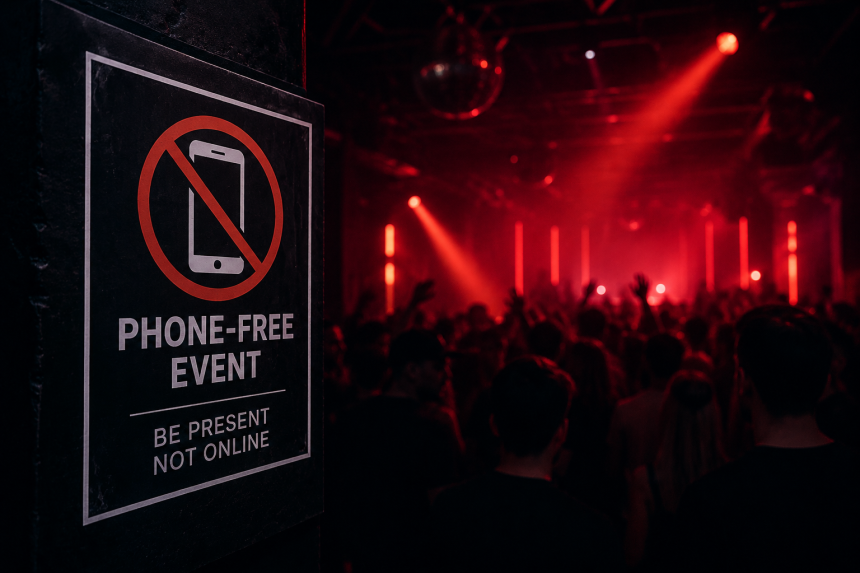
Phone-free events are rapidly becoming one of the defining nightlife trends of 2026, with new data from Eventbrite showing a 567% global increase in events marketed as “phone-free” or “photo-free” over the past year.
The report tracked listings across club nights, raves, listening sessions and analogue-focused gatherings throughout 2024, 2025 and the opening months of 2026. The results point toward a wider cultural shift happening across nightlife and live music spaces — one increasingly shaped by digital fatigue and a growing desire for more immersive, less performative experiences.
At the centre of the movement sits the UK, where phone-free events reportedly grew by 1,200%, while attendance surged by an even larger 1,441%. The trend has become so visible that cultural analysts have started referring to the current moment as the “Year of Analog,” reflecting a broader rejection of constant online visibility in favor of physical presence and real-time connection.
The United States has experienced a similar rise. Event volume climbed 388% across 2025, while attendance increased by more than 900%, suggesting the format has evolved far beyond underground novelty status.
What initially looked like a niche reaction inside smaller club communities now appears to be entering the mainstream nightlife ecosystem.
The early numbers for 2026 already indicate further acceleration. According to the report, the first quarter alone has already generated more than one-third of 2025’s total global phone-free event volume in just three months.
Part of the momentum appears connected to changing audience psychology, particularly among younger generations increasingly exhausted by algorithm-driven social media culture.
Consumer data included in the study shows that nearly half of Gen Z and Millennial respondents actively prefer events that feel less curated and less performative. Even more notably, 79% specifically stated they are searching for spontaneity and unpredictability within live experiences.
That shift has become increasingly visible across electronic music culture in particular.
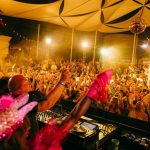
Over the past decade, dancefloors have slowly transformed into spaces heavily mediated through phones, recording culture and social content creation. Boiler Room clips, viral crowd moments and TikTok-driven visibility helped reshape clubbing into something partially experienced through screens rather than fully inside the room itself.
Phone-free events directly challenge that model.
For many promoters and club communities, banning or restricting phones is less about nostalgia and more about rebuilding intimacy, focus and collective energy on the dancefloor. The absence of cameras often changes crowd behavior immediately — people move differently, interact more naturally and engage with music without constantly documenting themselves.
Some of the world’s best-known electronic music spaces have already embraced the approach in various forms. Clubs like Berghain have long discouraged photography, while newer promoters increasingly market no-phone policies as part of the event identity itself rather than a restriction.
As nightlife culture continues adapting to digital saturation, the rapid rise of phone-free events suggests that many audiences are no longer searching for perfectly documented experiences — they are searching for experiences that feel real enough not to need documentation at all.