
Björk’s Seroke Set: A Cultural Mashup at the Venice Biennale
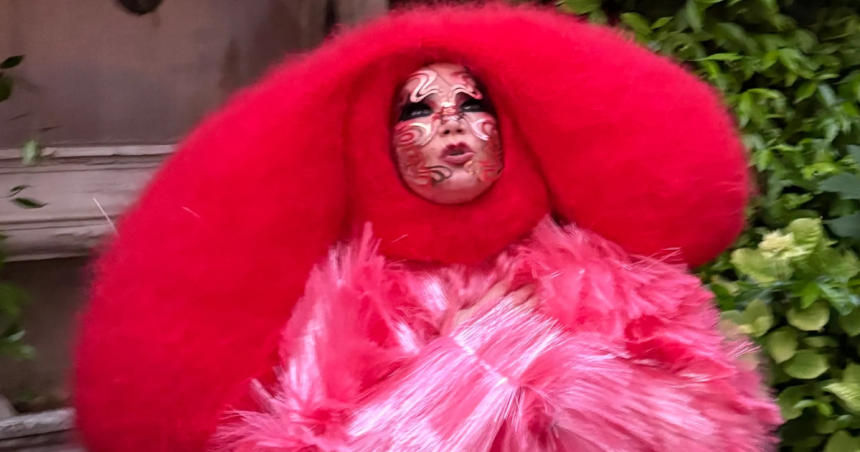
The digital landscape was set ablaze recently as clips emerged of Icelandic music doyenne Björk spinning a DJ set that introduced the world to some of South Africa’s lesser-known dance music. Clad in a striking Bottega Veneta dress—one that subversively echoed the cultural aesthetics of the sounds she played—Björk turned heads and ears alike at the 2026 Venice Biennale. The set not only showcased her eclectic taste but highlighted a burgeoning segment of the local music scene that often remains in the shadows of more prominent genres.
Unearthing Talent: The Emergence of Serokolo 7
Among the refreshing tracks featured during her pop-up set was “Bonkoko Bagana,” created by local artist Serokolo 7, a vibrant DJ, producer, and sound system operator hailing from Ga-Sekhukhune in Limpopo. Over the past few years, Serokolo has made waves in the electronic music landscape with his unique take on Mapanta, a hyper-localized genre that fuses traditional Bapedi musical elements with pulsating, frenetic rhythms.
Mapanta’s exhilarating beats resonate with the energy of Angolan Kuduro, where traditional cultural sounds intersect with modern electronic music. Serokolo’s work is an exploration of this rich tapestry, and when we spoke to him about the recent exposure his music received, he expressed a mix of honor and humility.
The Essence of “Bonkoko Bagana”
“Bonkoko Bagana” is a standout track from Serokolo’s critically acclaimed debut album, Maramfa Musick Pro, released under the innovative African underground label Nyege Nyege Tapes. While many locals identify it with the Mapanta genre, it’s worth noting that “Bonkoko Bagana” is more aligned with Tsa Manyolo—often referred to as “wedding music.” This term reflects the track’s high-energy vibes, typically embraced at Tsonga, Pedi, and Venda wedding celebrations, where the intoxicating mix of electronic beats and melodic guitar strings creates an atmosphere of joy and exhilaration.
To give you a flavor of this vibrant sound, you can listen to “Bonkoko Bagana” below:
Beyond Amapiano and Gqom: Expanding the Narrative of South African Electronica
Björk’s set has illuminated a broader electronic music spectrum existing in South Africa, one that goes far beyond just amapiano and gqom—two genres that have dominated the global conversation around South African electronica. There was, in fact, some misinterpretation of “Bonkoko Bagana,” with several reports inaccurately labeling it as amapiano. This mischaracterization highlights the need for a deeper understanding of South Africa’s eclectic music offerings.
By showcasing lesser-known music like Serokolo’s work, Björk has invited the world to step beyond the familiar, uncovering a rich subculture that, despite being integral to Pedi heritage, may still be relatively unknown, even to many South Africans. This undercurrent of creativity is vibrant and alive, reminding us of the continent’s unparalleled capacity for musical innovation and diversity.
A Celebration of Cultural Heritage and Musical Evolution
The prominence of Serokolo 7 and similar artists reflects the evolving musical landscape in South Africa—a place where tradition meets modernity. These emerging sounds tell stories steeped in cultural history while embracing contemporary electronic expressions, enriching not only the local soundscape but also the global musical narrative.
“A re bineng bohle!” (Let’s all sing together!) resonates not just as a call to celebration but as an affirmation of community and shared musical heritage that binds people across the globe. Through such artistic expressions and global interconnections, the music takes on a life of its own, uniting listeners through the universal language of rhythm and sound.



