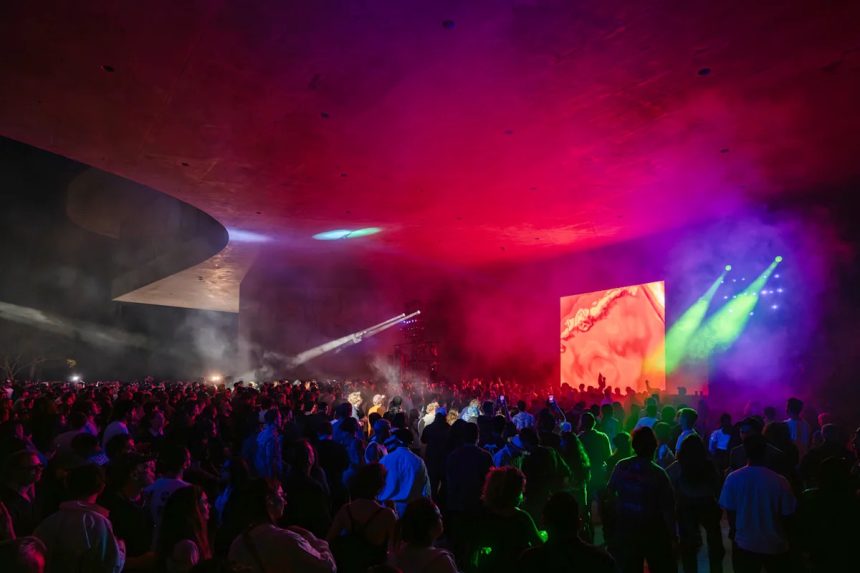
A Fusion of Sound and Vision: Richie Hawtin and John Gerrard’s SPIRITS
The collaboration between internationally acclaimed DJ and producer Richie Hawtin and digital artist John Gerrard marks a monumental evolution in the intersection of electronic music and visual art. Recently showcased at the Los Angeles County Museum of Art (LACMA) in the newly opened David Geffen Galleries, their live performance, built around Gerrard’s year-long solar artwork project titled SPIRITS, dives deep into societal issues surrounding our dependence on plastic and petroleum.
The Concept Behind SPIRITS
SPIRITS is not just an art exhibit; it’s a profound commentary on modern consumption and environmental sustainability. Using discarded footwear collected from beaches around the globe, Gerrard’s project transforms these items into high-resolution digital sculptures. As viewers engage with the installation through their mobile devices, they witness these sculptures gradually dissolve into rippling oil, symbolizing the pervasive impact of pollution and waste on our planet. This dynamic interplay encourages audiences to reflect on their relationship with material goods and environmental responsibility.
Richie Hawtin’s Role
Richie Hawtin has long been recognized for his groundbreaking contributions to the electronic music landscape. However, with this collaboration, he pushes the boundaries further by exploring sound beyond traditional club settings. He has previously transcended the confines of nightlife, working with prestigious institutions like the Guggenheim and luxury fashion brand Prada. In this particular collaboration, he took on the role of a creative advisor, helping to develop the score for SPIRITS. This not only enriches the auditory experience of the exhibit but also intricately ties together the themes of sound, sight, and technological innovation.
A Symphony of Sights and Sounds
In articulating his vision, Hawtin eloquently highlights the synergy between music and visual art: “As a visual artist, John has often cited music & rave culture as an important influence as he discovered (and danced to) techno in the early nineties. As a musician, the structure and subtractive nature of my studio works would have never materialized without a deep interest and analysis of mid-century works of Rothko, Barnet Newman, and Donald Judd. For our collaboration at LACMA, John and I will explore the meeting point between sight & sound, rhythm & repetition, and analog vs. digital.”
This insightful commentary underscores how the two artists merge their mediums to create an immersive atmosphere, allowing attendees to experience a seamless blend of auditory and visual stimuli.
The Audience’s Interaction
The exhibit is designed with audience interaction in mind, emphasizing accessibility through digital engagement—viewers can best experience SPIRITS via a mobile browser. This engagement allows individuals to become part of the artistic process, actively participating in the transformation of the visual sculptures while contemplating their implications. Through this innovative approach, the collaboration becomes a participatory dialogue rather than a passive viewing experience.
Ongoing Exhibition
SPIRITS at LACMA is not a fleeting event; it is an online exhibit that will run through 2026, ensuring long-term accessibility for audiences far and wide. The digital nature of the project allows for continual engagement and reflection, making it a poignant and timely exploration of climate issues and consumer culture.
For those interested in experiencing this groundbreaking fusion of art and music, details can be found here.
Visual Inspirations
The exhibition was made possible through the contributions of visual artists like Lance Gerber and Michael Wilwani, who provided captivating imagery that enhances the narrative of SPIRITS. The visuals serve not just as a backdrop but as integral components of the overall experience, further emphasizing the themes at play.
Through this collaboration, Richie Hawtin and John Gerrard are not just challenging conventional boundaries but are also prompting society to reflect on critical issues through a synergistic lens of creativity. As technology evolves, the potential for cross-disciplinary collaborations like this one will undoubtedly pave the way for future artistic explorations, enriching our understanding of both art and the environment.