
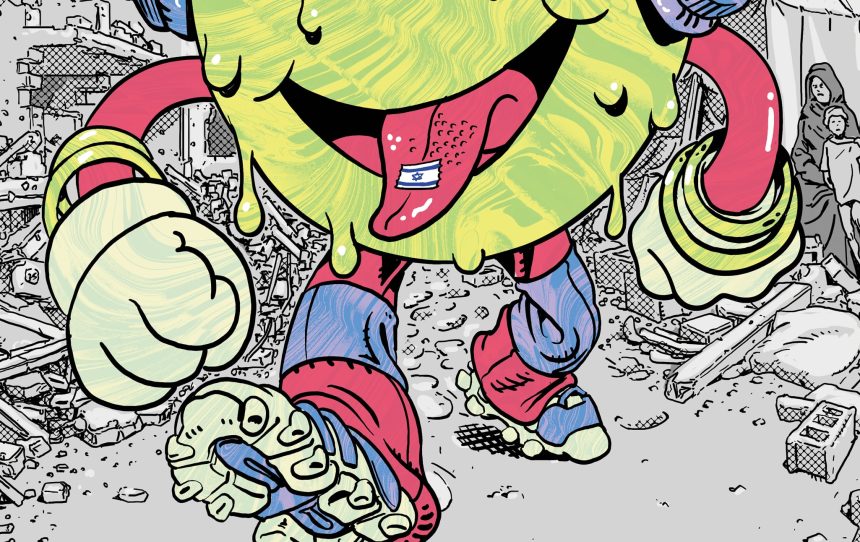
The Electrifying Paradox of Israeli Psytrance Festivals: A Sonic Culture Bursting Amidst Conflict
It’s 6:29 AM on a Tuesday, and a throbbing drum machine pulses through the desert air. The beat is steady at 150 beats per minute, a driving force for revelers on the dance floor of the Supernova Sukkot Gathering, a psytrance festival nestled near Kibbutz Re’im in Israel. Attendees, adorned with tribal tattoos, piercings, and eye-catching psychedelic fashion, lose themselves in the music, dancing beneath canopies bedecked with intricate symbols of Hindu spirituality. This congregation of electronic music lovers is designed to be an alluring escape, but as the atmosphere vibrates with joyful energy, the realities of the geopolitical landscape remain unyielding just outside the festival’s gates.
An Israeli Psytrance Experience
The Supernova Sukkot Gathering is more than just a music festival; it represents a cultural phenomenon born from the convergence of Israeli and global electronic music traditions. Modeled after Brazil’s Universo Parallelo festival, this event is a kaleidoscope of vibrations, offering attendees a multi-sensory experience filled with flashing lights, mesmerizing visuals, and the intoxicating effects of hallucinogens. As crowds pulse in unison, many are entranced not only by the music but also by the essence of freedom they believe the festival embodies—a paradox steeped in the realities of ongoing conflict in the region.
Israeli DJ Yarin Illovich, known as Artifex, spins hypnotic tracks that blend traditional Middle Eastern sounds with modern electronic beats, aiming to create a sonic journey for listeners. The vibrant atmosphere, featuring costumes of pashmina scarves, bindi forehead jewelry, and loose-fitting shalwar trousers, represents a communal gathering yearning for connection and transcendence even amidst rising geopolitical tensions.
Cultural Roots and International Influence
The cultural significance of psytrance in Israel has its roots intertwined with the global EDM movement that blossomed in various parts of the world. Israeli psytrance artists have carved their niche within this genre, intertwining local folklore, spirituality, and immigrant experiences. The music serves not only as entertainment but as a medium for exploring collective identity, resilience, and the longing for peace. As people from differing backgrounds get lost together in the rhythm, they navigate the obstacles of their lives, enveloped in immersive soundscapes.
However, as joyous atmosphere flourishes, underlying tensions persist. The Supernova festival is merely one example of contrasts colliding: a celebration of freedom occurring in proximity to an area imbued with historical and ongoing conflict. This duality often challenges attendees’ perceptions of safety, spirituality, and ethical engagement.
Conflict Erupts: A Soundscape Disrupted
In an unforeseen twist, the pulsating joy is shattered by the sound of gunfire, sirens, and explosions. Militants from Hamas and other Palestinian factions launch an unexpected attack, targeting the festival attendees. As the celebratory dance shifts into chaos, attendees attempt to escape while others become entangled in the crossfire. The once-vibrant sonic oasis transforms into a harrowing scene of panic and violence, drawing headlines across the globe. This incident encapsulates the tragic reality where recreational music gatherings can swiftly devolve into humanitarian crises.
Historical Context: The Kibbutzim and the Nakba
The backdrop of the festival is steeped in a tumultuous history. Kibbutz Re’im and its neighboring settlements emerged post-1948, during the Nakba, a time characterized by mass displacement and violence against Palestinians. The establishment of these kibbutzim served not only as agricultural settlements but also maintained a complex relationship with their surroundings: often indicative of the expansionist tendencies within Israeli policy.
Palestinians displaced during the Nakba frequently attempt to reconnect with their lost lands, now shadowed by the festivals and resorts springing forth in their wake. The juxtaposition of authentic cultural expression against a backdrop of oppression is a poignant reminder of the lasting scars of conflict.
Music as a Double-Edged Sword
The music that temporarily unites attendees becomes an emblem of escapism, yet it concurrently reflects the socio-political realities that surround it. Israeli psytrance provides a release; people dance to forget, yet it also serves to mask deep-rooted issues within the region. The festival-goers engage in a sonic celebration that feels celebratory while remaining largely oblivious to the surrounding strife.
Israeli artists like Astral Projection and Infected Mushroom have emerged as international sensations in the psytrance scene, blending Jewish cultural elements with global electronic sounds, thus promoting a familiar yet complex sonic legacy. Yet, the commercialization of this music often raises questions about authenticity and cultural appropriation as it commercializes themes of peace and unity—the very ideals at odds with the tumultuous context in which it flourishes.
The Festival Experience: A Temporary Paradise
The Supernova Sukkot Gathering allows attendees to forge new connections within an electrifying atmosphere while also grappling with the weight of historical injustices. Participants lose themselves in the euphoric highs engendered by music and chemical substances, drawing from the festival’s spiritual roots. As they drift among the crowd, each individual conjures personal interpretations of freedom and escape, albeit against a backdrop of systemic violence.
The festival narrative illustrates a profound paradox: that even at the heart of celebration, there exists an exploration of identity, belonging, and the search for solace amid turmoil. As festival-goers seek refuge within the music, the conflict outside serves as a stark reminder that sanctuary is often fleeting.
Future Prospects: The Harmonizing Potential of Music
Amidst the chaos of events like the Supernova Sukkot Gathering, music stands as a powerful tool for both resistance and reconciliation. Whether through blending cultural traditions or serving as a voice for the oppressed, psytrance and electronic music create a unique space for dialogue and expression. While the possibility of a brighter future remains veiled within uncertainty, the evolution of this genre continues to reflect the complexities of life in Israel and Palestine—an unyielding testament to resilience and creativity even in the face of despair.