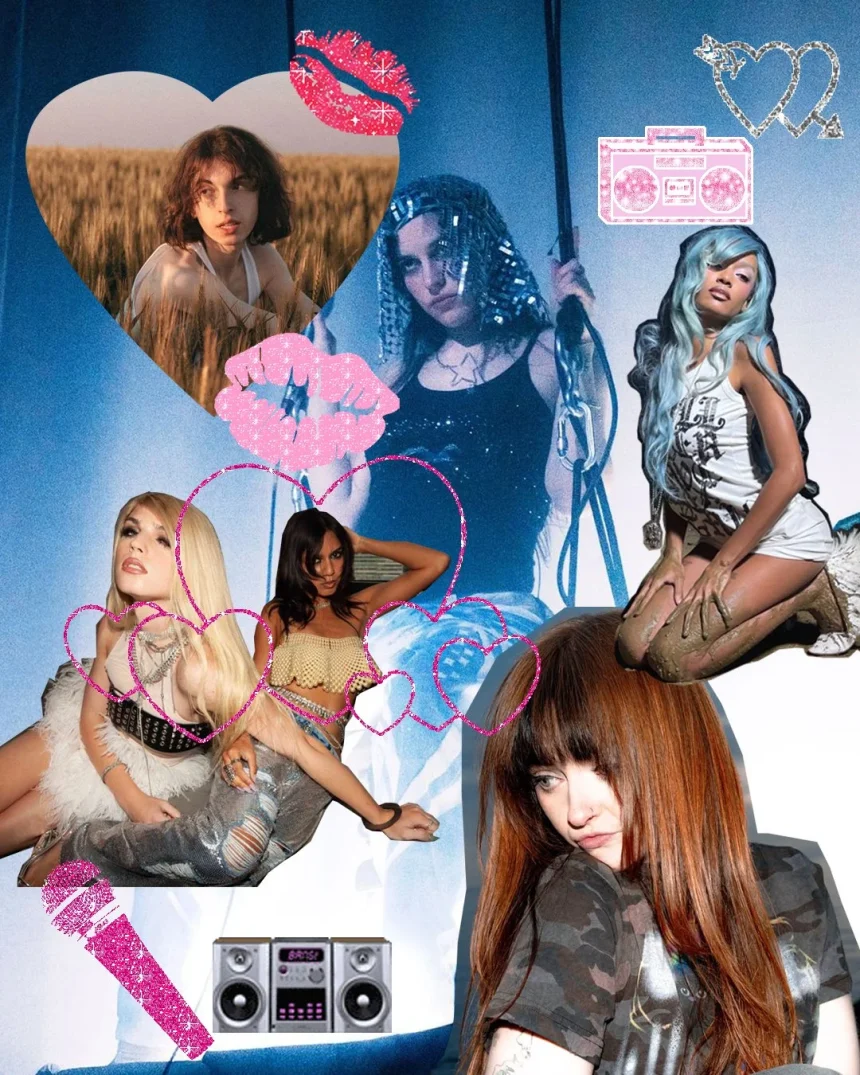
The Rise of Girl EDM: A Revolutionary Sound
Girl EDM has emerged as a powerful movement that resonates with the modern experience, channeling the chaos and vibrancy of today’s existence into electrifying beats and immersive soundscapes. Artists like Ninajirachi with tracks like “F*ck My Computer,” and underscores with “Music” are not just creating music; they are crafting technicolor love letters to the world of machine-infused sounds. In stark contrast to the gentle acoustics that once dominated, they encapsulate the frenetic energy of life today—a world that feels increasingly out of control.
Disco’s Influence and the 2020s Reboot
Tan Lin’s essay, Disco as an Operating System, posits disco as a sensory experience absorbed rather than merely heard. This notion echoes profoundly in the realm of Girl EDM, which essentially revives the disco ethos, decoding the synth-heavy elements and repackaging them for the contemporary dancefloor. The genre transcends traditional understandings of femininity, innovating a sound that feels both revolutionary and intrinsically connected to the current zeitgeist. The artists spearheading this movement illustrate a multi-faceted femininity: powerful, unapologetic, and brimming with complexity.
The 2010s: A Male-Dominated Era
Historically, the 2010s were a starkly male-dominated period in electronic dance music. The industry was characterized by the towering presence of figures such as David Guetta, Marshmello, Calvin Harris, Skrillex, and the late Avicii, whose names were synonymous with mainstream EDM culture. While these artists played pivotal roles in shaping the sound of the decade, they also overshadowed the contributions of female artists. EDM rapidly transitioned into a lucrative sector, exemplified by SFX Entertainment’s meteoric rise to a billion-dollar enterprise, followed by its abrupt downfall.
Noah Yoo’s critical analysis in Pitchfork highlights how the genre was defined by its male heroes and specific subgenres like “brostep” became emblematic of this era. Yet, within this landscape, female artists were present, albeit often overlooked. Ellie Goulding’s collaborations and Alison Wonderland’s landmark performances signified their presence, yet a prevailing bro culture stifled recognition and opportunities for many women in the industry.
The Continuing Disparity
Research indicates that the gender imbalance in electronic music remains pervasive. Reports from VYBZ Academy state that only 25% of festival line-ups feature women DJs, while a 2019 study by the University of Portsmouth reveals that women constitute less than 10% of DJs, and a mere 5% of recognized electronic music producers. This enduring disparity speaks to broader issues of representation and recognition in a genre that has seen a surge in interest and attendance over the years.
Emergence of the Girl EDM Renaissance
As we immerse ourselves in 2026, the landscape of EDM has undergone a transformation. The revival of electronic dance music is now marked by the vibrant emergence of Girl EDM, which creates space for women and non-binary artists to thrive and express themselves authentically. This renaissance resonates with the imperfections and complexities of contemporary life, providing a platform for personal expression that goes beyond microcultures and online niches.
Ninajirachi articulates the evolution of femininity through this genre, emphasizing its divergence from traditional notions previously popularized online. Girl EDM stands in stark contrast to the so-called “trad-wife” archetype, embracing a more robust and multifaceted view of womanhood.
The Euphoria of EDM in the Here and Now
EDM inherently thrives on euphoric release—its essence rooted in pulsating rhythms, melodic synth patterns, and a blend of machine-crafted sounds with human emotion. In its return, the music of the 2020s captures the catharsis listeners craved in the 2010s while integrating a more diverse array of voices.
In recent years, the transition from bro-centric festivities to events like All Points East showcases a new narrative. Artists such as Ninajirachi and Oklou are crafting inclusive experiences where women, non-binary individuals, and diverse audiences can connect not only with the music but with each other and the performers themselves. These spaces are vital in reaffirming visibility and representation within a scene that continues to evolve.
The narrative of Girl EDM is thus not only about reclaiming the dance floor but also about fostering a vibrant and safe community where everyone feels empowered to discover their identity amidst the pulsating beats and swirling lights. As the genre continues to grow and diversify, its impact reverberates across both the music industry and broader cultural landscapes, hinting at a dynamic future for electronic music.