
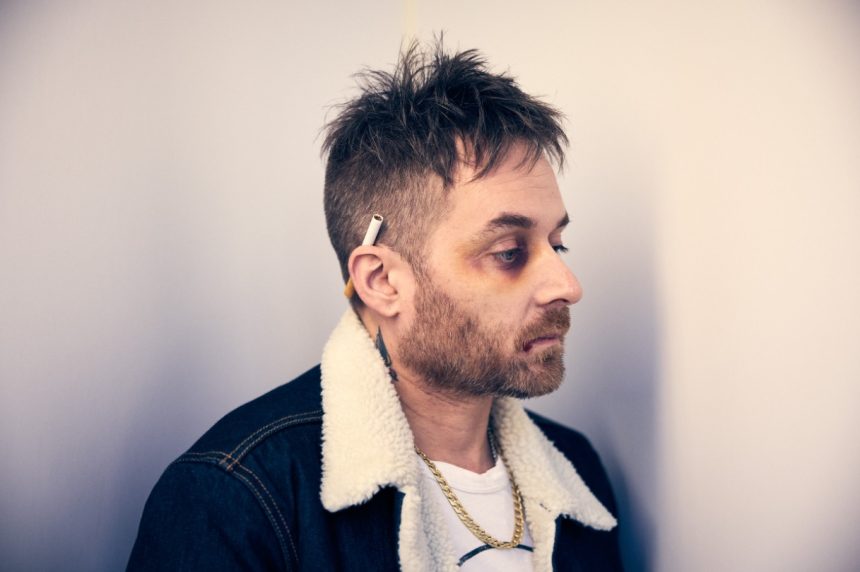
After more than two decades working across indie rock, folk, pop, and soundtrack music, songwriter, producer, and multi-instrumentalist Nico Allard is exploring a rich new territory with his project D1RT TH13F.
Residing now in Mexico City after exciting stints in Belfast and Portland, Allard embraces a wider musical history to fuel a project rooted in deep, atmospheric house. His music draws inspiration from a diverse range of influences including West African paradigms, Latin rhythms, post-punk energy, ambient textures, and traditional studio craftsmanship.
His latest single, “Hold On,” exemplifies his artistic evolution, featuring a hypnotic rhythm, understated keys, and ethereal vocals. The track serves as a compelling introduction to a project that is still actively shaping its identity.
In a recent conversation, we had the opportunity to delve deeper into D1RT TH13F. We discussed his transition into house music after two decades of diverse songwriting, his experiences in Mexico City, and the creative freedom he’s found in breaking musical conventions.
After making music in genres such as indie rock and folk, what prompted your shift to house music? Was there a defining moment that led you here?
There wasn’t really one significant moment—it wasn’t like I heard a house record and thought that was my path. Over time, I found myself increasingly attracted to rhythm, repetition, and the idea of creating a track with minimal elements.
I’ve spent much of my life operating as a songwriter, and after over twenty years in that realm, I began to seek a new framework. House music provided that fresh perspective. I can still write melodies and convey emotional arcs, but I’m liberated from the need for three verses, a bridge, and a multitude of guitar overdubs.
My interest in African music—especially from Mali—started to merge with my exploration of melodic and Afro-influenced house. Eventually, it all coalesced into a language I felt comfortable using without having to forfeit my existing skills.
“Hold On” uses a minimalistic approach, relying on few elements. Was this restraint a deliberate choice from the outset, or did you refine it over time?
It’s a bit of both. Initially, I tend to incorporate many ideas, then gradually realize that a lot of those elements detract from the focus. The beauty in this style of music is how exposed everything becomes without a plethora of elements.
A bass line, a specific percussion sound, or a single vocal can hold significant weight. You can’t mask a subpar component behind layers of sound. With “Hold On,” I wanted to let the groove and vocal drive the track, which meant eliminating anything that distracted from those core elements.
I’m becoming increasingly fascinated with the notion of minimalism—exploring how little I can effectively use rather than how much I can cram into a piece.
Stepping into dance music after a diverse background, what “rules” of house music did you find more beneficial to break than adhere to?
I’ve probably encountered a significant number of them, many of which I didn’t even realize I was breaking until others pointed them out.
Truth be told, I’m not keen on being a genre purist. I approach this new phase as someone who has spent years crafting songs and records, rather than someone trained solely as a DJ.
So, if a song needs to flip the expected structure or runs shorter at three and a half minutes instead of seven, I’m entirely comfortable with that.
Meanwhile, grasping why certain conventions exist can be enlightening. There’s a vital distinction between breaking a rule with intention and doing so from ignorance. I’m still navigating some of that terrain.
As a songwriter and multi-instrumentalist in an age where technology allows a laptop to do virtually everything, how much of your traditional approach influences D1RT TH13F?
A considerable amount, likely more than I’m aware of. My roots are in the analogue tape era, so even though I predominantly operate out of a laptop now, I retain a mindset that prizes traditional recording methods.
Performance and tone are crucial to me, and I appreciate the beauty of slight imperfections.
Ableton helps me craft grooves, but once I have the structure down, my thoughts start aligning with traditional recording processes again.
I’ve been tracking in LUNA, focusing on playing parts in instead of strictly conforming everything to a grid. Utilizing tape emulations and summing is also part of my workflow.
Modern technology can do countless wonders, but that doesn’t imply I want it to do everything for me.

You’ve moved through music scenes in Belfast, Portland, and now Mexico City. What auditory experiences have you encountered in Mexico City, and have any of them unexpectedly influenced your music?
Mexico City is vibrant and musically diverse; you’re surrounded by sounds constantly. It’s a mix that you wouldn’t always expect based on your location.
There’s a plethora of Latin music, of course, but electronic sounds, retro pop, reggaeton, cumbia, and strains emanating from shops and cars also weave into the tapestry here. It’s all interconnected.
I wouldn’t say I’m consciously trying to create “Mexican” music; I’d be cautious of claiming that title.
However, living here has likely loosened my approach. I’m now more attuned to rhythm and syncopation than ever before.
Since I’ve long been captivated by West African and Latin rhythmic sounds, being immersed in a rhythmically rich environment only solidifies that focus.
Your influences range from West African and Latin styles to post-punk, ambient music, and house. Is your creative process intentional, or do you typically go where inspiration takes you?
It’s primarily about following what sounds intriguing on any given day. I’m rarely sitting down with a mindset of deliberately merging Mali, Joy Division, and house; that would probably produce a chaotic mess.
Instead, I start with a rhythm, texture, or melody that resonates, and I allow that to lead me. The myriad of music I’ve consumed over the years undoubtedly seeps in, but I prefer to let it manifest organically.
I have a broad range of musical tastes, and trying to control those influences too rigidly might dilute the uniqueness of my records.
While soundtracks and club music may appear distinct, both rely heavily on mood and pacing. What lessons from working in film have you unexpectedly applied to your house music?
Absolutely. Working on soundtracks highlights that minimal changes can lead to vastly different emotional outcomes.
It enables you to appreciate pacing, tension, the timing of introducing elements, and how long a musical idea can resonate before it necessitates a shift. Surprisingly, this knowledge translates well into house music.
I’ve learned not to shy away from repetition either. In film music, you often rely on a simple idea to sustain a scene for extended periods without overpowering it.
House music can similarly thrive on subtle harmonic shifts or the introduction of new textures to maintain engagement.
As D1RT TH13F is still an evolving project, what areas are you particularly excited to explore in the next year?
This uncertainty is honestly exhilarating; I’m still figuring it out. I aim to delve deeper into longer-form house music, crafting tracks that resist the constraints of typical streaming singles.
I’m keen on creating music that develops gradually, yet retains a discernible song or emotional core throughout.
Moreover, I want to amplify my West African influences, especially guitar and rhythmic ideas, while avoiding stereotypical “world music” tropes in house.
Ultimately, I want to navigate further into electronic music without sacrificing the essence that defines who I am as an artist—D1RT TH13F should reflect my authentic evolution rather than a generic interpretation of house music.
With D1RT TH13F, Nico Allard embarks on a new musical chapter that artfully intertwines his rich past with fresh explorations. His extensive background as a songwriter, producer, and multi-instrumentalist continues to shape his innovative approach to house music and its various rhythms, atmospheres, and constraints.
By pulling from his experiences in diverse cultural landscapes, Allard is crafting something unique and deeply resonant. Listen to his latest track, “Hold On,” for a taste of where his journey is headed, with much more surely on the horizon.
Listen to the track below!



