
The Rise of Gospel House in Lagos: Where Worship Meets the Dance Floor
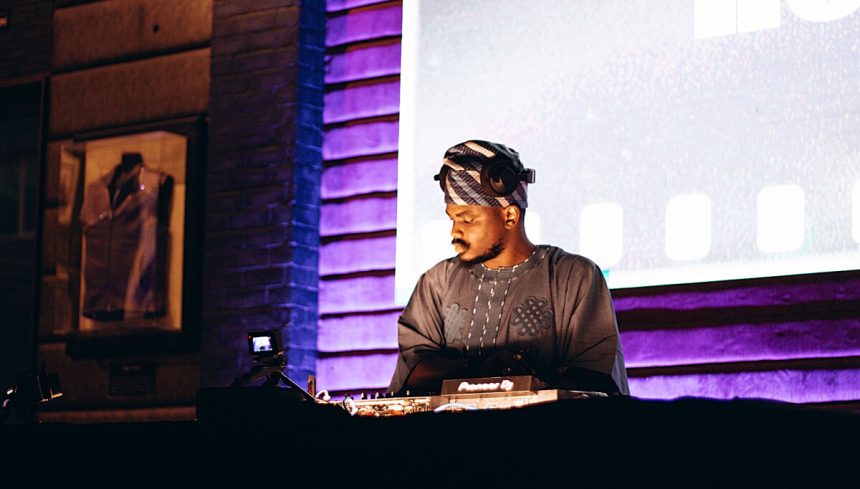
It is sometime past 7 PM on a Sunday in May, and the air inside the industrial-style container park at Pop Landmark, Lagos, is thick with heat and bodies. A large central LED screen behind the DJ booth blazes with the words “GOSPEL HOUSE” against a cloudy sky backdrop. The DJ, Tobi Peter, skillfully drops a house remix of Mercy Chinwo’s “Excess Love.” The recognizable piano chords linger in the air, stretched and looped, while a 128 BPM kick drum reverberates, inviting bodies to move.
A Dance Floor Transformed Into a Sanctuary
The crowd, several hundred strong and predominantly in their twenties, doesn’t hesitate. A girl at the front closes her eyes and reaches toward the ceiling, her arms outstretched in exhilaration. Around her, people dance in loose circles, some with their eyes shut, others belting out the lyrics they know amid the heavy bass. When the chorus hits, a collective silence takes over, interrupted only by the unified voices perfectly synchronizing with the beat, creating a space that feels close to a sanctuary. This scene encapsulates the essence of Gospel House—one of Lagos’s burgeoning “Christian raves,” where the lines between worship and entertainment blur to create a unique spiritual experience.
A New Wave of Christian Gatherings
Gospel House is not an isolated phenomenon in the landscape of modern Christian gatherings. Inner Circle Gospel Club, spearheaded by producer DJ Krizbeatz, adopts a similar approach, merging DJs, dancing, and live performances with Christian worship. For a growing number of Nigerian Christians, particularly younger audiences, these events provide a fresh alternative to standard church services, allowing them to engage with contemporary music and nightlife culture.
The increase in Christian raves can be traced back to a broader trend within Nigeria’s electronic music scene, which has experienced a significant boom in recent years. According to the platform Black Noise, 199 electronic music events were documented across seven Nigerian cities in the first half of 2026, with nearly 87% of those events occurring in Lagos. Christian raves seamlessly tap into this vibrant energy, attracting those who wish to celebrate their faith in a more dynamic context.
Bridging Faith and Culture
For DJ Krizbeatz, the notion of fostering such spaces stemmed from observing young Christians navigating a double life. “Why should people feel like they have to choose between their faith and the culture they enjoy?” he queries. His vision for Inner Circle is not about curating an alternative version of Christianity or making it more trendy; instead, it’s about crafting a welcoming environment where individuals can connect with their faith in an authentic manner. He remains unfazed by the comparisons to rave culture, emphasizing that “the cultural language can be familiar,” but the message being communicated is distinctly different.
The Debate Over Authenticity
Tobi Peter, the brain behind Gospel House, hesitates to label his event as a “rave,” likening it instead to a genre of music akin to an amapiano or Afrobeats party. This reluctance hasn’t shielded Gospel House from scrutiny. Critics have questioned whether it misrepresents its Christian audience, especially when promotional materials hint at alcohol sponsorship, even if the brand in question had no affiliation. Peter defends Gospel House as a “safe space away from church,” arguing that its purpose is distinctly different from that of a traditional service.
Younger Christians involved in organizing and attending these events appreciate their potential for allowing worship without the constraints imposed by conventional religious settings. Aderinsola Adenihun, formerly Content and Creative Lead at Street Church, expresses that the ability to enjoy entertainment freely is crucial for survival. “Everyone should be able to partake without compromising their spiritual integrity.” Yet, she remains cautious, aware of the possibility that such gatherings could eventually morph into a Christian version of clubbing.
Chibunna, Head of Music at Street Church, embraces the culture and community these events foster. For him, discernment is essential, with individuals having the autonomy to choose what resonates with their spiritual journey.
Critiques From the Secular Rave Scene
Not everyone who observes this trend from the sidelines is convinced of its merits. Critics within the secular rave scene often highlight the uncomfortable questions raised by the appropriation of rave culture in Christian gatherings. In cities like Lagos, the modern rave scene has historically been a refuge for marginalized groups, particularly queer individuals, allowing them to express themselves freely without societal judgment or religious scrutiny.
Kuffy Eyo, a culture writer, perceives a contradiction in the blending of Christian and rave cultures, describing it as cultural appropriation. She argues that it capitalizes on an aesthetic that many marginalized communities have built through their struggles, potentially using those experiences for institutional gain.
On the other hand, Bamise Oyetayo, a PR and Communications Executive, offers a more nuanced take on the trend. Initially skeptical, she found herself reassured by witnessing actual events that showcase authentic EDM Christian music. Still, she acknowledges that raving transcends merely musical engagement.
Religious Pushback and Concerns Over Reverence
Criticism isn’t limited to secular perspectives; it also arises from within Christian circles. Some individuals express concern regarding the influence of rave culture on Christianity, questioning whether the essence of worship can endure within an excessively vibrant and chaotic setting. Literary scholar Israel Cimthong voices these thoughts, positing that contemporary electronic production may dilute the true lyrical essence of worship.
Chigozie Ibe articulates deeper psychological concerns regarding the impact of club environments on worship. He argues that the engineered chaos of a rave can conflict with the structured reverence traditionally associated with spiritual gatherings. The boundary between cultural engagement and imitation becomes a central question, with each side of the debate circling the concerns around substance versus form.
Ultimately, the discussions surrounding Gospel House and other Christian raves reflect a complex interplay of faith, culture, and identity. While organizers defend the spiritual authenticity of their events, critics scrutinize the cultural implications of this blending of worlds. Back at Pop Landmark, the lights flash, the bass reverberates, and the congregation of dancers continues to harmonize a gospel chorus—whether one views it as a revival or mere entertainment often depends on who you ask.



