
Friday 25th September 2026
Mija has always treated genres more like raw material than restrictive components.
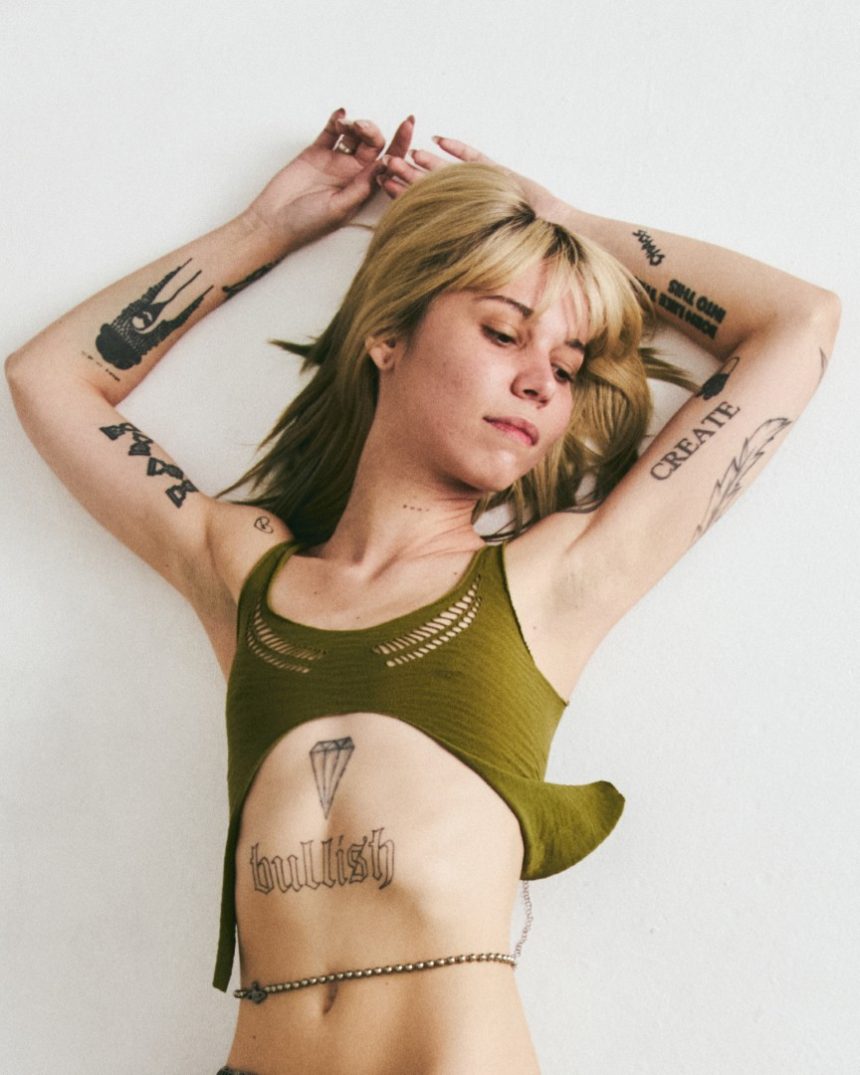
Berlin-based DJ, producer, and vocalist Mija is redefining the boundaries of electronic music with her latest EP, Hard Disco. The project weaves together four tracks that resonate with themes of desire, mischief, and liberation. Taking a hands-on approach, Mija wrote, performed, produced, and mixed the record entirely on her own. This level of control allows her to rely on instinct and experimentation rather than strict adherence to genre conventions. In an exclusive interview with FAULT, she opens up about the beauty of scars in music production, the art of revitalizing old sounds, and her journey toward building an inclusive artistic community that transcends the limitations imposed by streaming platforms.
FAULT: Hard Disco presents disco as a culture that’s still evolving. What drew you to that area of music in the first place? What did you want to preserve from its history, and which elements were ripe for repurposing?
Mija: Disco house was the very first genre I ever spun when I began DJing in 2012. The playfulness and infectious joy of disco always captivated me, creating an environment where people could smile, sing, and lose themselves in the dance. I was also heavily influenced by Chicago house, which maintains sophistication while sharing overarching themes with disco. I believe that a DJ’s greatest skill lies in celebrating our musical ancestors while simultaneously feeding the crowd something fresh and enlightening. Disco and Chicago house have such a timeless quality that they lend themselves to revival. You’ll find samples of a cappellas from the ’90s and even the famed M1 synth making a comeback this year, proving their lasting impact.
The EP brings disco, hardgroove, techno, Eurodance, and classic house into the same space. I know you hate genre limitations, so it must’ve been fun chopping up those sounds to create something less constrained by their origins. That said, I’m curious about how you make your influences feel cohesive without smoothing away their differences – is that something you do freely and instinctively, or is it more intentional?
I strive to keep the process instinctive, focusing on what excites me in the moment rather than overanalyzing. The beautiful thing about subgenres is their intersectionality; the vernacular we use to define them continues to evolve. When I produce tracks that fit nicely into my DJ set without sweating the technical details of genre classification, it’s a sign to me that it belongs together.
You wrote, performed, produced, and mixed the entire project yourself. Which part of that process pushed you furthest beyond your comfort zone?
The last 5% of the song is always my challenge. I relish the creative spark of initiating new ideas, but bringing them to completion brings a unique pressure. Often, I overthink the process, and it’s only when I revisit earlier drafts that I rediscover the real magic. The pressure to produce excellent tracks encourages me to push boundaries, but I continually remind myself to trust my intuition and know when to stop tinkering.
Your vocals give these tracks a playful, personal quality. Has singing changed the way you approach electronic music compared with producing primarily for the dancefloor?
Singing has always been a core part of my approach to electronic music. Since the beginning, I’ve integrated my vocals into my tracks in a way that enhances their emotional resonance. There’s an undeniable connection that occurs when I use my own voice, creating more impact for the audience. It’s raw and imperfect, but I believe that our imperfections contribute unique flavor and stylistic identity.
Berlin and techno go together like hipsters and Club-Mate, but the city’s club culture has always been broader than its reputation. At the same time, there’s often a sense of looking back to go forwards, with the return of ’90s-era hardgroove and Eurodance a case in point. As a Berlin resident yourself, does it feel like the city is drawing productively on its past, or is there a danger of nostalgia crowding out innovation? And where does disco fit into that picture?
In my view, true innovation cannot be overshadowed by nostalgia. Visionary artists will always manage to cut through any noise. That said, as humans, we derive comfort from familiar rhythms and sounds, and everything we create is inherently linked to our history. As a DJ and producer, I revel in drawing inspiration from the past and infusing it with new life, celebrating the cyclical nature of music and creativity.
Each track has its own character, from the immediate movement of ‘Feels Good’ to the darker pull of ‘Temptation’. How did you shape the EP’s progression across those four tracks?
Structuring the EP with unique identities for each track while ensuring cohesion was my primary goal. If you think of the EP as a book, each song serves as a chapter. ‘Hard Disco’ encapsulates that fluttery feeling of having a crush, whereas ‘Temptation’ embodies a cheeky encounter. ‘Feels Good’ is akin to indulging in something long yearned for, while ‘On The Floor’ captures the euphoria of ultimate success on the dancefloor.
You’ve described finding a pocket between the classic house and disco you love and the faster, harder rave sounds you grew up with. Was that something you specifically tried to achieve with this record, or is it more of an ongoing goal for what you want to do with your music in general?
That’s definitely an ongoing mission for me. Since moving to Europe, I’ve dedicated myself to producing ‘house’ music that embraces higher energy levels while respecting its origins. My ultimate aim is to retain the ‘soul’ of dance music, bridging classic vibes with contemporary influences to create something timeless.

After taking your music through Asia, the US, the UK, Europe, and Australia this year, have different crowds changed your understanding of which sounds or moments create a genuine sense of collective release? Does that differ from place to place, or is there a universal language of the dancefloor that you’re aiming to express as fluently as possible?
Absolutely, the reaction can vary greatly depending on the location. The key lies in how you deliver your set. You can’t simply drop tracks and expect an instantaneous connection; finessing your selection is crucial for engaging the crowd. I always try to balance giving them familiar hits and then introducing something new they haven’t heard yet, contextually integrating it into the flow of the gig. Adaptability, while maintaining artistic integrity, is something I strive to hone constantly.
Never B Alone uses a community-led model in which artists collectively vote on new music. What has running the label taught you about sharing creative authority while protecting a strong artistic identity?
For me, music streaming often doesn’t cover bills, but my artistic community does. Thus, I focus largely on community building to empower emerging artists to gain confidence and independence in their creative expression. My label thrives on a collective artistic identity rather than a singular vision. While I don’t dictate which tracks get released, I’ve noticed organic trends in the music that garners votes, and observing this natural evolution feels far more rewarding than imposing one narrow sound.
Mija, what is your FAULT?
It’s my FAULT that the guest list is over capacity (not sorry).