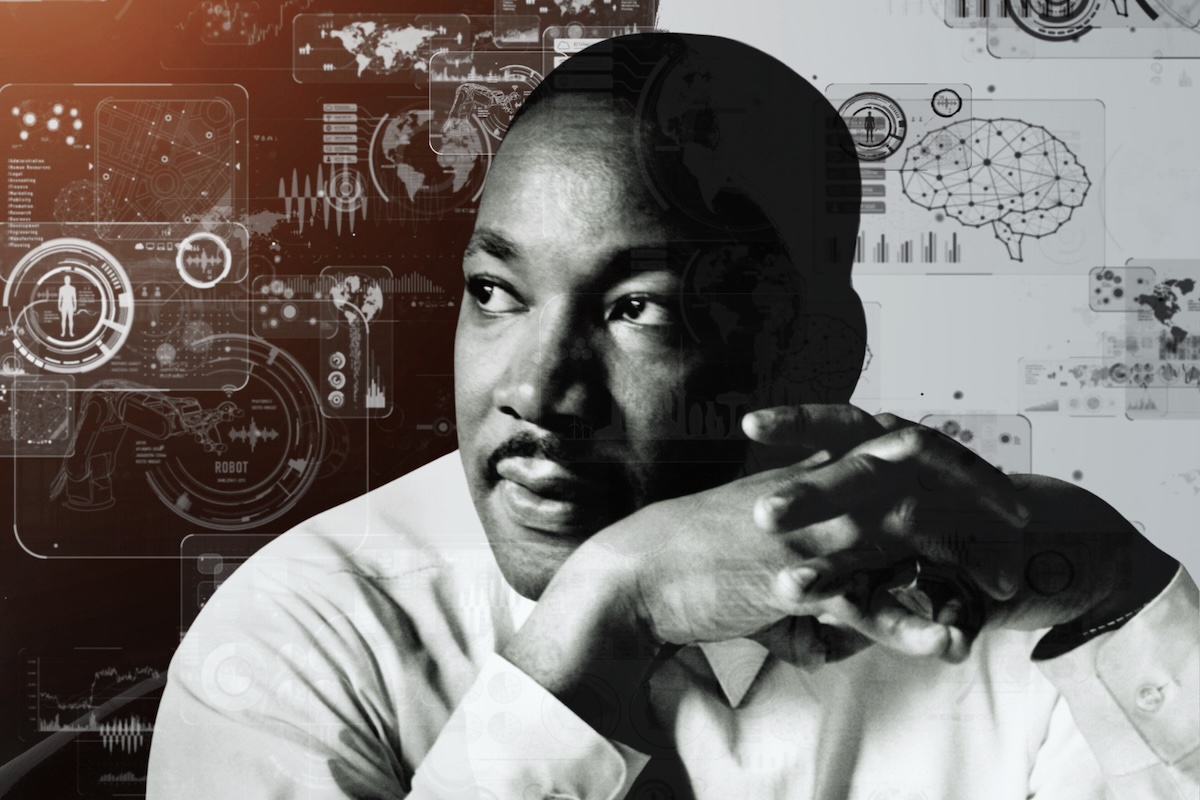
Martin Luther King Jr.’s Massey Lectures: A Vision for Technology and Morality
In late 1967, the Rev. Martin Luther King Jr. captivated millions of Canadians through five groundbreaking speeches delivered as part of the Massey Lectures. During these addresses, he tackled pressing issues of the time, such as the Vietnam War and the ongoing struggles of the Civil Rights Movement. However, his foresight extended far beyond these immediate concerns. King took a moment to reflect on a theme that remains relevant today: the social challenges posed by technological progress.
King eloquently articulated his concerns about technology and its implications for humanity. “Gargantuan industry and government, woven into an intricate computerized mechanism, leave the person outside,” he warned. “The sense of participation is lost, the feeling that ordinary individuals influence important decisions vanishes, and man becomes separated and diminished.” His words resonate powerfully in our current age, where technology increasingly shapes everyday life in ways King could only begin to imagine.
At the time of King’s addresses, the world of computers was vastly different from today. Machines were large, only functional within the confines of specialized rooms, and operated by experts who managed stacks of punch cards. The beginnings of digital networking were emerging, with funding from the Pentagon paving the way for what would eventually become the ARPANET, the precursor of today’s internet.
Anticipating Ethical Questions of Artificial Intelligence
Recent discussions at the University of Pennsylvania, during an event titled AI and the Dream: Technology in Service of Humanity, brought King’s insights back into focus. This event was co-sponsored by various university departments, including Penn Engineering and the School of Social Policy & Practice. Participants highlighted that King had anticipated many of the ethical questions currently posed by artificial intelligence (AI) systems.
“Dr. King warned us that our technological means can outpace our moral ends,” stated Valerie Dorsey-Allen, Director of the African-American Resource Center (AARC). As AI technology reshapes various sectors such as education, healthcare, and civic life, pressing questions arise: Who benefits from this technology? Who is left behind? And critically, who makes these decisions?
The Challenges of AI: Bias and Misinformation
As discussions progressed, the panel acknowledged the well-documented downsides of AI. These systems have the potential to replicate biases manifested in their training data, generating misleading information and rendering a considerable impact on the labor market by automating intellectual tasks.
AI expert Chris Callison-Burch noted that, even if AI is utilized with good intentions, the ingrained biases can be harmful. “AI is learning from internet data, which reflects us, our society, and our history,” he explained. This raises an important point: the question of not merely how AI functions but also who is controlling its development.
Desmond Upton Patton, a prominent figure in discussions about AI and ethics, emphasized the necessity for communities to have a say in the technologies being created. “Harm has to be addressed from the start, not just after deployment,” he argued, stressing the importance of inclusive and responsible governance in technological advancements.
Rethinking Connection in a Digital Age
King’s conceptualization of the “Beloved Community” comes to light in this discussion, emphasizing a society characterized by justice and mutual responsibility. The panelists explored what meaningful human connection looks like in an age heavily mediated by screens and algorithms.
Clayton Colmon, the event’s moderator, raised vital questions regarding authenticity in our modern interactions. The underlying consensus was that the role of AI should not be to sever human connection but to enhance it. “AI can move us toward beloved community when it strengthens care and deepens understanding,” Patton noted, pointing to the potential for AI to better identify at-risk users in social networks or to improve community outreach.
The Path Forward: Ethical Tech Development
King’s Massey Lectures also differentiated between technological and moral progress. “Nothing in our glittering technology can raise man to new heights,” he asserted. “In the absence of moral purpose, man himself becomes smaller as the works of man become bigger.”
In reflection, the panelists concurred that the ultimate impact of AI will depend on the decisions of those who wield it. “Our participation matters,” said Callison-Burch. By fostering a community of informed users who engage with AI technology comprehensively, members can contribute to more equitable and ethical societal outcomes.
In a world where technological advancements continue to evolve at an unprecedented pace, revisiting King’s warnings and foresights is not just relevant—it’s imperative for shaping a future that prioritizes humanity alongside innovation.