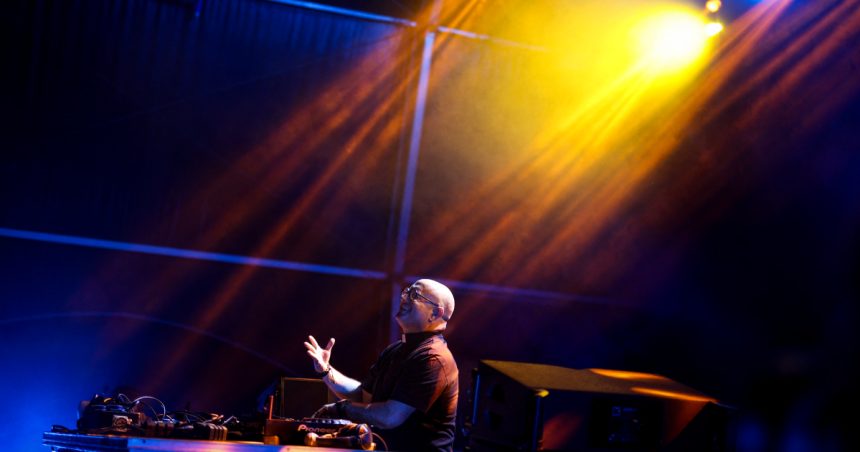
Padre Guilherme: The Priest Who’s Revolutionizing the EDM Scene
Earlier this year, the Portuguese electronic dance music sensation Padre Guilherme lit up London’s Ministry of Sound, a venue synonymous with nightlife and beats. My friends and I eagerly attended, intrigued by this clerical DJ whose infectious energy has captivated audiences worldwide. We had first encountered Padre Guilherme on Instagram, where clips of his January 2025 set beneath the iconic Christ the Redeemer statue in Rio had gone viral. These videos showcased a smiling priest presiding over a sea of ecstatic ravers, his outstretched arms mirroring the statue’s own, creating a striking visual of celebration and spirituality.
A Blend of Spirituality and Celebration
Further cementing his unconventional status, another viral video surfaced from November 2025, where he performed outdoors at a concert celebrating Archbishop Bernard Bober’s 75th birthday in the heart of Košice, Slovakia. The set’s centerpiece was a unique collaboration with Vatican authority, featuring a video address from Pope Leo XIV directed at the youth gathered to celebrate. The Pope’s synthesized blessing, building to an energetic beat drop, embodied a spirit of fraternity, calling on the youth to live out their Christian values with enthusiasm. The connection between the Pope’s words and the EDM atmosphere was compelling, giving attendees in this crowded space a unifying experience of hope and pulsating energy.
The cheekiness surrounding the label “the Pope’s official DJ” adds a playful touch to Padre Guilherme’s persona, yet it serves as a reminder of the innovative blend he represents. While many view electronic dance music as a genre incongruent with ecclesiastical tradition, he has ingeniously merged these worlds. Catholicism’s history is rich with hymns and liturgical music, yet Padre Guilherme ventures into a territory scarcely explored by Catholic artists who cater to mainstream youth culture.
The Nostalgia and Innovation of Dance Tracks
Attending the concert evoked a mix of curiosity and skepticism. I perceived Padre Guilherme as a symbol of a Catholicism that appeals to young people who enjoy the vibrant energy of a club scene. As cultural conversations around faith evolve, Padre Guilherme seems to embody the newfound countercultural influence of Catholicism—a phenomenon increasingly relevant in discussions of modern religious identity.
The music itself was undeniably catchy. Many of Padre Guilherme’s tracks are simple yet well-produced, like the poignantly titled “We Want Peace,” which features visuals of the Holy Ghost fluttering its wings in rhythm. Another track, “Lift Up the Fallen,” similarly promotes community and virtue—not exactly high theology, but crafted to inspire attendees to embrace the foundational values of faith, hope, and charity. While the set largely consisted of original tracks, the highlight was a spirited remix of “Freed from Desire,” a football anthem that transformed within the context of this celebration, resonating with joy and camaraderie.
The Crowd’s Energy and Collective Experience
Despite my personal reservations about listening to EDM outside of such settings, nothing could diminish the electrifying atmosphere created by the crowd. The energy surged as people danced, united by a common appreciation for Padre Guilherme—a middle-aged priest with an infectious smile. Chants of “Padre! Padre!” rang out, reflecting a genuine affection that transcended diverse backgrounds.*
In analyzing the phenomenon of Padre Guilherme, it becomes clear that the innovation lies in his introduction of Catholicism into an existing cultural celebration rather than the reverse. The liturgical modernization seen in many churches during the latter half of the 20th century is inverted here; instead of altering traditional worship, EDM is being infused with a message of faith. What’s breathtaking is the naturalness with which this happens—no forced imagery, no awkward attempts to fit a square peg into a round hole.
Musical Form and the Essence of Worship
However, the dynamic celebration also raises questions about the relationship between music and its intention within the context of worship. While electronic dance music excels at engaging the senses, whether it effectively serves as a tool for spiritual edification is debated. The Church holds that music composed “soli Deo gloria” transcends mere enjoyment—its purpose is to glorify God. While some argue that EDM can evoke transcendence, others cite the necessity of maintaining theological depth and complexity in worship music.
St. Augustine’s reflections on music provide a critical lens for this discussion. He cautioned against the sensory allure of music overshadowing rational apprehension of the divine. Critics might argue that the extravagance of upbeat EDM could detract from its intended spiritual essence—a concern particularly relevant in an age when music often serves as a backdrop to escapism rather than a conduit of worship.
The Path Forward for Catholic Music
Nonetheless, while traditional devotional music retains its revered status, Padre Guilherme’s contributions stand as a fresh, accessible avenue for engaging with the faith. His tracks, enjoyable and lively, cater to those seeking connection, not as replacements for solemn worship but as expressions of joy that may lead closer to God. They don’t aim to infiltrate sacred services; nothing about his performance seeks to overshadow the beauty and depth of traditional liturgical music.
As the boundaries of worship music continue to expand, the exciting prospect remains: the potential for innovative approaches to make faith resonate within contemporary cultural contexts. It raises fascinating questions about how different genres can coexist, enhancing rather than replacing the richness of Catholic heritage. Whether viewed as novelty or a genuine expression of faith, Padre Guilherme’s EDM journey signals a time of exploration and joyful celebration within the faith community.