
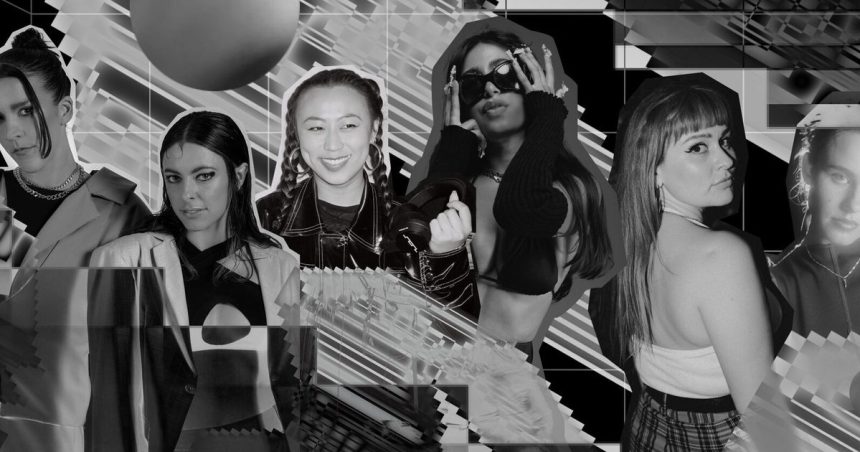
SHELLEY LIU
“Electronic music that would usually be considered ‘underground’ is now the ‘mainstream’ amongst youth, and a lot of the festivals here that traditionally only booked indie-rock acts have started branching out and are booking electronic acts,” says artist manager, booking agent and DJ Shelley Liu, who was named in Australia’s Music Networks 30 Under 30 Music Industry list in 2021 and helps program Boiler Room’s Australian flagship events.
Having had her first taste of the club world 14 years ago and gone on to spend many years working as a promoter booking bands and DJs at indie club nights, she says it has been “interesting to see music genre trends change over the years.” With artists now regularly playing a mix of pop, techno, and everything in between, Liu thinks that post-lockdown, people are more open to hearing a range of genres in sets. “That’s what makes this current new wave of electronic music so exciting because the artists making the music are influenced by so many different genres. In turn, this creates their own unique sound.”
One reason for this, she suggests, is that “club community culture doesn’t really exist as much anymore” – because weekly, community-building club nights no longer exist. This is a seismic shift compared to when she grew up: “Every Tuesday, Thursday, Friday and Saturday, you’d find me at the same club, and there was a real sense of community amongst the regulars because we’d be seeing each other so often. To this day, some of my best friends I met at those clubs”.
Nowadays, however, she suggests that young people are turning to other platforms to find community, for example, Discord channels and Tik Tok. “It’s a lot more online, and there are a lot less reasons to leave the house these days,” she says. Consequently, Liu suggests that because of “the power of the internet, streaming platforms, and social media, the barriers between countries when it comes to music aren’t as difficult as they previously were.”
The fact that Melbourne went through two years worth of strict lockdowns didn’t help either; “many people got used to not leaving the house, and living a URL lifestyle instead of an IRL lifestyle.” Alongside the negative impact of the pandemic, she says the rising cost of living and inflation has hit the industry hard. “People are having to prioritise their spending, and that’s without mentioning increased touring costs.” Consequently, she says, “It is harder for music events to sell tickets, and I can’t see that changing anytime in the near future. People will just learn to adapt to it”.
Liu also suggests that because everyone knows each other due to Australia’s smaller population size compared to other countries, it is “easier to break through as the scene is smaller, and there are only so many cities you can tour here before you need to look at touring internationally.” This sense of community, she believes, is what creates a thriving scene. “It’s nice to see when artists are genuinely friends with each other, too, and that happens a lot here,” she adds, drawing similarities with the wave of electronic artists who found success around 2015 after Flume blew up internationally; “Wave Racer, Cosmo’s Midnight, UV boi, Basenji and Young Franco were also really close friends and supportive of each other because there was this new wave of music that wasn’t considered commercial or mainstream.”
Being so much further away from the rest of the world has a wide impact; she adds: “When there are other Australians doing cool shit in the same vein as you, you want to be supporting and uplifting each other – especially when they do export to overseas because we want to see each other win.”