
It was around 10 years ago that Courtesy fully immersed herself in Copenhagen’s nightlife. Back then, DJs were mainly playing crossover indie rock and electro house; there was no techno scene to speak of. Times were cheesier, she admits, but there are aspects of that bygone scene that she still appreciates. “It was very colorful with a very costume-y, graphic aesthetic as well. The music had an energy to it which I really enjoyed.”
Over the past few years, however, Danish artists have revived and modernized the fast trance one might associate with ’90s Belgian labels. In the process they have put their own dark, distinctly melancholic spin on it. Courtesy has become a central figure in this movement: First by co-founding Ectotherm, a short-lived label that officially disbanded last year, after one of her co-creators wanted to abandon the project. Now, Courtesy has a new solo venture, Kulør. With this new label, she plans to work with some of the artists from Ectotherm, but put more focus on visuals. (See the mercuric album art for Kulør’s debut compilation, which was a collaboration with photographer Fee-Gloria Groenemeyer). The project will channel Courtesy’s journalistic sensibilities and build on the work that Ectotherm accomplished, in order to better expose Danish techno to a wider audience. “This specific compilation was about this sound, documenting what is happening in Copenhagen right now,” she says. “Now people are making fast techno everywhere, but to be honest, the boys from Copenhagen are the ones who properly brought it back.”
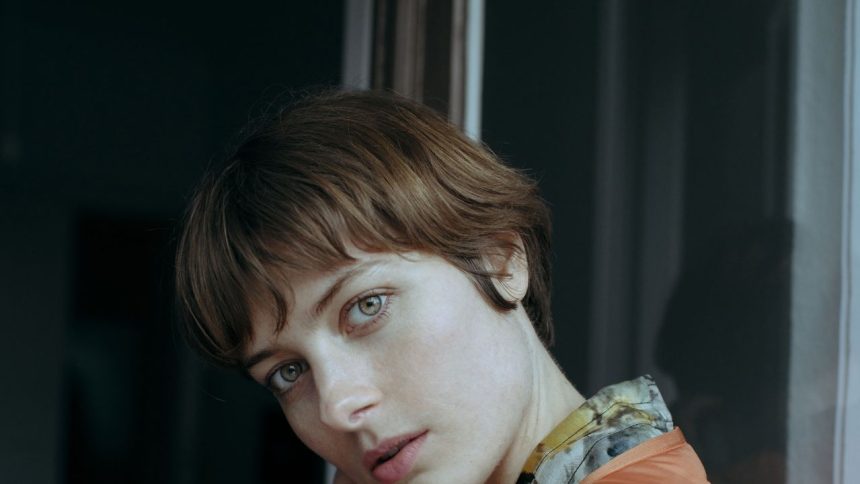
Photo: Fee-Gloria Groenemeyer , Hair: Attila Kenyeres
Their sound takes influence from the past, but it’s underlying character is fully of this time. Courtesy maintains there are major differences, beyond the obvious technical advancements in terms of production. “I just had a really interesting conversation with a guy I just hired, this young man from Copenhagen called Mio Nordentoft,” she says. “He just wrote a thesis about this sound in Copenhagen, comparing it to ’90s trance, and he kind of coined the term ‘blue euphoria’ to describe it, which I think is a really nice way of looking at it.” The ’90s fostered a sense of optimism that lent itself to emotional arpeggios built with major chords, but things are different now. “Before I just called it heartbreak techno because I would see these boys who were a little bit heartbroken or struggling a bit and then they would make this beautiful, slightly sad music, but I also think that’s our world now.”
Perhaps surprising, given the melancholic nature of this sound, Courtesy’s wardrobe is an explosion of color (though, fitting given that Kulør is the Danish word for color). She often wears a brightly patterned vintage shirt that resembles a grid of trippy screensavers (in a good way), which is part of her environmentally-conscious strategy to pare back. “My friends say I have slightly eccentric taste in colorful shirts, so I’ll find something and I’ll fall in love with and it and wear it all the time,” she says. On a recent trip to India, she found several intricately patterned shirts to round out this collection. With a loud top, she’ll wear more classic bottoms and accessories, which she notes is a somewhat Scandinavian approach (Danish brand Wood Wood is one of her go-to sources for pants and jackets). “Especially as an artist, you can really get into a trap where you feel like every time you perform you have to wear a new set of clothes. I would rather have something beautiful and high quality,” Courtesy says. “I don’t have a huge wardrobe. I like simple things that are beautiful, and I try not to be too mean to the environment, and that’s kind of my attitude towards the way that I dress.”



