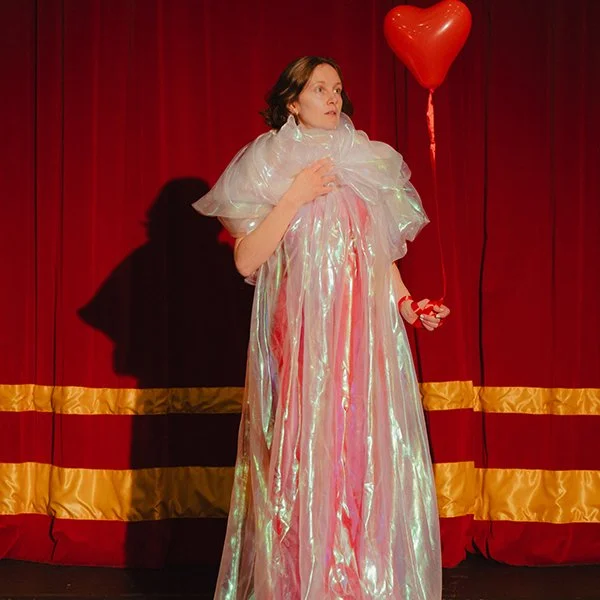
Frankie Archer: Bridging the Old and the New in Traditional Music
There’s a unique vibrancy in the music of Frankie Archer, an evocative artist hailing from Consett in the North East of England. By resurrecting centuries-old ballads, medieval texts, and Northumbrian folk melodies, Archer crafts a refreshing sound that pushes boundaries. Her debut album, The Dance of Death, is not merely a nostalgic look back at tradition; it is an exhilarating journey that transforms the past into an energetic and contemporary musical experience.
A Sonic Fusion
At first listen, Archer’s music is striking in its ability to intertwine ancient narratives with modern electronic production. “I take very old traditional words, tunes, songs, and build them into a totally new sonic world,” she explains, infusing synths, drum programming, and fiddle into her compositions. Her distinct vocal style—rooted in tradition yet imbued with a contemporary flair—creates an audacious blend that challenges the conventions of folk music.
The Birth of a Genre
Artwork often emerges from necessity, and for Archer, her exploration into the electronic realm was not initially a calculated decision. With a handful of songs layered in complexity, she sought a means to perform them live. This quest led her to invest in a sampler-sequencer, a tool typically associated with electronic dance music. “Playing around with that opened up so many possibilities for arranging and manipulating sounds,” Archer reflects. This intuitive approach allowed her to embrace the wild landscapes of sound that characterize her work.
Transforming Themes
The title track of her album, The Dance of Death, stands out both thematically and sonically. Drawing from the medieval poem by John Lydgate, Archer distilled 82 stanzas into a haunting yet punchy narrative. “It’s about whittling down the words to the ones that are gonna tell the story best,” she explains. The result is a high-energy, almost anthem-like experience that resonates today. With a catchy synth riff and powerful percussion, the song brings the weight of mortality into a visceral dancefloor context, reminding listeners to live fully in the face of life’s transient nature.
Reflecting on Mortality
As she navigated through traditional ballads, Archer found herself reflecting deeply on themes of mortality, obsession, and identity. “It took me straight back to the YOLO era,” she comments, highlighting the timeless message within the music. By stripping away religious contexts and focusing on the essence of human existence, she emphasizes the fragility and preciousness of life, encouraging listeners to seize their moments.
Breaking Norms in Folk Music
Folk music is often approached with tremendous reverence, but Archer’s fearless experimentation strives to redefine boundaries. “I do a lot of work to make sure I don’t misinterpret [old songs] by looking at them too simply,” she affirms, underscoring a thoughtful approach to traditional narratives. Within her artistic process, there exists an ethos of unrestricted creativity. “I don’t want to restrict myself,” Archer states candidly. This liberating mindset allows her to explore strikingly original interpretations.
Influences and Inspirations
Archer’s sonic landscape is marked by a plethora of influential artists. From Björk’s innovation to Caroline Polachek’s pop sensibilities, she pulls inspiration from a diverse array of talents. The rhythmic textures of Sofia Kourtesis and the emotional depth of James Blake combine in a tapestry of sounds that shape her music. Each artist contributes to her distinct sound palette, showcasing the collective influence of contemporary artists in her work.
Studio Dynamics and Collaboration
Collaborating with the revered producer Guy Massey brought an enriching dimension to The Dance of Death. “Guy was everything that the album needed, and everything that I, as an artist, needed,” Archer emphasizes. In the studio, she found an environment characterized by positivity and playful experimentation. With the collaborative support of Massey and fellow producer Fran Mezanmi, new ideas flowed freely, resulting in an album that feels both cohesive and adventurous. The experience pushed Archer creatively, leading her to experiment with sounds she might have otherwise avoided—for instance, playing bass, a task she initially approached with hesitation.
Frankie Archer stands as a testament to the power of innovation within tradition. By breathing life into historical narratives through a modern lens, she invites listeners into a world that is both ancient and strikingly contemporary, ensuring that the stories of the past continue to resonate vibrantly in today’s musical landscape.