
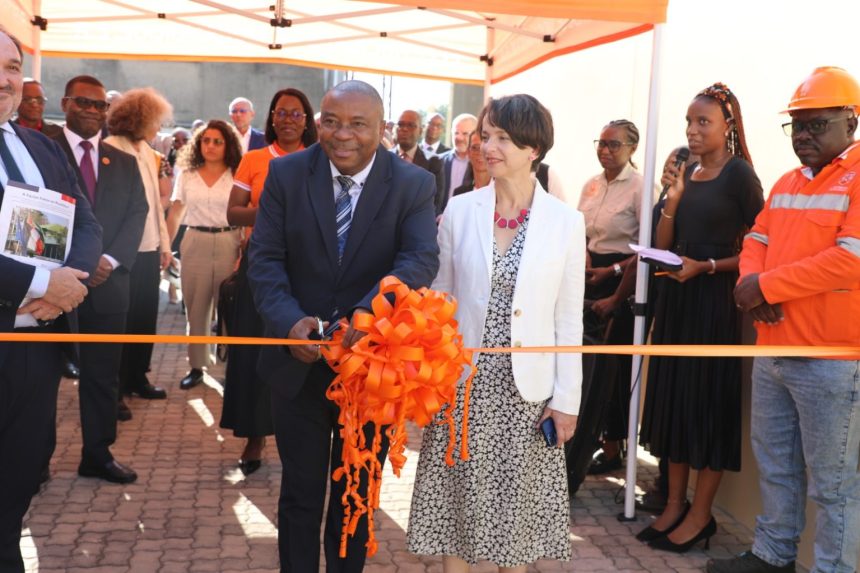
Mozambique’s publicly owned electricity company, EDM, on Wednesday inaugurated a training centre in Maputo, with the capacity to train approximately two thousand workers per year.
The facility, located at the Maputo Thermal Power Plant, was budgeted at five million Euros (5.8 million US dollars, at the current exchange rate), and is aimed at modernizing and enhancing the company’s human capital.
According to António Banda, Permanent Secretary at the Ministry of Mineral Resources and Energy, speaking during the inauguration ceremony, the centre has seven state-of-the-art laboratories, complemented by four others already existing at the Chimoio training centre, in the central province of Manica.
Banda believes that the new centre represents an important milestone in the company’s transformation.
“This project includes the rehabilitation of the Maputo and Chimoio training centres, initiated in 2018, including technical assistance, content development, and the creation of operational courses. The initiative allowed for the reinforcement of laboratories and training rooms, strengthening the company’s technical and pedagogical capacity”, he said.
Banda added that the investment in training has contributed to EDM’s positive performance, which is recognized internationally.
“In March 2025, EDM achieved ISO 9001 certification, which attests to the quality of its training processes, both in-person and distance learning. In 2023, the company became the first in the country and the second in Africa to obtain ISO 21001 certification, reinforcing its position in the field of training”, he said.
For her part, Yolanda Cintura, the EDM Human Resources manager, said that the centre is the result of a strategic vision oriented towards the enhancement of human capital, in partnership with the French Development Agency (AFD).
“Today we have a centre of excellence for training, which is already attracting interest from companies in the national and African energy sector,” she said.
The French ambassador to Mozambique, Yann Pradeau, highlighted that investment in human capital is one of the pillars of cooperation between the two countries.
Pradeau said that the project allowed for the restructuring of 16 technical training programmes, with an additional investment of approximately 2.6 million Euros.
He added that part of the funds, around 100,000 Euros, was allocated to training grants for women, covering the northern cities of Quelimane and Lichinga, the southern cities of Inhambane and Xai-Xai, and the central city of Beira.
Source: AIM



