Nigeria’s Telecommunications Transformation: A Leap into the Future
The Communication Desert of 2000
In the year 2000, Nigeria’s landscape was starkly different in terms of connectivity. With a burgeoning population of 125 million, the nation had merely 700,000 fixed telephone lines, of which only about 500,000 were operational. This resulted in a dismal tele-density of 0.4 lines per 100 inhabitants—a far cry from America’s robust 68.4. Nigeria was, in many ways, a communication desert, lamenting the absence of a reliable infrastructure that has become a lifeline for economies around the globe.
A Mobile Revolution Unfolds
Fast forward a quarter of a century, and Nigeria has undergone a seismic shift, emerging as the sixth-most populous country in the world with a staggering estimated population of 237 million by 2025. The wireless revolution is nothing short of miraculous—surpassing a mobile connections figure of 200 million, it has ushered in an era where access to telecommunication and, consequently, economic opportunity, has dramatically transformed.
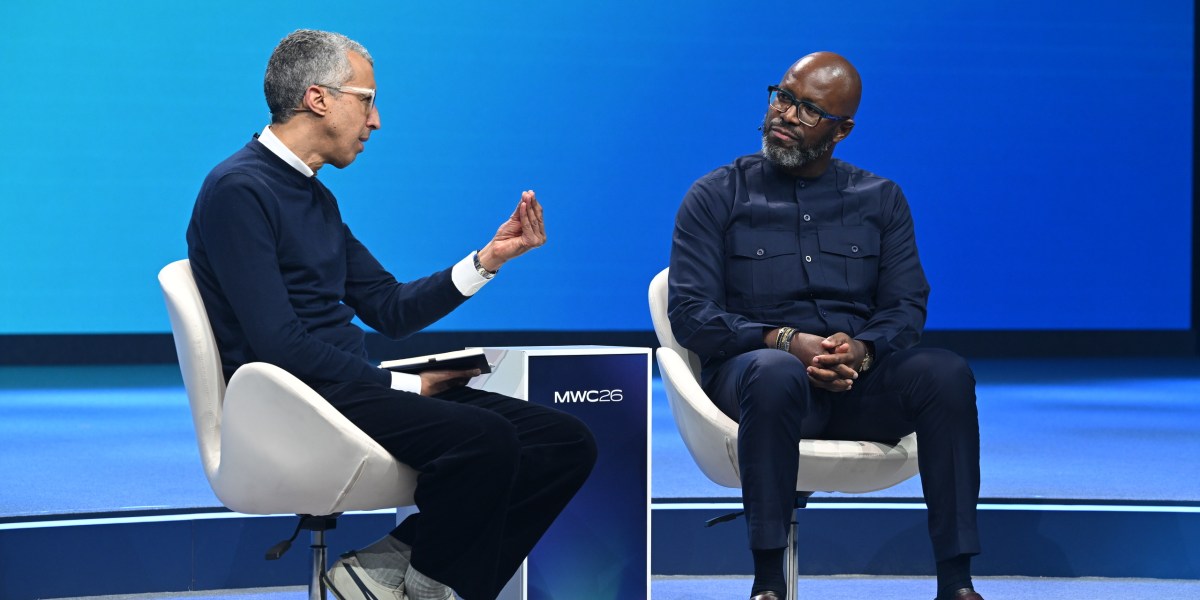
Ralph Mupita, the chief executive of MTN, Africa’s largest mobile provider, encapsulated this sentiment at the Mobile World Congress in Barcelona, emphasizing how technology has enabled Africa to leapfrog traditional development hurdles. “We are using technology to leapfrog and to move ahead,” he remarked. Mupita noted that by 2040, Africa’s median age would be just 19, making it imperative that technology plays a pivotal role in realizing the continent’s full potential.
The Road Ahead: Digital Services and Infrastructure
As analysts ponder the next steps for Nigeria and other emerging economies, MTN demonstrates proactive growth strategies by expanding into diverse digital service provisions, including gaming, music, and mobile financial services. Partnerships with corporate giants like Microsoft and Mastercard underscore a collaborative approach that seeks to redefine telecommunications from merely owning “dumb pipes” to providing comprehensive “all service” offerings.
Mupita, however, clarified the need for caution amidst optimism, noting that 40% of MTN’s 300 million customers remain entrenched in traditional voice services. The conversation around advanced technologies like 6G seems distant when many consumers have yet to embrace the internet fully. “How does the Global South not get left behind?” he asks, acknowledging that the path forward hinges on affordable products and global partnerships.
Youthful Populations: An Asset or a Challenge?
Many emerging economies, including Nigeria and India, possess youthful populations with fewer legacy systems to hinder their technological adoption. This demographic dividend can be a powerful boon for economic growth. During the India AI Impact Summit, for instance, the palpable excitement among attendees mirrored that typically reserved for celebrities. This energy fosters economic dynamism—in stark contrast to societies overwhelmed by outdated infrastructures.
Jyotiraditya Scindia, India’s Minister of Communications, articulated India’s swift transition from 4G to one of the fastest deployments of 5G, characterized by investments upwards of $4 billion and coverage nearly spanning all districts. With mobile data pricing collapsing from $3 per GB a decade ago to just nine cents today, the Indian experience exemplifies what can happen with determined governance and innovative approaches.
Entering the Intelligence Economy
Matthew Oomen, CEO of Jio Platforms, describes the current era as the “intelligence economy.” Where the 20th century was heavily reliant on industrial outputs, this century is steered by technological advancements. Oomen emphasizes that harnessing comprehensive intelligence—infusing it within critical sectors such as energy, transport, finance, and national defense—is essential for sustainable growth. He argues that at the crux of this transformation lies a robust telecommunications infrastructure, serving as a foundation for future advancements.
Embracing Responsibility for Resources
This technological revolution has also raised critical conversations around responsibly managing global resources. Visionaries like Elon Musk have hinted at a “new era of plenty,” while Ezra Klein has penned works on “Abundance,” examining the potential of technology to solve pressing global issues like food production and sustainable energy. However, skepticism persists regarding the inevitability of progress—historically, technological advances have not always resulted in equitable outcomes.
The Digital Divide: An Ongoing Challenge
Despite the strides made in telecom and digital services, the digital divide remains a pressing reality. Developing regions often face barriers that could stifle their growth or compound their challenges. It’s crucial to acknowledge that while opportunities abound, they must be navigated with a keen awareness of historical inequities and systemic obstacles.
In this landscape of rapid transformation, Nigeria stands as a fascinating case study—one poised to redefine not only its own future but potentially influence broader global narratives around technology and economic development. The journey from being a communication desert to a potential tech powerhouse may just be the beginning of a more expansive revolution.