The Evolving Landscape of Warfare in the Age of AI: Insights from the US-Israeli Attacks in Iran
In the aftermath of significant US and Israeli military operations against Iran on March 4, 2026, the geopolitical landscape of the Middle East has been irreversibly altered. This conflict, which has expanded rapidly and involved multiple nations, raises profound questions about modern warfare, particularly with respect to technology and artificial intelligence (AI). The integration of AI systems on battlefields presents a new frontier involving moral implications, critical assessments of accountability, and the privatization of military operations.
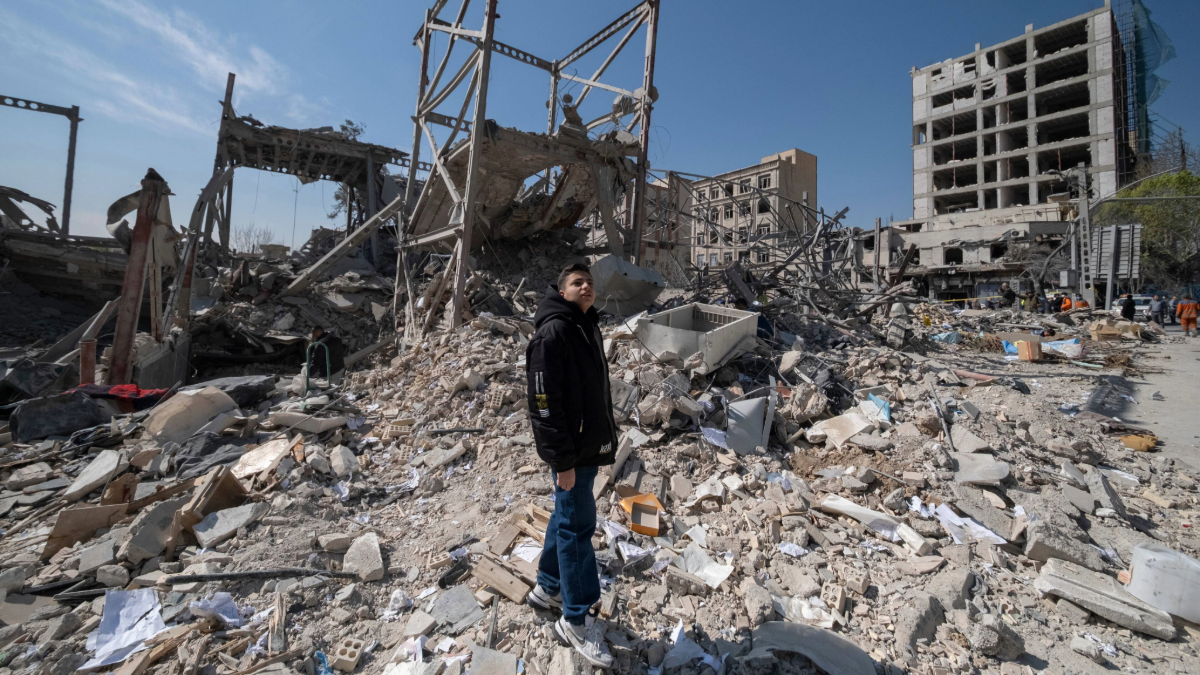
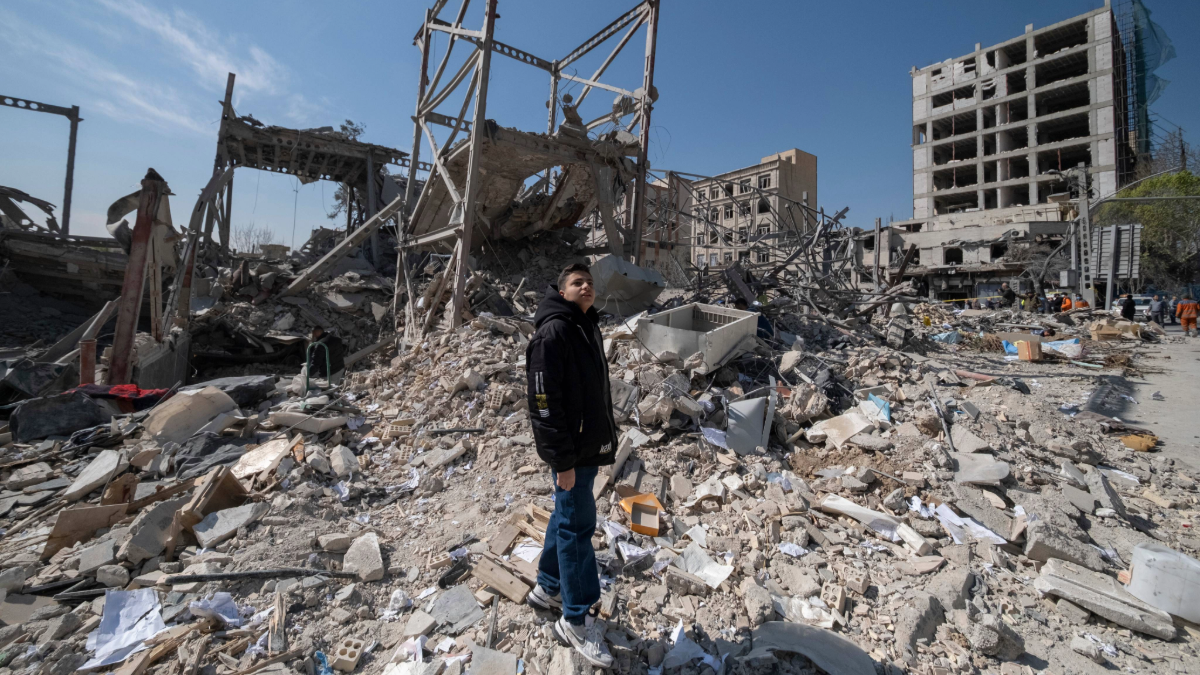
Image: A young Iranian boy looks at the sky while standing on the ruins of a diplomatic police station that is completely destroyed in US-Israeli attacks in Tehran, Iran, on March 4, 2026. (Photo by Morteza Nikoubazl/NurPhoto via AP)
AI Targeting Systems: A Double-Edged Sword
The Role of Technology in Military Operations
The current conflict exemplifies a watershed moment for AI technologies in military operations. Heidy Khlaaf, Chief AI Scientist at the AI Now Institute, emphasizes the precarious nature of integrating generative AI in both decision-support systems and lethal autonomous weapons. While these technologies offer the promise of efficiency, the risks associated with their inaccuracies raise alarms. Current generative AI models often produce outputs with less than 50% accuracy, leading to significant concerns about their application in high-stakes war scenarios.
Accountability and Oversight Challenges
As AI systems increasingly dictate military strategies, questions emerge regarding accountability. Steven Feldstein from the Carnegie Endowment for International Peace points out that the Pentagon’s reliance on AI for targeting has accelerated the pace of conflict operations. However, such rapid execution can result in devastating mistakes, as evidenced by civilian casualties in similar conflicts involving AI in Ukraine and Gaza.
Expert analyses indicate a pressing need for rigorous oversight mechanisms to validate AI-generated target lists. The uncertainty surrounding the reliability of these lists and the adequacy of verification procedures poses risks for innocent lives and complicates adherence to the laws of armed conflict.
The Information Environment: Guardrails Off
Deteriorating Trust in Information Platforms
In tandem with technological shifts in warfare, the conflict in Iran has highlighted the deterioration of integrity in information-sharing platforms. Melanie Smith and Bret Schafer from the Institute for Strategic Dialogue report that many tech companies have reduced their trust and safety teams, leading to a proliferation of state-sponsored propaganda devoid of necessary labels.
This breakdown in informational safeguards increases the risk of misinformation filling the void created by limited connectivity and accurate reporting. Instances of Iranian propaganda disseminated as factual narratives illustrate the precariousness of the current media landscape, underscoring how misinformation can exacerbate conflicts.
Information Shutdowns: A Tool for Authoritarian Control
Historically, information shutdowns during crises have been employed by authoritarian regimes to manipulate the narrative and control public perception. Such measures not only stifle legitimate communication among citizens but also create vacuums that are rapidly exploited by disinformation campaigns. The absence of credible information hinders journalists and observers from constructing a factual representation of events, thereby allowing false narratives to flourish.
The Privatization of Warfare: A New Frontier
The Emergence of Private Military Technologies
As noted by experts like Brett Solomon and Betsy Popken from the University of California, Berkeley, the battlefield has increasingly become a domain for private contractors. Emerging private technology companies play central roles in diversified operations, from predictive targeting to information warfare.
The militarization of Silicon Valley has profound implications for governance and accountability in warfare. While companies like Anthropic develop sophisticated AI systems for military applications, their technologies may inadvertently facilitate actions that violate international law, such as the recent attack on Iran. The challenge lies in regulating these companies whose interests often diverge from ethical considerations of warfare.
Economic Implications of Military Technologies
The conflict marks a shift in how warfare is conducted, moving from reliance on high-cost military assets to economically viable solutions. For example, the introduction of the LUCAS low-cost unmanned combat system exemplifies this trend. This shift not only enables a broader deployment of precision weaponry but also raises challenging questions about the potential human cost of replacing traditional military assets with automated systems.
Surveillance Infrastructure: Repurposed for Conflict
The Dual Use of Surveillance Technology
The aftermath of the Iranian Green Movement in 2009 catalyzed a surge in domestic surveillance technologies throughout Iran. Azadeh Akbari highlights the dual use of surveillance systems originally conceived to suppress citizen dissent, now utilized against the Iranian state itself, as evidenced by reports of Israeli infiltration via compromised traffic cameras. This unsettling inversion of power demonstrates how systems designed for internal control can ultimately expose state vulnerabilities.
Cyberwarfare and Its Consequences
The Stuxnet incident serves as a precursor to today’s cyberwarfare dynamics, showing the potential for digital infrastructures to produce real-world effects. As surveillance technologies evolve, they become increasingly integrated into the fabric of military strategy, blurring the lines between civilian control and state security.
In the rapidly evolving landscape of warfare, the intersection of AI, information dissemination, military privatization, and surveillance technologies continues to shape the global geopolitical order. The challenges posed by these developments compel a deeper examination of ethical, legal, and moral frameworks governing modern conflicts. Each of these elements represents not just tactical shifts, but an evolving paradigm reflecting the complexities of contemporary warfare.