Expanding Direct-to-Device Connections
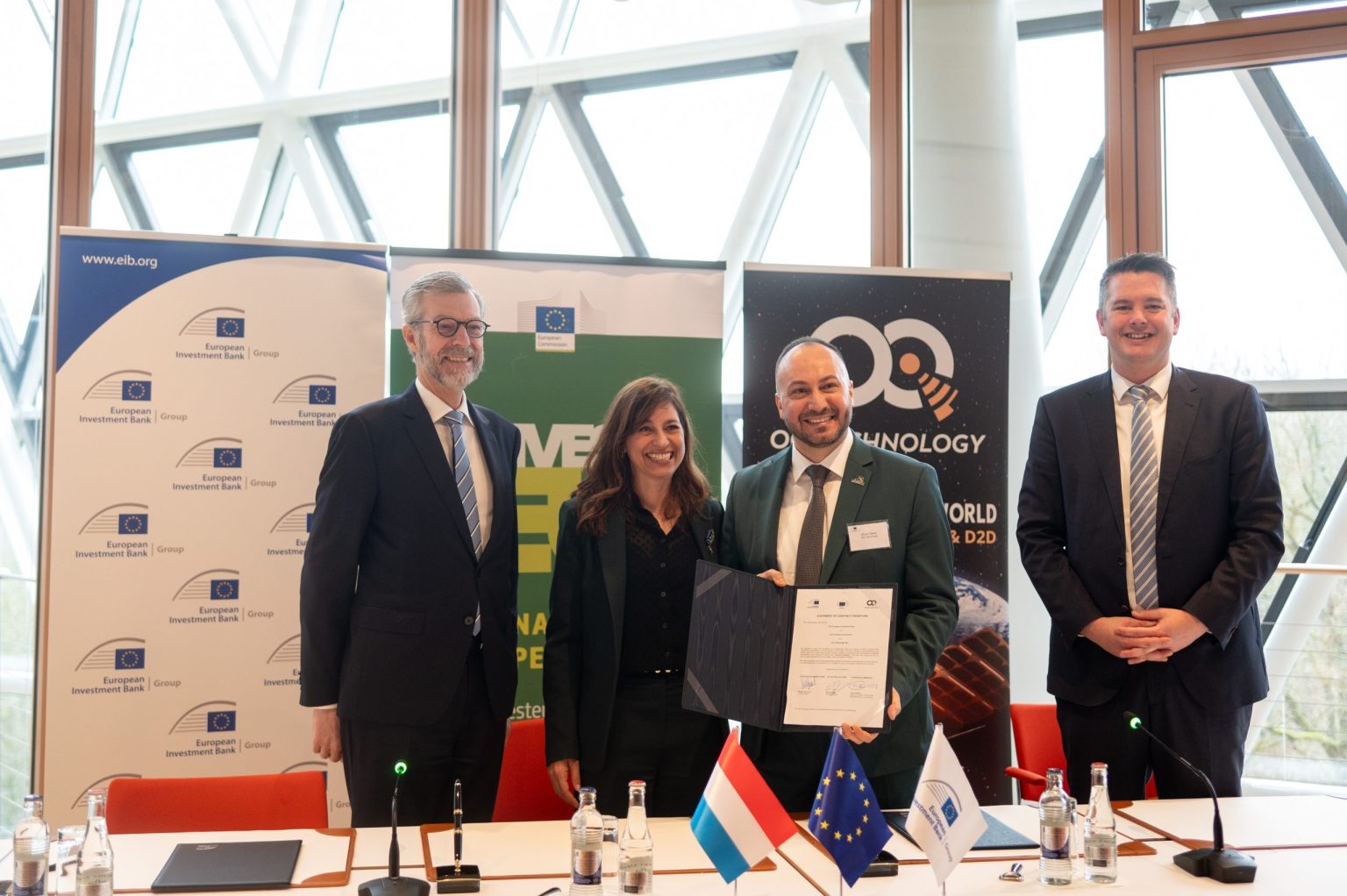
TAMPA, Fla. — In a significant move for Europe’s space ambitions, Luxembourg-based OQ Technology has secured a €25 million (approximately $30 million) loan from the European Investment Bank (EIB). This funding is earmarked for the development of a direct-to-device satellite constellation, enhancing Europe’s competitive stance against U.S.-led initiatives to deliver smartphone connectivity from space.
The critical investment by the EIB will facilitate the deployment of over 20 small satellites, which are vital to OQ Technology’s vision of establishing a network dedicated to providing connectivity directly to smartphones. This includes plans for their inaugural satellite operating in the C-band spectrum, anticipated to launch around mid-2023. This innovative approach aims to streamline smartphone connectivity with direct access to space-based services.
Current Operations and Future Directions
Currently, OQ Technology utilizes S-band for connecting a range of tracking and monitoring devices that operate off the grid. With already 10 Internet of Things (IoT) satellites positioned in low Earth orbit, the company has made substantial strides in satellite communication. Notably, they successfully transmitted a test emergency broadcast message through one of these satellites to unmodified smartphones, showcasing the initial steps toward functional direct-to-device capabilities.
The transition to C-band is particularly significant as it promises enhanced bandwidth, outperforming the current S-band capabilities. With additional satellites planned, OQ Technology aims to improve both coverage and latency. The ultimate objective is to create a multi-band constellation that serves multiple devices, including IoT and smartphones, positioning the company for a leading role in the burgeoning D2D market.
Global Competition in the D2D Market
The timing of this financial backing comes when U.S.-based operators, such as SpaceX and AST SpaceMobile, have shown considerable advancements in the D2D communications landscape. SpaceX has already begun offering messaging and limited data services across various regions while pursuing the C-band spectrum to further bolster its offerings. Additionally, AST SpaceMobile has plans to ramp up satellite deployments and recently secured a $30 million contract from the U.S. Space Development Agency to demonstrate D2D broadband capabilities for military applications.
Andrius Kubilius, the European Commissioner for Defence and Space, emphasized the importance of this investment, stating, “Space is a globally fast-growing sector, and OQ Technology is onboard the race. Europe needs to capture this growth for its competitiveness, resilience, and autonomy.” The urgency underscores a collective understanding that maintaining a competitive edge in space technology is crucial for the continent’s future.
Support from the European Commission
The financial transaction is supported by the European Commission’s InvestEU program, which seeks to mobilize public and private capital into strategic sectors, including space. This initiative aims to foster growth in these crucial fields, thus promoting Europe’s technological sovereignty.
This trend of financial backing is not unique to OQ Technology. Earlier, the EIB also supported the Spanish satellite operator, Sateliot, outlining a similar ambition to transition from 5G-compatible IoT services into direct-to-smartphone connectivity. Such movements highlight a broader European strategy to establish a significant foothold in the fast-evolving satellite communications market.
Building Institutional Capital
Before this major loan, OQ Technology had successfully raised €13 million in a Series A funding round in 2022, co-led by the venture capital arm of Saudi oil giant Aramco and Greek early-stage investor 5G Ventures. The company was initially seeking a comprehensive €30 million in a Series B round, which included a €15 million commitment from the Luxembourg Space Sector Development (LSSD), a government-backed initiative in collaboration with SES, a prominent multi-orbit satellite operator based in Luxembourg.
Interestingly, SES has also made investments in U.S.-based D2D ventures such as Lynk Global and Omnispace, which indicates a strategic effort to gain exposure to this emerging sector. Instead of broadening equity funding that ties into long-term strategies, OQ Technology’s CEO, Omar Qaise, has focused on advancing key technology milestones. This focuses on mitigating risks and subsequently attracting more institutional investors, including the EIB.
Qaise remarked, “We are continuing discussions with additional long-term investors as we scale our IoT and D2D satellite constellation,” further highlighting his commitment to securing the necessary resources for growth in this rapidly evolving sector.