
An Audio Odyssey: Exploring Riley’s Groundbreaking Debut EP “Walking Home”
Riley’s entrance onto the music scene with “Hear the Message” from his debut EP, Walking Home, is nothing short of electrifying. The opening notes are a flurry of blistering synths that pull listeners into a disorienting soundscape. Riley’s voice, a unique blend reminiscent of Mark E. Smith’s speak-singing, sets a captivating tone that is both intriguing and comfortable. The rhythmic groove that quickly emerges provides a solid foundation, grounding the listener amidst the warped musical atmosphere. What follows is a striking blend of poetic observations delivered in a remarkably brief format, showcasing Riley’s ability to convey depth within a short time frame.
The Mind Behind the Music
Diving deeper into the essence of “Hear the Message,” Riley reveals an introspective side. He describes his creative process as a quest for understanding patterns in life and his own psyche. “I’m someone who looks for a lot of patterns to explain the world and myself,” he explains. This introspection leads him into moments of existential spirals when those patterns seem elusive. With Walking Home, he embarks on a journey to express the disconnect between the mental narratives we construct and the tangible realities around us. When the track gathers momentum, Riley finds solace, learning to embrace the chaotic workings of his mind and his role as an observer—an identity he seems to wear comfortably.
A New Direction in Sound
Walking Home is no ordinary debut; it features six restless electro-oriented tracks that reflect a bold departure from Riley’s previous work with the band Ribbon Skirt. Where Ribbon Skirt rooted itself in conscious indie rock, Riley pushes the boundaries, blending the lyrical earnestness of the Pet Shop Boys with the raw energy inspired by Nine Inch Nails. This evolution in sound reflects his past in post-punk bands, where he often found himself behind the microphone. Exploring electronic music was initially intimidating, but exposure to various artists in different contexts opened the door to new creative possibilities. “It clicked,” he notes. “I think I was also missing that catharsis of singing. You’re going a little bit harder.”
The Journey of Self-Challenge
Interestingly, it was with Ribbon Skirt that Riley first ventured into the realm of electronic sounds. Their album Bite Down and its subsequent EP PENSACOLA showcased how post-punk can merge with intricate electronic textures. Inspired by collaborations and new possibilities, Riley challenged himself during the creation of Walking Home by choosing to forgo guitar altogether. “I didn’t want to fall back on stuff I’m comfortable with,” he says, emphasizing the importance of pushing his creative boundaries.
Finding Humanity in Electronics
In crafting his new sound, Riley grappled with the fear of producing music that felt too robotic. “I always struggled to see how I could make electronic music sound human,” he admits. Yet, his influences reveal a keen understanding of blending the synthetic with the organic. Drawing on inspirations such as Suicide, Happy Mondays, and modern techno from artists like Debit, he discovered how electro-infused beats could resonate with human emotion. Moreover, the artwork for Walking Home by Juliette Dupont-Duchesne adds an additional layer of depth, bridging the digital with the tangible and completing Riley’s sonic vision.
The Concept of Identity Through Attire
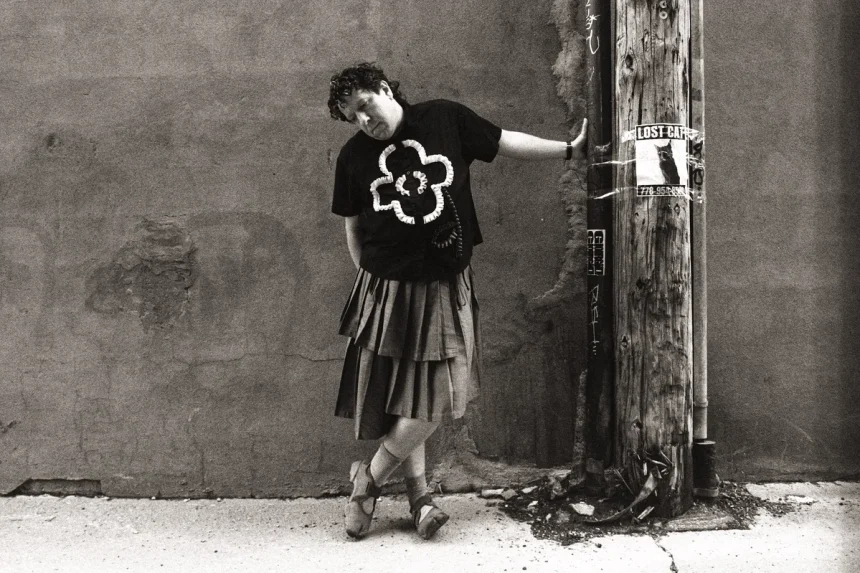
Riley’s artistic explorations extend beyond the music itself; they delve into identity and personal expression. With both Ribbon Skirt and Perfect Outfit, he reflects on clothing as a powerful means of presenting oneself to the world. “What you choose to wear means something,” he states, indicating an unintentional thematic link between his projects. The name “Perfect Outfit” derives from a misquoted line from the 1975 documentary Grey Gardens, emphasizing the idea that our external presentation is an expression of our inner selves.
Clothing as a Bridge to Clarity
Through this lens, clothing becomes a fascinating conduit for Riley to express the often-chaotic internal landscape of his mind. He explains that the clothes we wear serve as a bridge between our internal states and how we wish to be perceived by the outside world. By inviting listeners into this exploration, Riley offers a new perspective: a way to find clarity amidst life’s complexities, reflected in both his innovative sounds and his thoughtful attire. Together, they encourage an open dialogue about identity and self-expression, engaging audiences to reflect on their own experiences as they navigate a world filled with noise and disarray.