
The Legacy of “I Feel Love”: A Masterclass in Electronic Music
When you think of revolutionary tracks that have shaped the landscape of modern music, few can match the impact of “I Feel Love” by Donna Summer, produced by the innovative duo Giorgio Moroder and Pete Bellotte. Released in 1977, this track not only dominated the charts but also set a precedent for the future of electronic music, making it an essential study for anyone interested in the genre’s evolution.
The Vision Behind the Sound
In 1976, while Moroder and Bellotte were crafting Donna Summer’s fifth album, I Remember Yesterday, they aimed to encapsulate different musical eras. Their exploration of various genres led them to create “I Feel Love,” a track that boldly envisioned an electronic-infused future. The song’s infectious rhythm and lush arrangements represented a marked departure from traditional soundscapes, ultimately landing at number one in the UK for four consecutive weeks.
A Game-Changer in Electronic Music
“I Feel Love” is often credited as a turning point in modern music, especially in the realm of electronic dance music. Moroder’s pioneering use of a sequenced bassline, coupled with a steady four-on-the-floor kick drum and off-beat hi-hats, created a sonic template that became foundational for subsequent electronic music producers. The combination of synthetic sounds and rhythmic innovation acted as a catalyst, demonstrating the potential of creating music entirely through electronic means.
Brian Eno, visionary and collaborator with David Bowie, had a moment of revelation when he first heard the song. He famously relayed to Bowie that he had “heard the sound of the future.” This insight underscores how significantly “I Feel Love” influenced not just disco, but the fabric of club music for years to come.
The Technical Labors of Love
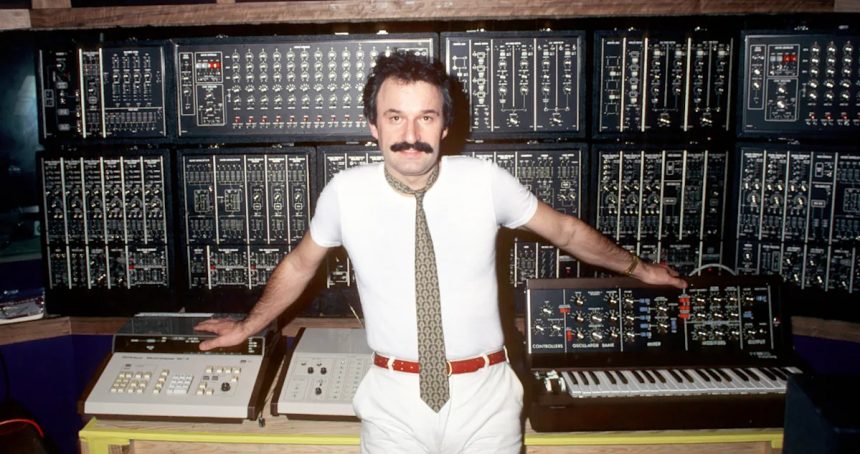
The creation process of “I Feel Love” was both innovative and technically challenging. Giorgio Moroder, utilizing a borrowed Moog Modular synthesizer, began with the bassline — a critical component in establishing the track’s infectious groove. However, Moroder faced a significant challenge: the Moog’s pitch would frequently drift, creating a hurdle in achieving the desired sound.
In what can only be described as a happy accident, an engineer added delay to the bass part, cementing the track’s iconic sound. This creative troubleshooting paved the way for an entire genre, demonstrating how imperfections can sometimes lead to breakthroughs.
Recreating the Classic Sound
For those interested in recreating the iconic sound of “I Feel Love,” modern technology has democratized music production, allowing anyone with a Digital Audio Workstation (DAW) to experiment with similar sounds. Utilizing a synthesizer plugin, aspiring producers can achieve the essence of the original bass sound relatively simply.
To successfully replicate the bassline, start by choosing a synthesizer with at least two oscillators. The Minimoog plugin from Universal Audio offers a starting point, although some modifications may be necessary to closely mirror the original sound.
Crafting the Signature Bass Sound
Select a sawtooth waveform at a low octave for Oscillator 1, and activate two additional oscillators at the same range. To recreate the harmonic interest that characterizes the original, mix in a square wave with modulated pulse waveform. While not all synths will allow for pulse-width modulation (PWM), it’s possible to emulate similar effects by carefully fine-tuning oscillators.
Adjusting the filter settings is crucial; set the cutoff frequency to ensure a less bright tone, particularly when it comes to envelope modulation, which adds warmth and depth to the final mix. Short decay times for both filter and amplitude envelopes will yield a snappier sound, characteristic of the original track.
The Role of Effects in the Mix
The delay was a vital element in Moroder’s production, adding texture and rhythm to the sound. For those looking to mimic this, routing a bus or auxiliary channel for delay effects can be effective. A standard tempo sync’d delay set to 16th notes will produce a ping-pong effect, enhancing the repetitive nature of the bassline.
Producing subtle embellishments can add further depth. A sub-bass line could be lined up an octave lower through a heavily filtered synth. Additionally, incorporating lush strings can evoke that rich, layered texture synonymous with Moroder’s productions.
Expanding the Soundscape
Don’t hesitate to experiment with additional instrumentation to encapsulate the essence of “I Feel Love.” Adding variations in instrumentation can help accentuate critical beats and elevate the overall texture of the composition. Each layer contributes to crafting a more complex sound, echoing the spirit of Moroder’s original creation.
In navigating the blend of technology and creativity, “I Feel Love” emerges as not just a song but as a foundational text for understanding the trajectory of electronic music. Its influence still resonates in contemporary genres, reminding us of the power of innovation and the enduring appeal of a track that dared to reimagine the future.