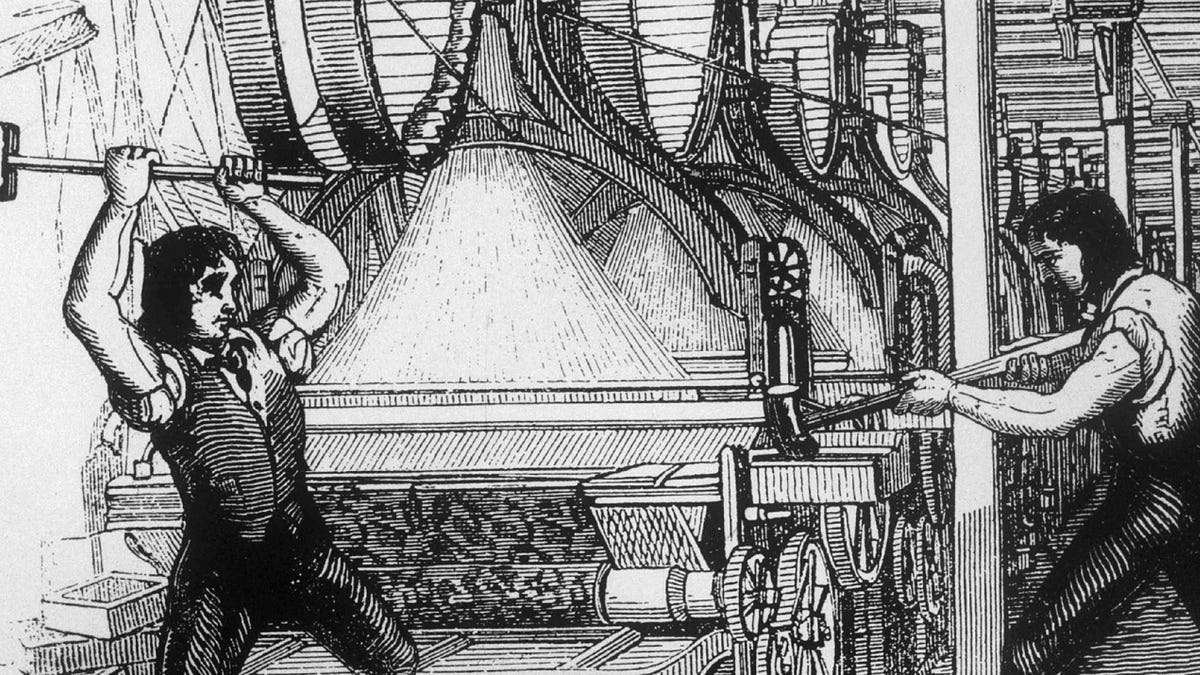
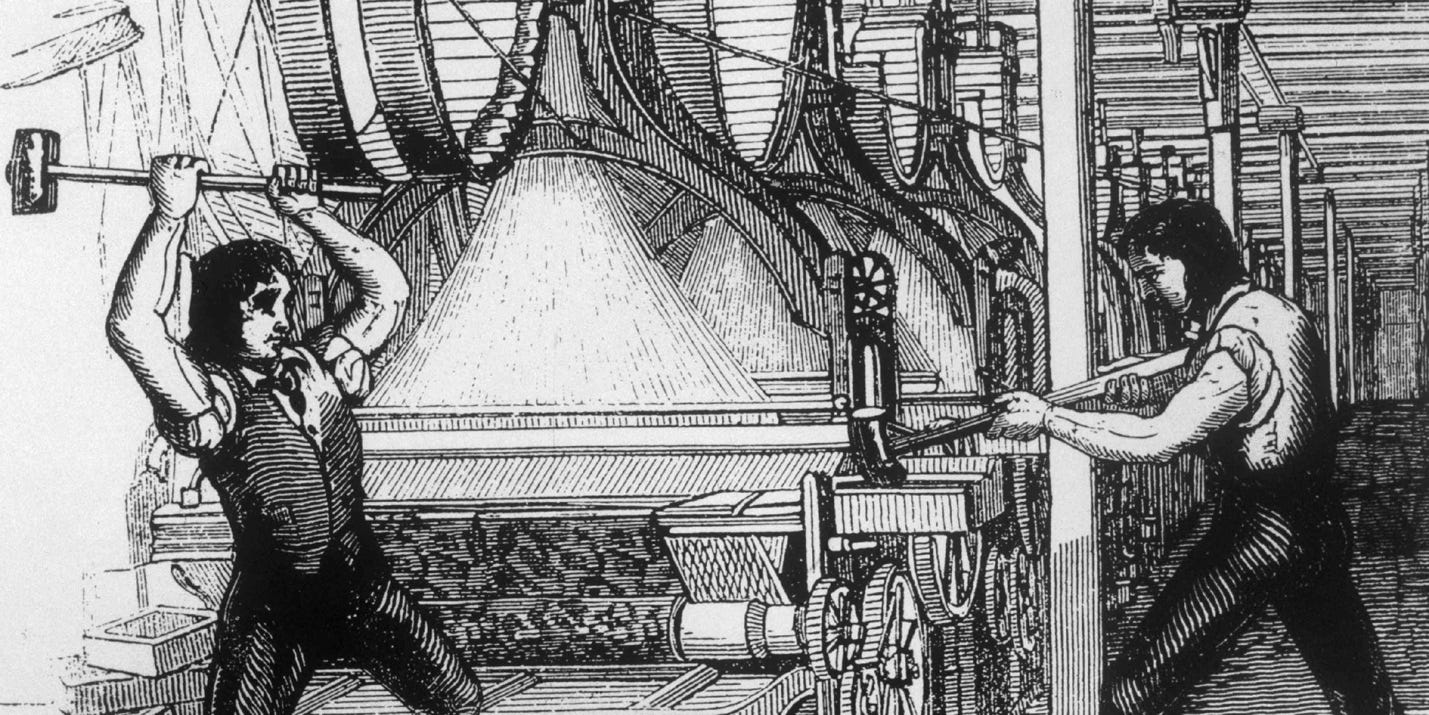
Rampaging Luddites
The Industrial Revolution marked a seismic shift in the socio-economic landscape, birthing factories, mechanization, and new economic models. Yet, it also ignited fear and resistance, epitomized by the Luddites—early 19th-century artisans who protested against the rising tide of machines that they believed threatened their jobs and livelihoods. As we now face a new revolution spurred by generative AI, it feels prescient to reflect on this historical narrative.
### The Cycle of Technological Anxiety
In today’s world, we find ourselves in a swirling vortex of excitement and anxiety around technological advancement. The stock market reacts dynamically; one moment, AI companies drive the S&P 500 upwards, and the next, fears surrounding over-investment in data centers and potential job loss send it tumbling. This cyclical pattern isn’t new; it harks back to the early industrial age when fears of unemployment and loss of human skill loomed large.
Historically, new technologies have consistently generated debates about their economic impacts. Initial excitement often gives way to anxiety, as labor forces grapple with the implications. From the steam engine to the internet, each technological leap has sparked discussions that merge economic theory with societal concerns.
### Technology and Jobs: The Unemployment Dilemma
One of the most pressing questions spurred by new technologies is whether they will lead to mass unemployment. The Luddites fundamentally believed that machines would displace their craftsmanship, and evidence from past revolutions suggests that this anxiety holds merit. Jobs are lost as machines replace human labor; however, history also indicates that new roles are often created.
For instance, while automation led to the decline of certain industries, it also fostered growth in technology, healthcare, and service sectors. The idea that while machines may take our jobs, they also pave the way for new employment opportunities remains a vital aspect of economic discourse.
### Technological Impact on Wages
Another critical consideration is how technology impacts wages. It’s entirely possible for productivity to soar while wages stagnate. The introduction of machines can enhance labor efficiency drastically, yet the economic returns may not equitably distribute among all workers.
In fact, data from various industries reveal that executives and stakeholders often reap greater benefits from technological advancements, leaving a significant portion of the workforce underserved. As productivity rises, the risk of wage dissatisfaction looms large, raising questions about the sustainability and ethical dimensions of technology-driven growth.
### Monopoly and Economic Concentration
Beyond individual jobs and wages, technology has the power to reshape markets themselves. New advancements can cultivate monopolies or dismantle existing ones, driving changes in the concentration of wealth and power within economies. The rapid growth of technology firms has led to increased market dominance, often at the expense of smaller competitors.
This context unveils the intricate relationship between technology and economic inequality. As power consolidates with a select few tech giants, discussions around antitrust regulations and market fairness become increasingly relevant. We witness a battle between innovation and monopolistic practices, reminiscent of the challenges faced during the Industrial Revolution.
### The Human vs. Machine Narrative
At the core of these discussions lies a perennial narrative: Are we, as a society, pitted against machines? The fear of machines undermining human value is timeless, representing a struggle where technology’s promise clashes with its potential for disruption.
In response, it becomes incumbent upon us to engage in proactive discourse around technology’s role in society. As we embrace generative AI, we must consider not only how it will transform industries but how it will reshape our lives, societies, and economies.
As we navigate this new technological watershed, the lessons of the past remain ever-relevant. The conversations we initiate today hold the promise of forging a future where technology serves humanity rather than supplants it. The urgency to weave together economic theory, ethical considerations, and societal needs has never been more pronounced. Engaging with these dialogues can enlighten our journey forward, ensuring that we harness the benefits of technology while safeguarding our collective future.
![PlayStation Might Be Reconsidering Release of Traditional Single-Player Games on PC [UPDATE]](https://beatmag.tv/wp-content/uploads/2026/03/PlayStation-Single-Player-Exclusives-May-No-Longer-Come-to-PC.webp-150x150.webp "PlayStation Might Be Reconsidering Release of Traditional Single-Player Games on PC [UPDATE]")