The Past, Present, and Future of Dance Music in D.C.
Washington, D.C. is often seen as a city dominated by its political landscape—filled with monuments and historical buildings, frequented mainly by tourists. However, as DJ and producer Jackson Ryland aptly points out, most of the 700,000 residents living in the nation’s capital don’t work for the government. D.C. is rich with creative energy and cultural movements, particularly in the realm of music. What many don’t realize is that D.C. has a vibrant dance music scene that has evolved over decades, making significant contributions to the broader tapestry of American music.
A Heritage Deeply Rooted in Rhythm
D.C. is famed for its musical legacies, from the birth of go-go music to its role as the spiritual home of American hardcore through Dischord Records. The city’s musical influence can largely be traced back to its funk roots, a sentiment echoed by Andrew Field-Pickering, a DJ and label owner, who emphasizes the ongoing “funk continuum” from iconic bands like Parliament-Funkadelic.
In the 1980s, the dance floor vibrated with boogie and proto-house tracks, thanks to artists like Vernon Burch and the nascent underground club scene. Venues like The Clubhouse, often dubbed D.C.’s response to New York’s Paradise Garage, laid the groundwork for the vibrant dance music culture that thrived in the neighborhoods surrounding the city.
Evolution in the Digital Age
The 1990s saw a shift in dance music culture in D.C., characterized by a wave of “woods-raving” parties on the outskirts, heavily influenced by jungle and trance sounds. This era marked a significant moment in D.C.’s dance music history, which increasingly became intertwined with the electronic music renaissance across the country. Following this, the 2010s heralded a new wave of talent spurred by numerous mid-sized venues, such as U Street Music Hall, focusing on quality and diversity—all while preserving the underground spirit of the city.
Innovative collectives like Sequence, The NeedlExchange, and ROAM have since become essential to the cultural landscape, organizing experimental parties that attracted partygoers not just from D.C., but from across the U.S.
The Struggles of a Mid-Sized City
Despite its rich heritage, D.C. has faced challenges that resonate throughout many mid-sized cities in America: the artists often dream of moving to bigger markets like New York, leading to a talent drain. DJ Lisa Frank captures this dynamic perfectly as she describes D.C. as “the middle child of the East Coast,” suggesting it’s overlooked in favor of larger cities. However, the current landscape is teeming with talent that is often underrated, yet powerful in its diversity.
Nonetheless, the post-pandemic reality has been tough. Gentrification continues to threaten underground spaces and erode cultural significance, with venue closures and a shift towards more commercialized music echoing the struggles of similar urban settings nationwide. DJ Juana paints a stark picture, noting the loss of underground warehouse spaces that once served as breeding grounds for creativity and expression.
A Resilient Underground
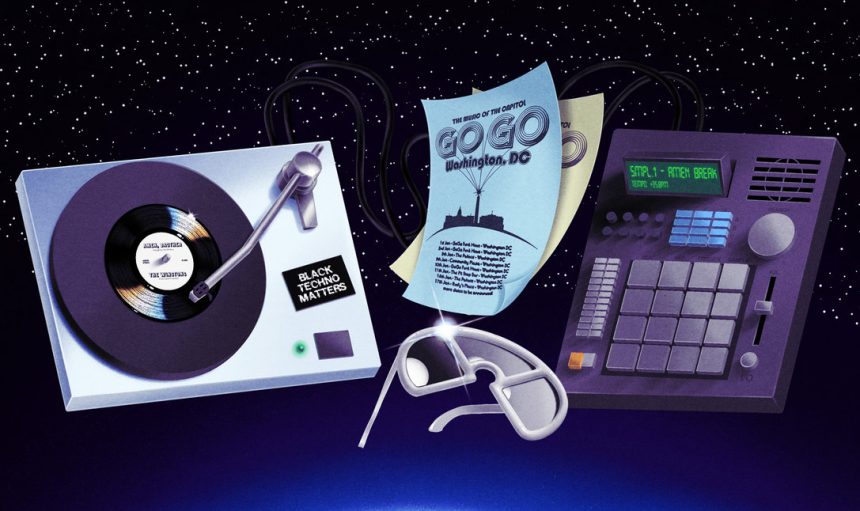
Historically a Black city—famously dubbed “the Chocolate City”—D.C.’s dance music landscape is still evolving, despite the pressures of gentrification. Organizations like Black Techno Matters highlight this resilience within the community. As they put it, the underground scene remains vibrant and diverse, constantly evolving beneath the surface with new artists emerging from the capital.
The current generation of producers is crafting a fresh approach to dance music, experimenting with an eclectic mix of genres. DJ Koh emphasizes this emergence: “We’re seeing a new wave of talent exploring and diversifying the sounds within electronic music.”
Noteworthy Contributions
A few records stand out while exploring D.C.’s contemporary scene:
-
Max D’s Boost represents a touchstone for Future Times, blending genres and styles that reflect D.C.’s eclectic spirit. Field-Pickering’s emphasis on “freaky spacetime coordinates” encapsulates the artistic freedom that characterizes modern D.C. music.
-
Sami%SuYung’s Ethics offers a get-lost-in-dreamy landscapes soundscape, capturing the whimsical essence of D.C.’s vibrancy.
-
Baronhawk Poitier’s Temperado Tornado engages listeners with its bossa nova-inflected house, showcasing a unique blend of cultural influences that has become a hallmark of today’s D.C. sound.
-
Outputmessage, led by Bernard Farley, emphasizes the importance of Black narratives in techno, turning out understated yet impactful tracks that resonate with long-time enthusiasts and newcomers alike.
-
James Bangura, an emerging talent, presents an introspective sound within his record Shadow Boxing, exploring deeper emotional landscapes through his music that combines elements of various genres.
-
Black Rave Culture, featuring Amal, James Bangura, and Nativesun, challenges the status quo, emphasizing their roles in reshaping the American dance music landscape, and ensuring that the richness of Black cultural history is front and center.
As seen through the lens of various artists and their contributions, D.C. continues to champion a diverse, vibrant electronic music scene that deftly ties its rich past to a dynamic present and an exciting future.