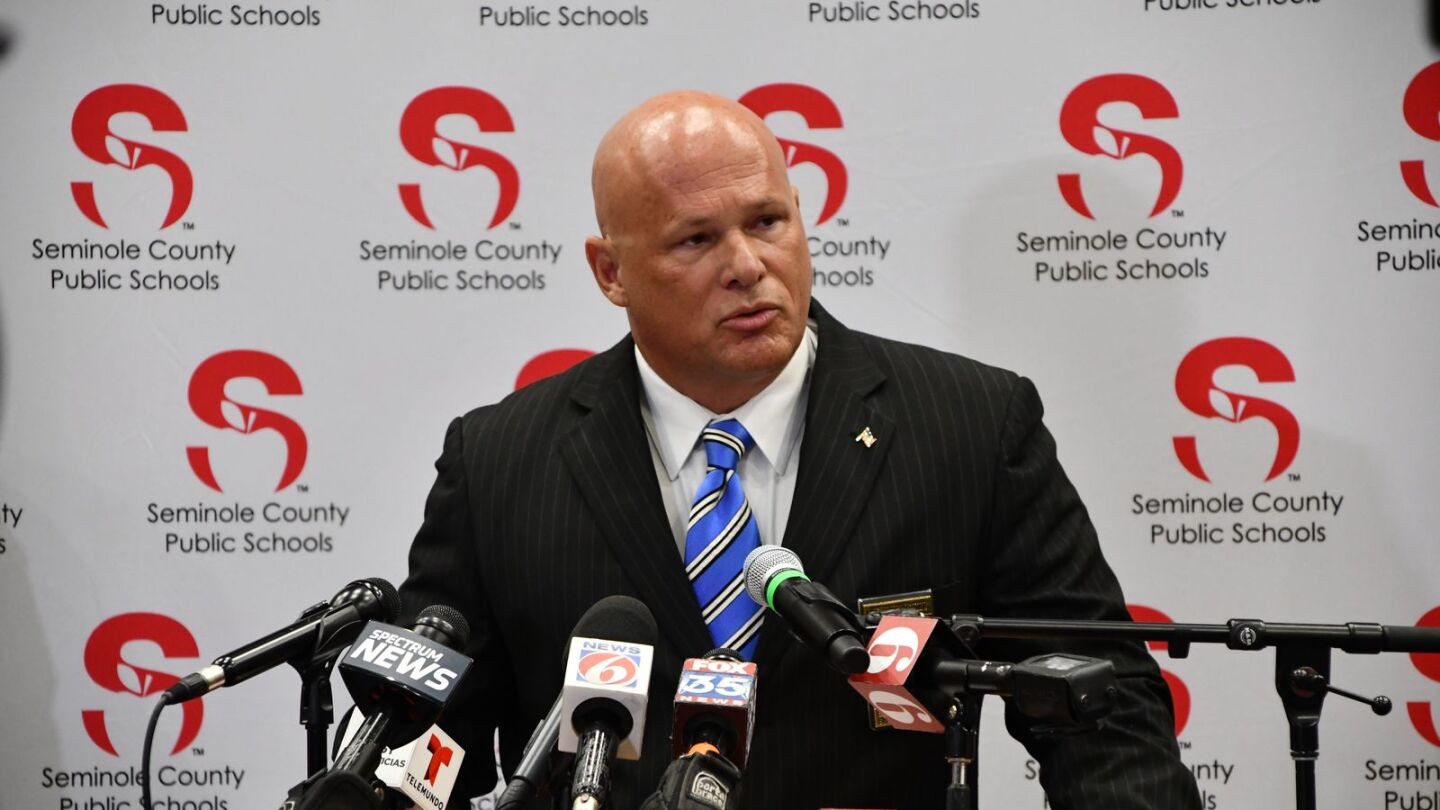
Understanding Technology and School Safety: Insights from Chief Rick Francis
Editor’s Note: This article is part of the Police1 Innovation Report, which examines how emerging technologies are reshaping law enforcement operations and leadership decision-making. This series focuses on school safety in an era of expanded digital awareness, exploring how technology, governance, and operational alignment intersect before a crisis unfolds.
The Imperative of School Safety
How much—and which—technology makes a school safe is a question frequently posed within educational settings. Chief Rick Francis of the Seminole County Sheriff’s Office knows this all too well. Reflecting on a poignant moment from a few years ago, he recalls a conversation with a grieving father who lost a child in a school shooting. The father wanted Francis to visit what he believed was “the safest school in the world.” Its features included a system that could fill hallways with smoke upon detecting a threat.
Francis responded with honesty, stating, “It’s a waste of time, and it’s a waste of money.” He emphasized a critical point: “All the technology in the world won’t stop someone who’s hell-bent on creating maximum casualties.”
The Booming School Safety Industry
The realm of school safety has evolved into a massive industry, with an estimated value of approximately $2.4 billion in 2023, projected to grow to over $6 billion by 2035. Modern safety strategies encompass a variety of technologies—ranging from advanced weapons detection systems to biometric access controls—integrated into a comprehensive safety protocol that includes behavioral threat assessments and emergency operations planning.
Despite the modern landscape of school safety technology, research indicates that reliance on these systems does come with risks. Underfunded or understaffed school safety teams may overlook alarms or signals, and a false sense of security can emerge among staff due to the existence of detection technologies.
Evaluating Technology in School Safety
Critically assessing the implementation of technology in schools is pivotal. Chief Francis clarifies that some advertised lifesaving technologies could potentially hinder swift responses from law enforcement. For example, smoke-dispersing systems might slow down first responders rather than aid them. When selecting new technologies, he emphasizes rigorous vetting: “I always ask vendors about their technology’s weak spots. If they claim there are none, I turn away.”
Local conditions also influence the effectiveness of any given technology. What suits a rural school in Washington state may not work effectively in urban Seminole County, which is home to a diverse population of around 500,000.
Collaboration between Law Enforcement and Schools
The department is responsible for the safety of 70 schools serving around 68,000 students and 10,000 staff members. Their strategy emphasizes not only the deployment of technology but equally the cooperation between local law enforcement and school leadership. Francis believes that the ownership and operation of safety technology should be collaborative endeavors, wherein law enforcement remains deeply integrated.
Decisions around safety response protocols must be clear-cut. Officers should feel empowered to operate based on professional judgment without hesitation but also exist within a framework that defines the roles of school personnel.
Speed and Real-Time Access
A successful school safety strategy hinges on three core principles: speed to resolution, breaking down operational silos, and ensuring law enforcement has independent access to school safety technologies. In Seminole County, the integration of cameras into the Real Time Crime Center (RTCC) allows law enforcement to access live feeds during emergencies.
This shift from historical delayed responses, such as in the tragic Parkland shooting, emphasizes the importance of real-time data. In that incident, officers operated on outdated information—watching security footage on a considerable delay—which compromised their response.
The Importance of Interoperability
The need for effective mass communication during a crisis cannot be overstated. Chief Francis emphasizes the role of secure, fast communications with school staff and law enforcement agencies. Redundant systems are critical, especially when cellular service may fail during emergencies.
In this context, interoperability becomes essential—not just for immediate responders but for a cohesive response that encompasses various agencies working together seamlessly. Clear communication helps maintain focus on primary objectives: stopping threats and safeguarding lives.
The Role of AI in School Safety
The integration of AI into school safety provides an additional layer of security. In Seminole County, AI-driven technologies are verified through human input to confirm alerts before escalating them to law enforcement. This collaborative verification allows for quick distinctions between false alarms and real threats.
Having law enforcement involved in this verification process enhances situational awareness, allowing everyone to respond appropriately based on real intelligence.
Governance and Collaborative Culture
Navigating the complex landscape of school safety involves harmonizing established protocols with unpredictable student behaviors and emergencies. Francis believes that the culture within schools plays a critical role in safety outcomes. Regular collaborative training sessions between law enforcement and school staff foster trust and create a shared understanding of safety protocols.
Moreover, it is vital to delineate decision-making responsibilities clearly. While officers may take charge in emergencies, not all incidents require their involvement, and some issues can be managed internally by school personnel.
Ultimately, Chief Francis advocates for a robust governance structure coupled with a strong culture of shared planning. According to him, the schools that achieve the safest environments are not simply those filled with high-tech gadgets, but those that prioritize clear leadership and collaborative problem-solving.