
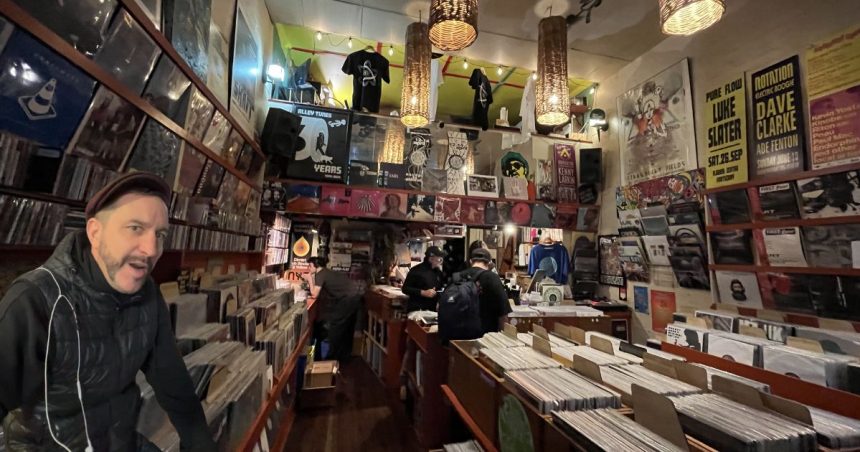
From Fear to Success: The Story of Alley Tunes Records
A French Expat’s Journey
Max Le Bras, a French expat who made the leap to Australia in 2003, found himself navigating the often turbulent waters of the music industry. Little did he know, the Hawthorn record store he took over almost two decades ago would become a beacon of resilience amid the perceived death knell of physical media.
“When I first arrived, I was really worried,” Le Bras reflects. He initially thought the digital revolution would wipe out physical stores like Alley Tunes Records. Fast forward 19 years, and the sentiment has drastically changed as vinyl sales surge, particularly among a younger generation of collectors.
The Birth of Alley Tunes Records
Tucked away in an unassuming alley off the Glenferrie train station, Alley Tunes Records opened its doors in 1994. Initially catering to DJs and aficionados of electronic dance music, the small vinyl and CD store quickly garnered a local following. Le Bras didn’t just inherit a store; he became a part of a vibrant community dedicated to an art form that was soon being overshadowed by the rise of digital formats.
In 2007, along with his business partner Fabrice Lemoyne, Le Bras took the reins. Faced with the challenge of dwindling sales as collectors and DJs gravitated towards digital platforms, they chose to innovate. The duo decided to open a café within the store, creating a space where music lovers could gather, sip coffee, and discover new sounds while keeping the community spirit alive.
The Vinyl Revival
Fast forward to around 2010, and Le Bras began to notice an intriguing phenomenon: a “vinyl resistance.” This resurgence wasn’t just a flash in the pan; it was a full-blown revival. Sales began to tick back up as nostalgia and the tactile nature of records drew in a new generation of collectors.
“What we’re witnessing is a trend that goes beyond just nostalgia; it’s a movement,” Le Bras explains. The resurgence of interest in vinyl resonates with the quest for authenticity in an increasingly digital world. For many, browsing through vinyl records in a store offers an experience that simply cannot be replicated online.
The Bush Doof Influence
One significant cultural element that has contributed to the vinyl renaissance in Australia is the underground electronic music festivals known as “bush doofs.” These gatherings, set up in remote areas, provide a unique environment for music appreciation, drawing in colorful, eclectic crowds, often dressed in fantastical costumes.
“There was a guy dressed up as a bunny, a girl dressed up as a clown, and some guys in suits,” Le Bras recalls, his eyes lighting up at the memory. His affection for this scene deepened his commitment to the vinyl culture, allowing him to merge his passion for music with the lively community surrounding it.
The Future Looks Bright
As Alley Tunes Records continues to thrive, Le Bras remains optimistic about the future of vinyl. The trend shows no sign of waning. Young collectors are flocking to record stores, not only for the unique sound and art but also for the sheer joy of the collecting experience.
“Kids and their parents are connecting with each other through something they both enjoy,” he notes, highlighting a heartwarming aspect of the vinyl revival. For young people, the experience of collecting records and learning to DJ serves as a new, exciting venture that bridges generations.
Community and Connection
There’s something inherently special about physical records that resonates deeply in our digital age. The tactile feel of vinyl, the beautifully designed album covers, and the act of flipping through crates in a store creates a community bond that streaming simply can’t compete with. Alley Tunes Records is not just a store; it’s a vibrant community hub that celebrates music, creativity, and connection across generations.
In an era where the future often feels uncertain, the enduring charm of vinyl stands as a testament to the power of music to bring people together, proving that some things are indeed worth holding onto.