
Revolutionizing Prosthetics: The UAB Amputee Clinic’s Leap into 3D Printing
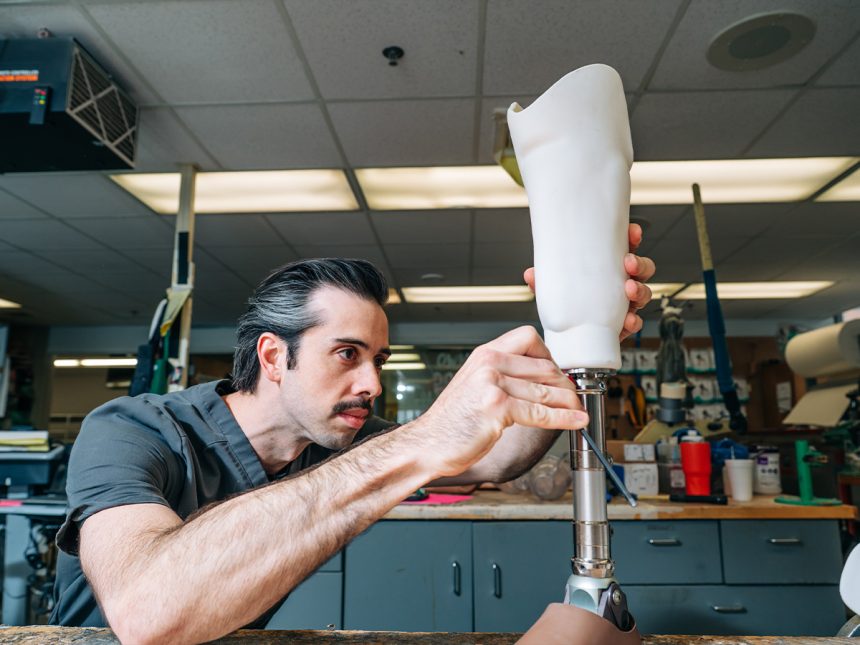
In the ever-evolving field of prosthetics, the University of Alabama at Birmingham (UAB) has made a significant breakthrough that is reshaping patient care. The UAB Amputee Clinic at the Spain Rehabilitation Center has become the first clinic in Alabama—and one of only a few nationwide—to offer 3D-printed sockets for prosthetic limbs. This innovative approach is set to transform how amputees receive their prostheses, making the process faster, more cost-effective, and highly personalized.
The Need for Innovative Solutions
The demand for prostheses in the U.S. is on the rise, with projections indicating that the number of individuals living with limb loss will double by 2050. A study published in the Archives of Rehabilitation Research and Clinical Translation highlights that this trend is primarily driven by increasing rates of vascular diseases and diabetes. With such an alarming forecast, clinics like UAB are stepping up to address these challenges head-on.
The 3D Printing Process Explained
Traditionally, creating prostheses has been a labor-intensive process, often limited by working hours and resources. However, UAB’s Orthotics and Prosthetics Lab is leveraging advanced technology to enhance efficiency and patient outcomes. The clinic utilizes a 3D scanner in conjunction with a carving machine to create a digital model of each patient’s limb.
Once a digital file is generated, it can be sent to a carver that transforms it into a precisely shaped piece of foam, which serves as a prototype. Dr. Conley Carr, the clinic’s director, emphasizes that the introduction of a 3D printer has accelerated this process. “Now, we can turn digital files from the 3D scanner directly into a finished socket,” he explains, bringing them closer to a fully digital operation.
The Efficiency of 3D Printing
Certified prosthetist Brian Mueller highlights that while each socket takes several hours to print, the 3D printer can operate overnight or on weekends, ensuring that no valuable time is wasted. The digital files created for each patient are stored in the scanner’s memory, facilitating quick and precise replacements when needed.
“This capability is particularly beneficial for patients who wish to replace an old socket with the exact same design,” Mueller states. “We can simply retrieve the file and reproduce it without any hassle.”
Personalized Patient Benefits
One of the most significant advantages of 3D-printed prosthetic sockets is the personalized fit they provide. Carr points out that these sockets are tailored specifically to each patient’s anatomy, which greatly enhances comfort and reduces the risk of skin irritation and pressure sores—a common issue faced by prosthetic users. The expedited access to sockets means patients can return to an active lifestyle more quickly, accelerating their overall rehabilitation process.
Moreover, the benefits of 3D printing extend beyond prosthetic sockets. Carr and Mueller are working on creating customized braces for various patient needs. These could range from orthotic solutions for individuals recovering from strokes to spinal supports for neurosurgery patients. “We aim to cater to a wide array of patient requirements across our facility,” Carr adds.
Looking Ahead
As technology continues to advance, the UAB Amputee Clinic is poised to expand its services further, utilizing 3D printing to meet even more patient needs. This groundbreaking approach to prosthetics not only enhances mobility for patients but also creates a more efficient workflow for the clinic, ultimately improving the quality of care provided. The integration of 3D technology into routine patient care represents a significant stride toward improving the lives of those living with limb loss, setting a new standard in the field of rehabilitation.