Understanding In-Flight Icing: A Comprehensive Look at Recent Advances in Detection Technology
In January 2023, a tragic incident unfolded when a private jet crashed in Maine, resulting in the loss of all six passengers onboard. The cause? In-flight icing — a perilous buildup of ice on the aircraft’s exterior that can severely impair its control and handling capabilities. This incident underscored the pressing need for advanced technologies to detect and manage icing conditions, as there have been over 150 icing-related accidents in the United States since 1982.
The Innovation Behind Icing Detection
A significant breakthrough in addressing this issue emerged shortly after the tragic event. Researchers from the University of Michigan published a study in Nature detailing a novel aircraft icing detection system. The study was led by Engineering Professor Nilton Renno, who had a personal connection to the problem through his love for flying gliders and planes. Renno’s unique background as a systems engineer combined with his experience as a planetary scientist positioned him to tackle this vital challenge.
The Costs of Icing: A Historical Perspective
Renno noted a startling statistic: a large number of aircraft accidents can be attributed to icing conditions. The technologies in use today, he argued, were somewhat primitive and inadequate for the complexities of modern aviation. With this in mind, he sought to develop a more sophisticated system that could better fulfill pilot needs and improve flight safety.
The Dual-Sensing System Explained
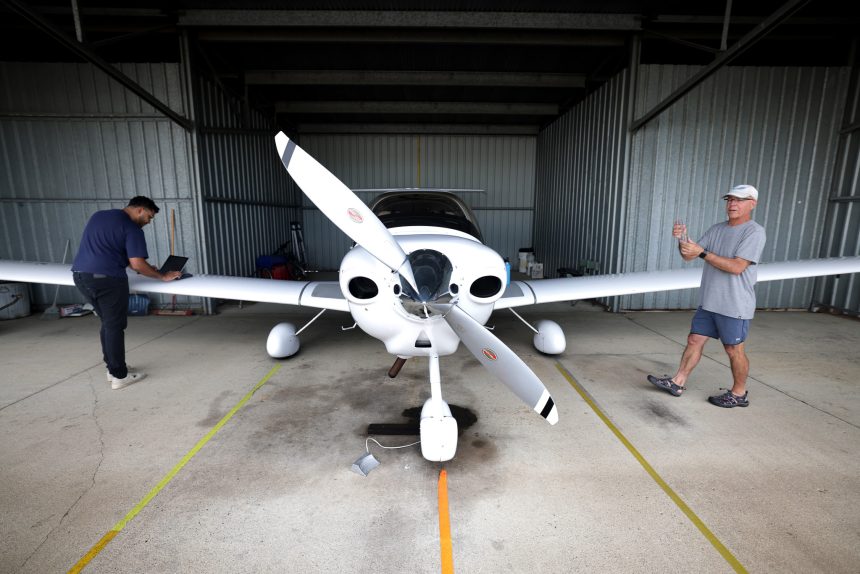
The innovative solution that came from Renno’s research involves a dual-sensor system. One sensor utilizes microwave technology and attaches directly to the aircraft body. This sensor determines the type and amount of ice buildup on the plane itself. The second sensor, comprising three laser probes, assesses the precipitation in the surrounding environment, giving pilots advance warnings about potentially hazardous icing conditions.
Significance of Droplet Size
One fascinating aspect of the research is its focus on droplet size, which plays a critical role in the likelihood of icing. Larger supercooled droplets pose a greater risk because, upon impacting the aircraft, they freeze and can result in significant ice accumulation. In contrast, smaller droplets typically affect only the leading edge of wings, which are usually heated to prevent icy buildups. Monitoring both the size and quantity of droplets in the atmosphere is thus integral to safeguarding flights.
Development and Testing: Overcoming Challenges
Following their theoretical framework, Renno and his team secured funding to create a prototype. The collaborative effort brought together multiple individuals, including Kurt Hochrein, sales marketing director at the Dexter Research Center. Hochrein recounted how the team worked under a tight timeline to ensure the prototype could fit into limited spaces within the aircraft while still maintaining all necessary functionality.
Each iteration of the prototype brought challenges, particularly regarding size. The team set out to create a reliable system small enough to replace existing technologies while ensuring it could withstand the harsh environments of aviation.
Data Collection and Future Prospects
The test flight yielded promising results, which have since been published, paving the way for potential adoption by aviation authorities like the Federal Aviation Administration (FAA). Hochrein expressed hopes that other competitors in the field would recognize the emerging technology, but emphasized the importance of FAA consideration given the crucial nature of icing detection for airline safety.
Broader Applications: Beyond Aviation
Interestingly, the sensors developed for aircraft may also find applications in the automotive industry. Fernando Saca, manager at the Space Physics Research Laboratory, indicated that while the technology requires calibration for different environments, the underlying principles could indeed benefit vehicles. This cross-disciplinary potential could lead to safer roads during icy conditions.
Encouragement for Inquisitive Minds
Rabhya Gupta, a graduate student who collaborated with Renno, reflected on her experience and how it shaped her approach to research. Renno’s inquisitive nature inspired her to explore various angles of problem-solving, emphasizing the idea that research is inherently about challenge and innovation.
Through collective efforts, academic rigor, and a genuine passion for flying, Renno and his team are pushing the boundaries of what is currently possible in icing detection, aiming for a future where in-flight safety and vehicle intelligence are significantly enhanced by their pioneering work. Their advancements not only hold promise for aviation but may also reshape our understanding of safety in everyday transportation.



![[EVENT REVIEW] My First Ultra: A Deep Dive into Ultra Music Festival Miami 2026](https://beatmag.tv/wp-content/uploads/2026/04/ULTRA2026_0328_185228-PZA09942_PIKZELZ-150x150.jpg "[EVENT REVIEW] My First Ultra: A Deep Dive into Ultra Music Festival Miami 2026")