Union Audio Two Valve Rotary Review: Analog Sound Refined
Union Audio Two Valve Rotary sits at the intersection of hi-fi listening and DJ performance, reflecting the renewed interest in sound quality over feature-heavy setups. Designed by Andy Rigby-Jones, the mixer carries a strong analog heritage and focuses on delivering a warm, musical mixing experience.
Design and Build of Union Audio Two Valve Rotary
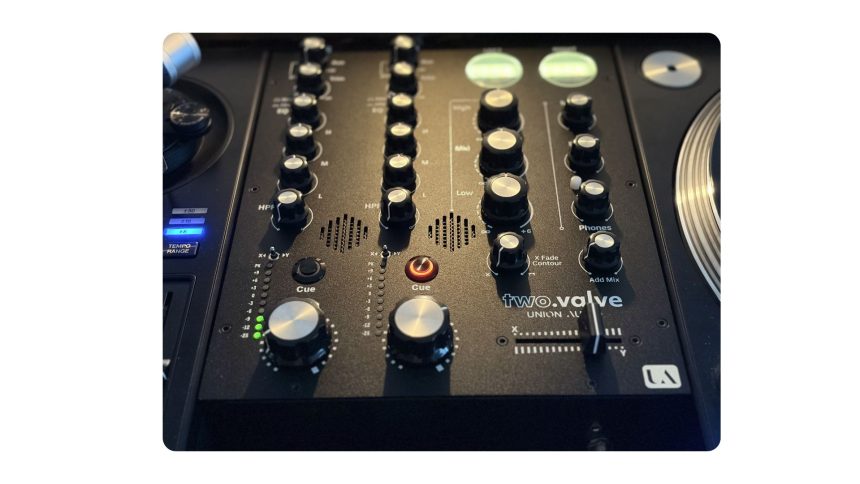
Union Audio Two Valve Rotary features a compact yet robust metal chassis, weighing around 3.5 kg. The layout remains clean and intuitive, with smooth rotary faders and well-spaced controls that allow precise adjustments. Dual RCA inputs, a 3-band EQ, master isolator and high-pass filters provide flexibility without unnecessary complexity.
A crossfader—rare for rotary mixers—adds creative options, while stereo VU meters enhance both usability and visual identity.
Sound Performance and Analog Character
Union Audio Two Valve Rotary stands out through its fully analog signal path and tube-driven sound. Valve stages introduce subtle harmonic saturation, resulting in a warm, full and controlled output. The low-end remains rounded yet punchy, mids are clear, and highs stay smooth without harshness.
The high-pass filter performs particularly well, offering clean transitions and tension-building capabilities. With high headroom and low distortion, the mixer maintains clarity even at higher levels.
Workflow and Use Case
Union Audio Two Valve Rotary is tailored for house and techno DJs who favour long blends and layered mixing. It excels in musical cohesion rather than fast, performance-driven styles.
While the premium price and limited digital features may not suit all users, the mixer delivers exceptional sound quality and craftsmanship. For DJs prioritising tone and feel, it remains a standout option.
For more DJ gear reviews and music tech insights, explore our related content.