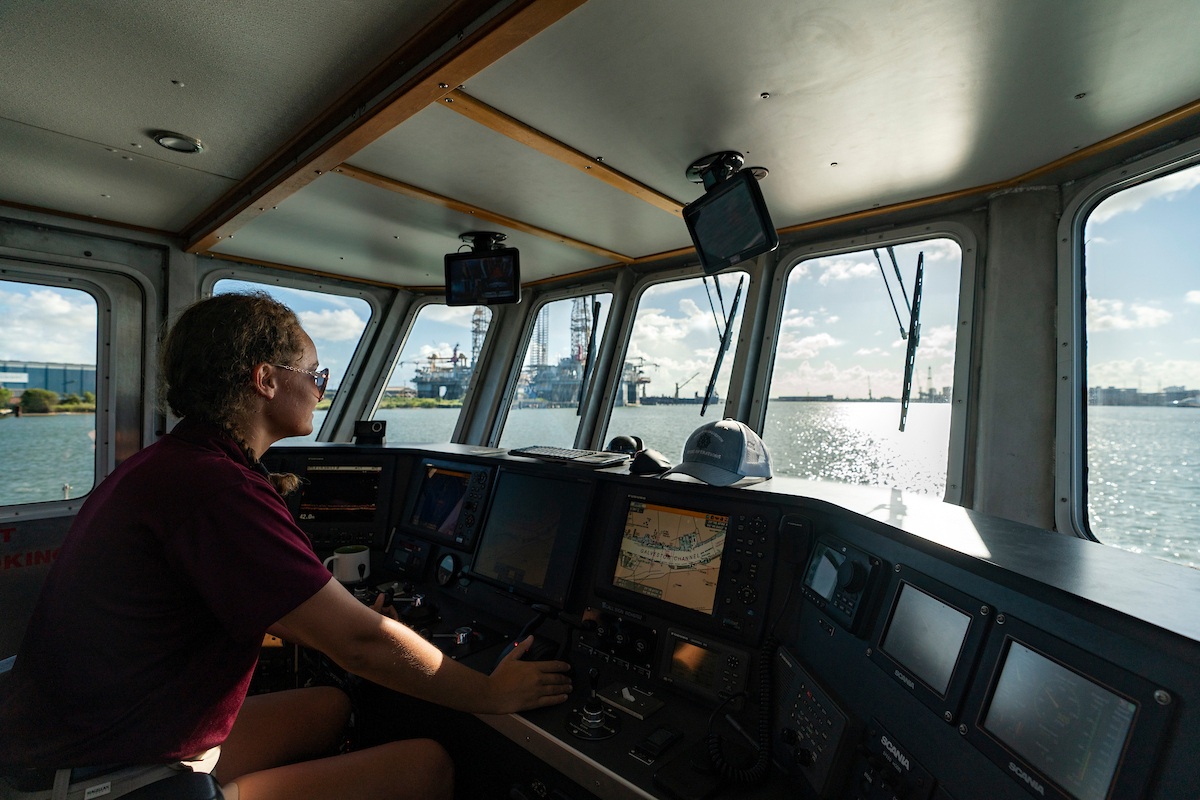
The Rising Need for Skilled Marine Engineers in the Maritime Industry
The maritime industry plays a critical role in the global economy, with over 70% of international trade transported by sea. However, a significant challenge looms as the average age of workers in this sector is now 41, with more than 75% of mariners above the age of 30. As a wave of retirements is expected in the near future, there is an urgent need for a new generation of skilled marine engineers to bridge the growing labor gap.
- The Rising Need for Skilled Marine Engineers in the Maritime Industry
- Changing Dynamics in Ship Management
- The Future of Energy in Maritime Operations
- Diverse Skill Sets Required
- Biometric Technologies on Cruise Lines
- Environmental Regulations and Compliance
- The Threat of Cyberpiracy
- Encouraging the Next Generation
- The Call to Action
Changing Dynamics in Ship Management
According to Vanicha McQueen, a professor of marine engineering technology at Texas A&M University at Galveston, the landscape of ship management has transformed dramatically over the past two decades. The trend is toward smaller crew sizes, with vessels relying increasingly on artificial intelligence (AI) and automated control systems for navigation and propulsion. This shift raises the bar for future marine engineers, who will need to adapt to increasingly sophisticated ship technologies.
The Future of Energy in Maritime Operations
One of the most exciting developments on the horizon is the advent of nuclear-powered vessels. Companies are actively developing offshore vessels that will predominantly utilize nuclear energy for propulsion. These innovative ships could debut as early as 2030, underscoring the urgent need for marine engineers equipped with knowledge in nuclear engineering. As the industry evolves, marine engineers will be at the forefront of ensuring that these new technologies are safely and effectively managed.
Diverse Skill Sets Required
The increasing complexity of maritime technologies necessitates a diverse skill set for marine engineers. As McQueen notes, skills in nuclear engineering, cybersecurity, naval architecture, and networking are essential to mitigating risks of disasters and collisions at sea and in port. The expectation is for marine engineers to be well-rounded, capable of resolving issues that arise in highly automated and technologically advanced environments.
Biometric Technologies on Cruise Lines
In response to evolving security threats, many cruise lines are now incorporating biometric technology. With systems that utilize facial recognition and other forms of operational security, it is essential for marine engineers and electro-technical officers to be adept at troubleshooting and repairing these advanced systems. A failure in such technology could lead to breaches of security, highlighting the importance of both technical prowess and problem-solving skills.
Environmental Regulations and Compliance
Environmental concerns are also shaping the future of maritime engineering. Emission control areas (ECAs) are designated regions where strict operational restrictions are in place to prevent environmental contamination. Any equipment failure that results in a leak of harmful substances could incur hefty fines and catastrophic damage to delicate ecosystems. Marine engineers must, therefore, possess knowledge of compliance regulations and environmental protection measures, ensuring that vessel operations are in line with legal requirements.
The Threat of Cyberpiracy
In an increasingly connected world, cyber threats are a growing concern in the maritime sector. Cyberpiracy, where hackers gain control of a ship’s automated systems, can endanger the safety of crews and cargo. McQueen emphasizes that tomorrow’s marine engineers must understand networking, programming, and AI engine-monitoring systems to prevent hacking and cyber intrusions. There’s a crucial need for robust cyberattack prevention plans onboard vessels to safeguard against these modern threats.
Encouraging the Next Generation
To address these pressing needs, there has been a notable rise in maritime high schools with specialized programs aimed at inspiring students to consider a career in marine engineering. McQueen and her team actively engage with local maritime schools, offering insights into the maritime industry and providing virtual tours of vessels. By highlighting the transferable skills learned through marine engineering, educators emphasize the numerous opportunities available to students both at sea and on land.
The Call to Action
With the maritime industry at a crucial crossroads, the call for fresh talent in marine engineering has never been more urgent. As current professionals near retirement and the sector embraces emerging technologies, the challenge lies in attracting and training motivated individuals to carry the torch forward. The future of maritime operations relies heavily on this new generation of skilled engineers, ready to navigate the complexities of modern shipping and ensure a sustainable and secure maritime environment.