
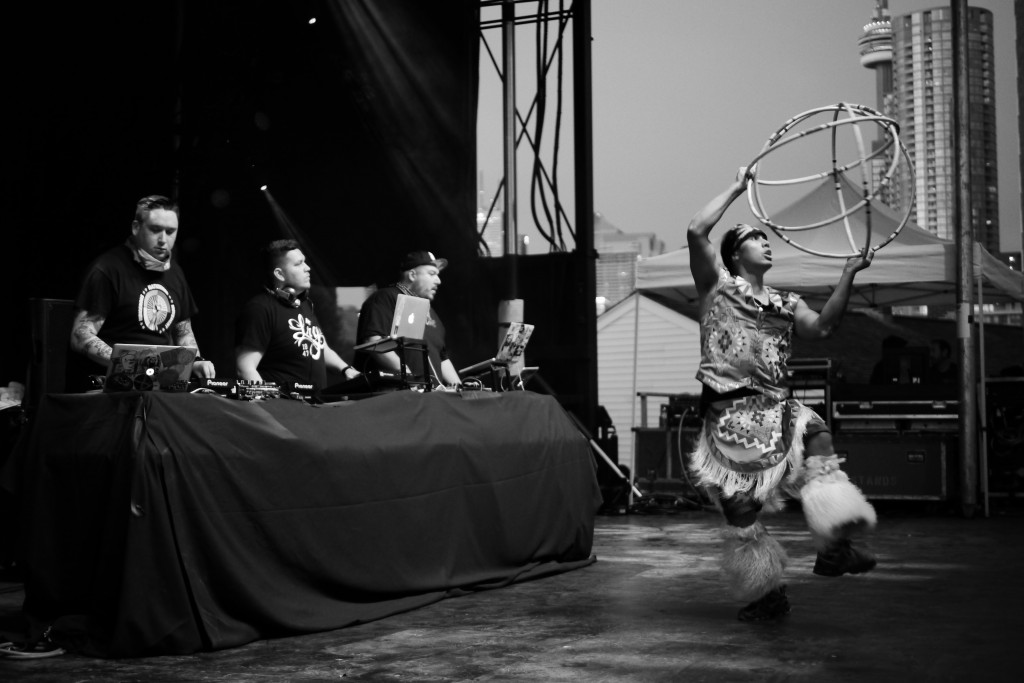
The Rise of A Tribe Called Red: Bridging Cultures Through Music
At first, it was just a party. In 2007, Ottawa-based DJ Bear Witness never anticipated that throwing a gathering for friends would lead to a cultural movement. Over a decade into his career in the Ottawa club scene, he teamed up with friend Ian Campeau, known as Deejay NDN, to create “Electric Pow Wow,” a dance party that targeted the city’s Indigenous community. The vision was simple: connect people through music and create a space that felt welcoming for Indigenous and non-Indigenous attendees alike. The inaugural event was a hit, attracting a vibrant crowd from every corner of the city.
- The Rise of A Tribe Called Red: Bridging Cultures Through Music
- The Eureka Moment
- A Musical Combination That Defies Categorization
- The Heart of Powwow Step
- Engaging with Cultural Appropriation
- The Impact of Their Performances
- Community Connection Through “Electric Pow Wow”
- The Navigation of Cultural Identity
- Listen to Their Journey
The Eureka Moment
A few years later, a transformative experience arrived in what Witness describes as the “eureka moment.” The duo expanded their team with Dan “DJ Shub” General, and together they began experimenting with mashups. Blending genres like electronic, hip-hop, reggae, and dubstep, they stumbled upon a groundbreaking combination when they incorporated Powwow samples into their sets.
Witness explains that “[Powwow] is really music that’s in the same vein, specifically made for dance parties.” The synergy between the standard club fare and traditional Powwow music created a unique sound, which they dubbed “Powwow step.” This energetic mashup resonated with audiences and set them on a course toward innovation.
A Musical Combination That Defies Categorization
Since those early days, A Tribe Called Red has released two full-length albums packed with infectious beats and politically charged messages. By weaving traditional Native singing and drumming into contemporary sounds, they created something that transcends classification. The group’s work challenges musical norms, yielding recognition on platforms usually reserved for mainstream artists. Their accolades include winning a JUNO Award for Breakthrough Group of the Year, making them the first Indigenous artists to do so in a non-Indigenous category.
Anya Montiel, a Yale Ph.D. candidate studying Native American art, points out how A Tribe Called Red has redefined boundaries, allowing them to share contemporary Native experiences in ways that resonate across cultural divides.
The Heart of Powwow Step
The group’s innovative sound remains anchored in the fundamental elements of Powwow music, as noted by ethnomusicologist Christopher Scales. The persistent dubstep beats echo the steady host drum central to Powwow music. Scales highlights the unique rhythmic qualities intrinsic to Powwow music—particularly the syncopation that gives it life and texture.
Witness employs these musical aspects to reclaim their heritage, making cultural statements through tracks like “General Generations,” which creatively samples archival recordings of Cayuga rituals. These recordings, originally documented by anthropologist Frank G. Speck in the 1930s, were brought back to life, showcasing how culture is alive and fluid.
Engaging with Cultural Appropriation
A Tribe Called Red also voices important social critiques regarding cultural appropriation. They challenge the narrow representations of Native peoples often found in media. Campeau has actively campaigned against racially insensitive mascots, such as the name of an Ottawa football team based on a Native racial slur. Witness himself transitioned from being an experimental video artist to intertwining his visual art with their music. His work confronts stereotypes and reclaims narratives through visual mashups that challenge audiences during live performances.
Witness describes their approach as a non-confrontational way to engage people with troubling historical images, allowing them to reflect on their own perceptions of Native cultures rather than putting them in a defensive position.
The Impact of Their Performances
A Tribe Called Red’s performances are a conscious blend of sound and social commentary. The song “Woodcarver,” for instance, incorporates snippets of news about John T. Williams, a Native man shot by police in Seattle. This blend of artistry and awareness exemplifies how Powwow music acts as a political tool, fighting against cultural erasure and the legacies of colonialism.
Witness emphasizes the importance of their identity, stating, “I come from a position where it’s not a choice to be political.” For Witness and others, the act of being Indigenous is inherently political; it demands engagement with historical injustices and contemporary issues facing their communities.
Community Connection Through “Electric Pow Wow”
The ongoing “Electric Pow Wow” events continue to thrive, consistently filling Ottawa’s Babylon Nightclub every second Saturday of the month. Witness highlights the importance of representation for Indigenous youth who often feel marginalized in broader pop culture contexts.
A Tribe Called Red doesn’t just cater to Indigenous communities; they invite everyone to explore and understand Indigenous identity. This inclusivity has made their events powerful spaces for dialogue and connection. The group’s reach extends beyond just music; they organize workshops ahead of their shows, creating opportunities for attendees to engage deeply with the ideas and themes in their work.
The Navigation of Cultural Identity
While Indigenous communities have always had respected figures, the visibility and acceptance A Tribe Called Red brings within popular culture provide a different level of recognition and validation. “It’s different when every community is looking at the things that we identify with,” Witness explains.
A Tribe Called Red’s music and performances create bridges that connect Native and non-Native individuals. Their approach is both an assertion of identity and an invitation for others to participate in a conversation about culture, representation, and shared experiences. This ongoing dialogue fosters a sense of inclusion and understanding that transcends geographical and cultural boundaries.
Listen to Their Journey
To immerse yourself in A Tribe Called Red’s unique sound, explore more of their music through upcoming performances and recordings. Their creative expressions remain a living testament to both their heritage and their contemporary vision, propelling forward the narratives that matter to them and their communities.